
Copper Repiping Near Me
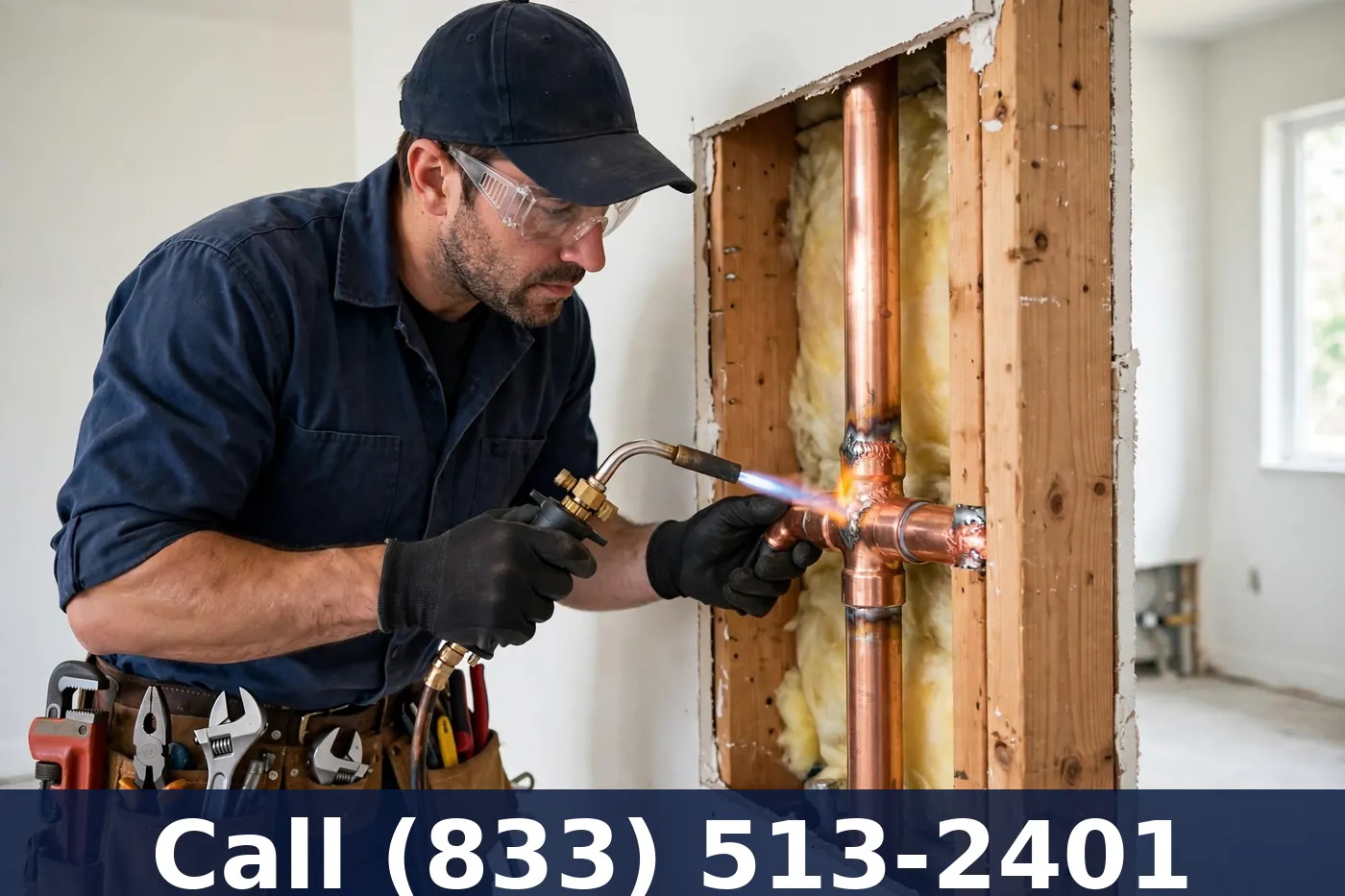
Starting price: Call for pricing
When the pipes inside your walls keep leaking, rusting, or choking off water pressure, patching one spot at a time stops making sense. Copper repiping replaces the home's worn supply lines with new copper pipe, run fresh to every fixture. It's the right move for homeowners tired of rust-colored water, weak showers, and a new leak every few months.
What copper repiping actually is
A repipe is not a repair. It's a replacement of the home's entire water supply system: new hot and cold lines run from the main entry point to every sink, shower, toilet, and appliance. The old galvanized, polybutylene, or failing copper lines get retired, and the house ends up with one clean, connected plumbing system.
The new lines often follow the same general path as the old ones, which keeps the work efficient. The old pipe usually stays where it is, disconnected and abandoned, while the new system takes over. It's a planned project, not an emergency scramble — the kind of job you schedule once and benefit from every day after.
The warning signs your pipes are done
Pipes rarely fail without announcing it first. The announcements just get easier to ignore than they should. Rust-colored water when you first open a tap means steel pipe is corroding from the inside. Pressure that fades when two fixtures run at once means the pipe's interior has narrowed with buildup. And leaks that pop up in a new spot every few months mean the whole system is reaching the end, not just one bad section.
- Brown or orange tint in the water, especially first thing in the morning.
- Weak shower flow that no new showerhead seems to fix.
- Recurring leaks in different rooms, not just one spot.
- Visible corrosion or green crust on exposed copper pipe.
- A metallic taste or smell in the drinking water.
Galvanized steel is the most common trigger for a repipe: it corrodes inward, shrinking the pipe's capacity until flow suffers. Polybutylene, used in some homes from past decades, is another known problem material. Old copper with pinhole leaks from water chemistry rounds out the list.
Why copper is the go-to material
Copper earned its place as the standard home plumbing material for straightforward reasons. It resists corrosion instead of rusting from the inside, so water stays clean and flow stays strong. It handles hot water without complaint, and soldered or pressed joints make solid, permanent connections. It's also familiar: any plumber you call years from now will know exactly how to work with it.
There are alternatives, and a good plumber will discuss them honestly. But copper remains the choice for homeowners who want a traditional, proven system with clean water and dependable pressure — the kind of plumbing you stop thinking about because it simply works.
How the repipe happens in your home
It starts with a walkthrough and a plan: where the main enters, where each fixture sits, and the smartest route for the new lines. Furniture and floors get protected, then small access openings are cut in walls and ceilings exactly where the new pipe needs to run. The old lines are disconnected as the new copper goes in.
New shut-off valves go in at fixtures and appliances, so future maintenance doesn't require killing water to the whole house. Once every line is connected, the full system is pressurized and every joint is checked for drips. Then the access openings are patched, textured, and left ready for paint. Most homes complete the plumbing phase in a couple of days, with water restored each evening.
- Plan the route and protect floors, furniture, and belongings.
- Cut precise access openings in walls and ceilings.
- Run new copper hot and cold lines to every fixture.
- Install fresh shut-off valves throughout.
- Pressure-test the entire system and check every joint.
- Patch openings and leave the work areas clean.
What affects the cost of a copper repipe
Every home prices differently, so the useful step is an in-home assessment — call (833) 513-2401 and we'll look at the actual system. The biggest factors are the home's size and fixture count: more bathrooms, more pipe. Layout matters too, since a single-story home with accessible attic space is simpler to repipe than a two-story with concrete slab floors.
Material choice plays a role, and so does the condition of what's there now. Homes where old pipe is easy to work around go faster than ones where access is tight. What doesn't change: the price is based on your home's real layout and real pipe, discussed before any work begins.
Copper repiping for Stockton-area homes
Plumbing Services Pros repipes homes across the Stockton area, from mid-century houses still running original galvanized steel to newer homes where failing lines need a fresh start. Hard water in the region is tough on pipe interiors over time, which is one reason repipes are such a common project here. Homeowners usually call after the third or fourth leak in a year, when patching has clearly stopped being the answer.
If your water runs rusty, your pressure fades, or your plumber keeps coming back to a new leak, it's worth a conversation. Reach out to (833) 513-2401 and tell us what your pipes have been doing lately — we'll take a look and give you a straight answer about whether repiping is the right move.
Features
- Full assessment of the existing pipe system
- New copper supply lines run to every fixture
- New shut-off valves at fixtures and appliances
- Pressure testing of the complete new system
- Patching of wall and ceiling access openings
- Walkthrough explaining the new layout
Benefits
- Water pressure that feels normal at every fixture
- Clearer water without rust tint or metallic taste
- An end to the pattern of one leak after another
- Hot water that arrives steady and stays steady
- A plumbing system matched to the home's actual layout
- Confidence when you turn on any tap in the house
Frequently asked questions
How do I know my home needs repiping?
Rust-colored or brown water, weak or fluctuating pressure at multiple fixtures, recurring leaks in different spots, and visible corrosion on exposed pipe are the classic signs. If your home still runs on galvanized steel or polybutylene, those materials are known to deteriorate. A plumber can assess the system and tell you whether repiping or a smaller repair makes sense.
Why choose copper over other pipe materials?
Copper resists corrosion, handles hot water well, and is a proven, code-approved material for home plumbing. It keeps water tasting clean and delivers steady flow. Many homeowners simply prefer the feel of a traditional soldered copper system, and it's a material any future plumber will know how to work with.
Will you tear my whole house apart?
The new lines often follow a similar path to the old ones, and the old pipe is typically left in place once the new system takes over. Walls and ceilings are opened only where access is needed, and the openings are patched afterward. Most homeowners stay in the house through the whole job and have water back each evening.
How much does copper repiping cost?
Home size, number of fixtures, how the house is laid out, and how easy the pipe runs are to reach all shape the project. A single-story home with open attic access is simpler than a two-story with slab floors. Call (833) 513-2401 for an in-home assessment and a clear explanation of what the work involves.
What kind of copper pipe do you install?
Type L copper is the common choice for repiping: thicker walls than the thinner Type M, and well suited to a home's hot and cold supply lines. Fittings are soldered or pressed to make solid, leak-resistant joints. Your plumber will explain what's going into your walls and why.