
CPVC Repiping Near Me
Starting price: Call for pricing
If your home's pipes are rusting, leaking, or past their prime, CPVC repiping gives you a fresh water system without the cost and weight of metal pipe. CPVC is a rigid plastic made to carry both hot and cold water, and a full repipe replaces every tired supply line with it. It's a smart pick for homeowners who want clean water, steady pressure, and quiet pipes.
Meet CPVC: the plastic pipe built for hot water
CPVC — chlorinated polyvinyl chloride — is a rigid cream-colored plastic pipe engineered for home water distribution. Unlike standard PVC, which belongs in drains and irrigation, CPVC is rated for the heat and pressure of a home's hot and cold supply lines. It's been used in residential plumbing for a long time, and it's a legitimate, code-approved material, not a shortcut.
The appeal is practical. CPVC never rusts, so water stays clear and the pipe's interior never narrows with corrosion. It's light to handle, cuts cleanly, and costs less than copper, which makes a whole-home repipe more approachable. For a homeowner facing worn-out steel or problem plastic, CPVC is the sensible middle ground between patching forever and the premium of a copper system.
Who CPVC repiping fits best
CPVC repiping makes the most sense when the existing system is failing across the board rather than at one spot. Homes with corroded galvanized steel get the biggest upgrade, since CPVC simply doesn't rust. Homes with polybutylene — the gray plastic used in some past decades — are another natural fit, because that material has a well-known failure history.
It's also a good match for budget-conscious projects. The material costs less than copper, and the installation is straightforward. If your priority is clean water and reliable pressure without overspending on the repipe itself, CPVC deserves a serious look. A plumber can walk you through how it compares for your specific home.
- Corroded galvanized steel that keeps leaking or choking flow.
- Polybutylene lines that are past their trustworthy life.
- Copper with recurring pinhole leaks from water chemistry.
- Mixed old materials patched together over the years.
Solvent-weld joints and what makes them hold
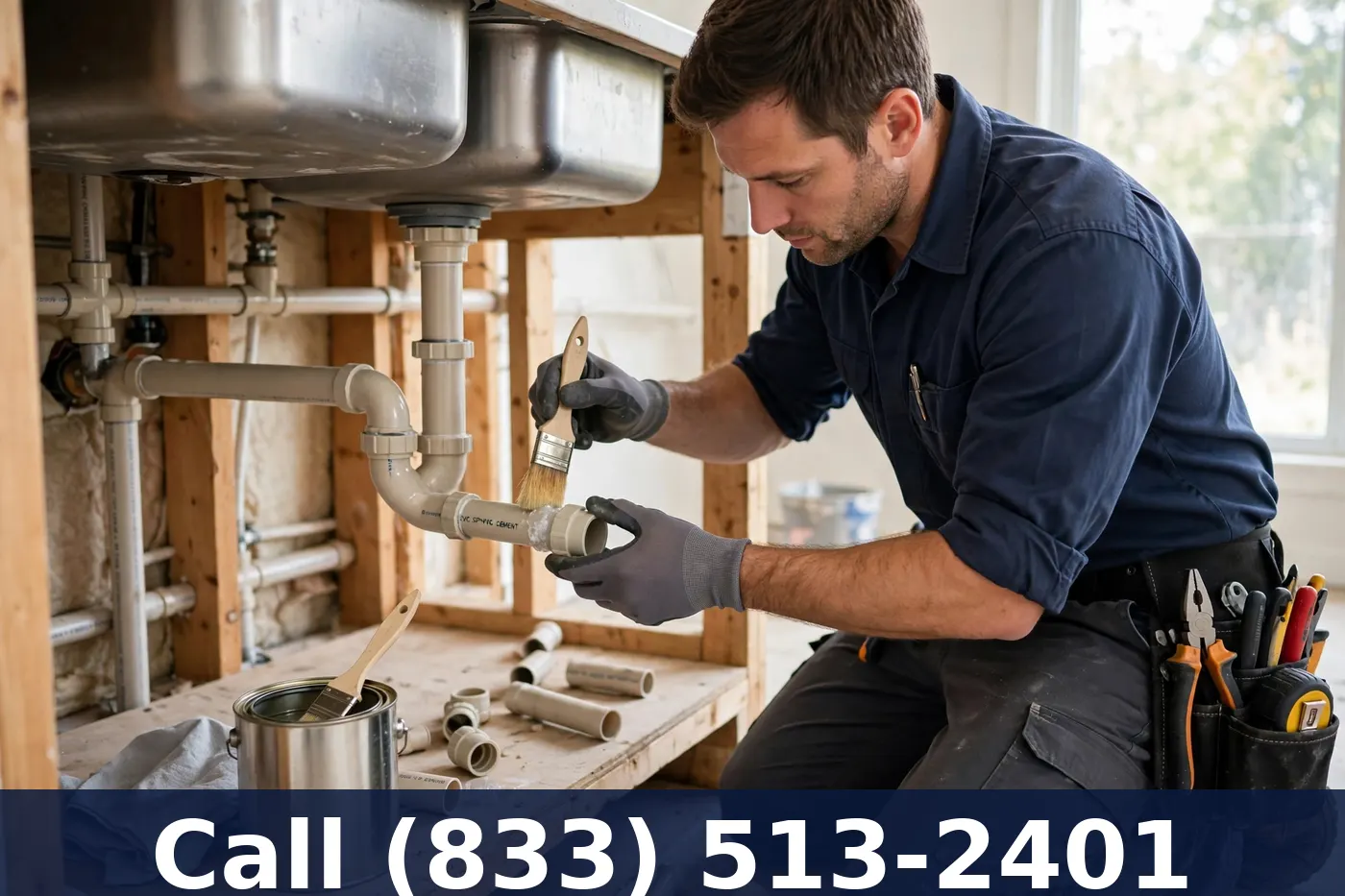
CPVC joints aren't threaded or soldered — they're solvent-welded. Primer and cement soften the pipe and fitting surfaces, and when they're pushed together, the plastic fuses into a single piece as the solvent cures. It's a chemical bond, not glue sitting on the surface, which is why a properly made joint is as strong as the pipe itself.
The catch is that the joint is only as good as its preparation. Surfaces must be clean, the cement must be applied correctly, and the joint needs its cure time before pressure goes on. This is where professional installation earns its keep. A seasoned installer makes every joint the same careful way, and the system gets pressure-tested afterward to prove each one holds.
A walk through the repipe project
The project starts with a plan: mapping the route from the main water entry to every fixture. Floors and furniture are protected, and precise access openings are cut where the new lines need to run. Because CPVC is rigid, the layout uses fittings at each turn, which the installer plans out so the runs stay clean and serviceable.
Pipe sections are cut, solvent-welded, and hung with proper supports as the new system takes shape. New shut-off valves go in at fixtures and appliances. Once everything is connected, the whole system is filled and pressure-tested, and every joint is checked. Then the openings are patched and the work areas cleaned up. Water is back on each evening, and most homes finish the plumbing phase within a couple of days.
- Protect the home and cut precise access openings.
- Cut and solvent-weld new CPVC lines to each fixture.
- Support the runs properly and install fresh shut-off valves.
- Pressure-test the full system and inspect every joint.
- Patch openings and leave the space clean.
Cost factors worth knowing
Repiping cost follows the home, not a price list. The number of fixtures sets how much pipe and how many fittings the job needs. The layout sets the labor: a ranch home with open attic access repipes faster than a two-story with tight chases. The current pipe's condition matters too, since corroded or cramped runs take more effort to work around.
Material choice is part of the equation, and CPVC sits in the sensible middle — less than copper, with installation that's efficient for a professional crew. Call (833) 513-2401 for an in-home look at your system. We'll explain exactly what your repipe involves and what shapes the price, with no guesswork.
CPVC repipes around Stockton
Plumbing Services Pros repipes homes across the Stockton area with CPVC, and it's a popular choice here. The region's hard water is rough on metal pipe interiors, which is exactly the problem a corrosion-proof plastic solves. We see it most in mid-century homes still running original steel lines, and in houses where a patchwork of old materials has finally run out of patience.
If your taps run rusty, your pressure keeps fading, or your plumber's visits are getting routine, let's talk about a repipe. Call (833) 513-2401 and describe what your plumbing has been doing — we'll take a look and give you a straight, honest read on whether CPVC repiping is the right fix.
Features
- Assessment of the current pipe system
- New CPVC hot and cold lines to every fixture
- Solvent-welded joints made to proper cure standards
- New shut-off valves at fixtures and appliances
- Full-system pressure test before walls close
- Patching of access openings and clean finish
Benefits
- No rust forming inside the water lines
- Hot water that holds its temperature better
- Quieter pipes with less knocking and hammer
- Water that tastes like water, not metal
- A full system installed in a practical timeframe
- One project instead of years of patch repairs
Frequently asked questions
What kind of old pipe does CPVC replace?
Corroded steel pipe, polybutylene, or copper with recurring pinhole leaks are all good reasons. So is a home where leaks keep appearing in new places. If you're not sure what material your pipes are, a plumber can identify them during an assessment and lay out your options.
Can CPVC handle hot water lines?
Yes. CPVC is made specifically to carry hot water, and it's commonly used for both hot and cold supply lines in homes. It holds heat better than metal pipe, so hot water arrives at the tap closer to the temperature it left the heater.
Why does CPVC need so many fittings?
CPVC is rigid, so it needs more fittings at corners and turns than flexible tubing. That's normal and expected — each joint is solvent-welded into a solid connection. The trade-off is a clean, straight pipe run that's easy to inspect and service later.
How much does CPVC repiping cost?
Size of the home, number of fixtures, layout, and how easy the pipe runs are to reach all shape the job. Call (833) 513-2401 for an in-home assessment, and we'll explain what your repipe involves and what drives the price before any work starts.
Will my pipes be quieter after repiping with CPVC?
CPVC runs quieter than copper or steel because plastic doesn't carry sound and vibration the same way metal does. Homeowners often notice the difference most at night, when a toilet refill or shower no longer echoes through the walls.
Do the glued joints actually last?
Done right, solvent-welded CPVC joints are permanent — the cement chemically fuses the pipe and fitting into one piece. The key is proper preparation and cure time, which is exactly what a professional installation provides. Rushed DIY joints are where most CPVC failures come from.