
Drain Cleaning Near Me
Starting price: Call for pricing
Slow sinks, gurgling tubs, and drains that keep clogging are signs of buildup a plunger can't fix. Plumbing Services Pros clears drains the professional way — cable machines for stubborn clogs, hydro jetting for heavy buildup — and leaves the line flowing like it should. It's for homeowners, landlords, and small businesses tired of fighting the same drain over and over.
What professional drain cleaning actually does
A plunger moves water. A store-bought snake pokes at the problem. Professional drain cleaning does something different: it removes the clog and the buildup around it, then confirms the line actually flows. The goal isn't a drain that works today and clogs again next month — it's a line restored to something close to its original capacity.
The visit starts with the symptoms. Which drain is slow? Is it one fixture or several? Does the tub gurgle when the toilet flushes? Those answers point the plumber at the right line and the right tool before any equipment comes out of the truck. Drain work done with a plan beats drain work done by force.
The two main tools and when each earns its keep
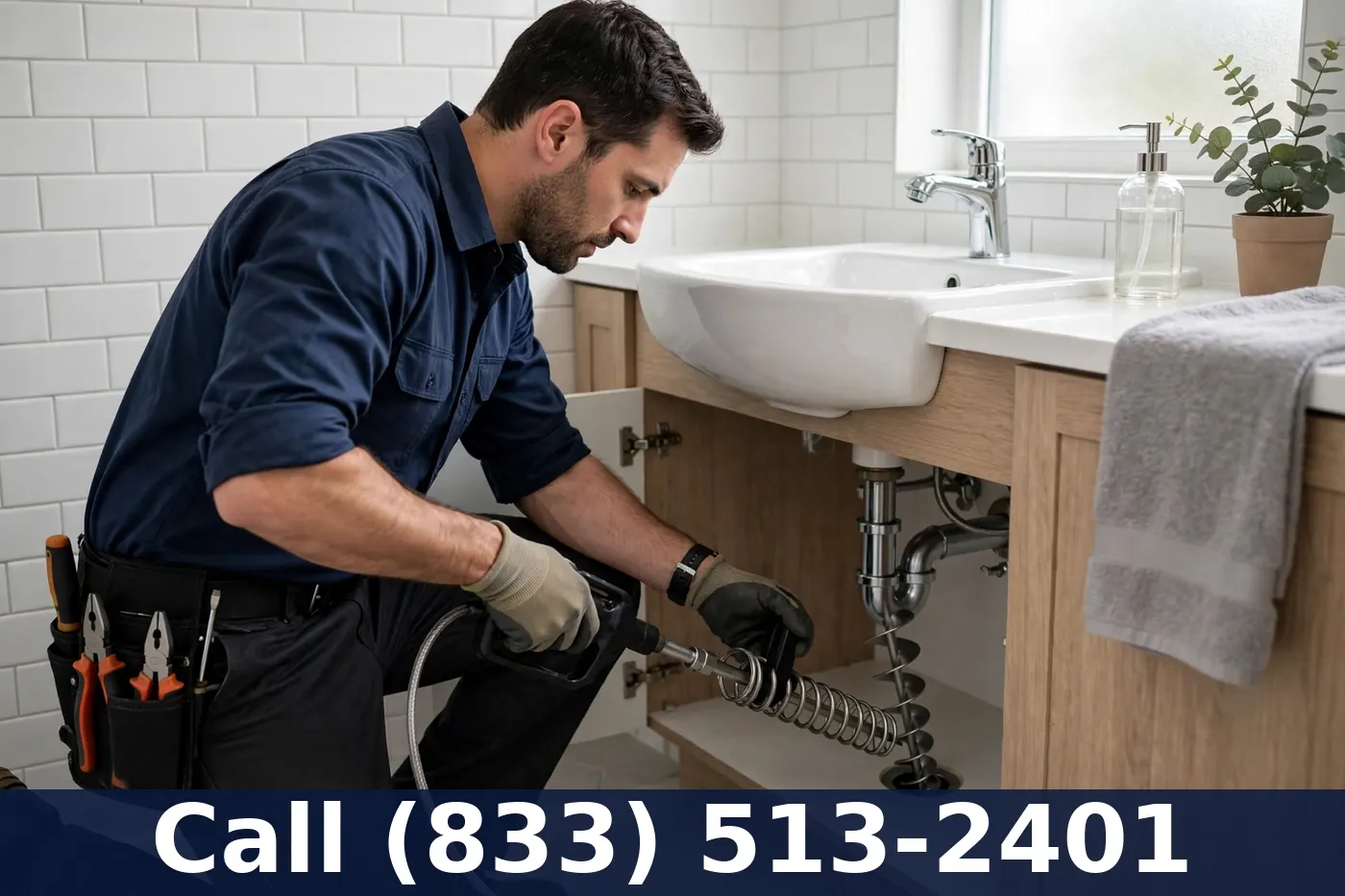
Most professional drain cleaning comes down to two methods, and they're not interchangeable. A cable machine — the professional version of a drain snake — feeds a rotating steel cable into the line. Different cutting heads break through or retrieve different clogs: a spiral head grabs hair, a blade head cuts through roots and paper masses. Snaking opens the line fast and works well on localized blockages in smaller pipes.
Hydro jetting takes a different approach. A specialized nozzle sprays high-pressure water in multiple directions, scouring the entire inside of the pipe. It doesn't just punch through the clog — it washes grease, sludge, soap scum, and loose roots off the pipe walls. Jetting is the right call for heavy buildup, recurring clogs, grease-choked kitchen lines, and main sewer runs. One caution: jetting needs a structurally sound pipe, so the line gets assessed first, sometimes with a camera.
- Snaking: hair, paper, and localized clogs in smaller drains.
- Jetting: grease, sludge, scale, and buildup along longer runs.
- Camera check: when clogs keep returning or the pipe is old.
What clogs each kind of drain
Different drains fail for different reasons, and the pattern usually names the culprit. Kitchen sinks clog on grease and food waste — grease cools, coats the pipe, and catches everything that follows. Bathroom sinks and tubs clog on hair and soap scum, which weave together into a slow-growing mat. Toilets clog on too much paper or the wrong things being flushed.
Main sewer lines have their own rogues' gallery: tree roots reaching through old joints, accumulated sludge, and the occasional foreign object. When several fixtures back up at once, or the lowest drain in the house is the one overflowing, the problem is in the main line, not a single fixture. That distinction matters, because it decides which tool comes out.
When cleaning isn't enough
Honest plumbers will tell you that cleaning has limits. If the same line keeps clogging after proper cleaning, the problem is usually structural: roots growing through a cracked joint, a section of pipe that's collapsed or sagging, or a line so scaled inside that no cleaning restores it. No cable or jetter fixes a broken pipe.
That's when a camera inspection earns its keep. The camera shows exactly what's wrong and where, so the next step is a repair or replacement aimed at the real problem instead of another cleaning that can't hold. Cleaning and camera work are partners: the camera finds what cleaning can't fix, and cleaning clears the way for the camera to see.
What affects the cost of drain cleaning
Drain cleaning is priced on the job, not the drain. A single slow bathroom sink that needs a quick cable run is the simplest visit. A main sewer line that needs hydro jetting — with more equipment, more setup, and more time — is a bigger job. Access matters too: a line with a proper cleanout is straightforward, while one that requires pulling a toilet or working through a fixture takes longer.
The method shapes the price as well, since jetting uses specialized equipment. Call (833) 513-2401 and describe the drain — what's slow, how long it's been happening, and whether it's one fixture or several. That's usually enough to explain what the cleaning will involve and what drives the cost.
Drain cleaning around Stockton
Plumbing Services Pros cleans drains across the Stockton area, from kitchen sinks in family homes to main sewer lines in older neighborhoods. The local pattern is familiar: mature trees feeding roots into old laterals, hard water leaving scale in lines, and kitchen drains doing battle with years of grease. We've seen every version of it.
If your drains are slow, gurgling, or backing up, don't wait for a full blockage. Call (833) 513-2401 and tell us which drains are acting up — we'll bring the right tool, clear the line properly, and tell you straight if something bigger is going on underneath.
Features
- Clearing kitchen, bath, and laundry drains
- Main sewer line cleaning
- Cable machine snaking for stubborn clogs
- Hydro jetting for grease and heavy buildup
- Testing flow after the line is clear
- Straight talk on what caused the clog
Benefits
- Drains that move water the way they should
- Fewer backups interrupting your day
- No harsh chemicals poured into your pipes
- Buildup removed, not just poked through
- Honest word when a clog signals a bigger problem
- Practical tips to keep drains clear longer
Frequently asked questions
Should I just use a chemical drain cleaner first?
Chemical drain cleaners can damage pipes, harm septic systems, and rarely clear the actual blockage — they just burn a small hole through it. Professional cleaning removes the clog and the buildup around it. If you've already poured chemicals down the drain, tell the plumber when you call so they can take proper precautions.
What's the difference between snaking and hydro jetting?
A cable machine (drain snake) is a rotating steel cable that breaks through or retrieves a clog — ideal for hair, paper, and localized blockages. Hydro jetting uses high-pressure water to scour the entire inside of the pipe, which handles grease, sludge, and heavy buildup. The plumber picks based on the clog type and the pipe's condition.
What if my drain keeps clogging after cleaning?
Sometimes. If the same drain keeps clogging after professional cleaning, the camera often reveals a structural problem: roots, a broken section, or a sagging belly. Cleaning clears what's inside the pipe; it can't fix the pipe itself. That's when a camera inspection is the smart next step.
How much does drain cleaning cost?
It depends on which drain, how bad the clog is, and which method the job needs. A single slow bathroom sink is one kind of visit; a main sewer line needing hydro jetting is another. Call (833) 513-2401 and describe the drain, and we'll explain what the cleaning involves and what shapes the price.
Can I rent a drain snake and do it myself?
Yes, and it's a bad idea for most homes. Rental-store snakes are underpowered for real clogs, and without knowing what's in the pipe you can push a blockage deeper or damage old pipe. A professional brings the right cable, the right head for the clog, and the judgment to stop before causing harm.
What causes most drain clogs?
Grease, hair, soap scum, food waste, paper products, and tree roots in outdoor lines. Kitchens clog on grease and food, bathrooms clog on hair and soap, and main lines clog on roots and accumulated debris. Knowing the pattern helps the plumber bring the right tool the first time.