
Electric Water Heater Installation Near Me
Starting price: Call for pricing
When the hot water runs out halfway through a shower or the old tank starts weeping at the base, it's time for a new water heater. Plumbing Services Pros installs electric water heaters sized to your household's real hot-water demand, with the old unit removed and the new one connected properly. It's for homeowners replacing a failed tank, upgrading an undersized unit, or switching fuel types.
When a water heater is telling you it's done
Water heaters fail in slow motion, then all at once. The slow-motion part looks like this: showers that run lukewarm by the end, a rumbling tank as sediment bakes onto the bottom, hot water with a rusty tint, or a repair visit every year for the same aging unit. The all-at-once part is water on the floor where the tank meets it — and once a tank leaks, there's no repairing it back to health.
Most tanks give years of warning before they go. The mistake is treating each symptom as a small problem instead of one big one wearing out. If your heater is showing several of these signs, replacement stops being a question of if and becomes a question of when — and "when" is a lot cheaper before the tank floods the garage.
- Water collecting beneath or around the tank.
- Rust-colored hot water from the taps.
- Hot water running out faster than it used to.
- Rumbling, popping, or banging sounds during heating.
- Repairs that keep coming back for the same unit.
Electric, tankless, or heat pump: the options on the table
The standard electric tank is the workhorse: an insulated tank with heating elements, sized in gallons, doing exactly what water heaters have done for generations. It's the simplest replacement when the old setup already works — same footprint, same connections, new equipment.
Two alternatives are worth knowing about. Tankless electric units heat water as it flows, so there's no tank to run dry and they take up far less space — but they need serious electrical capacity and suit households with moderate simultaneous demand. Heat-pump water heaters pull warmth from the surrounding air to heat water, using far less electricity than a standard tank, at the cost of a taller unit that needs room to breathe.
There's no universal winner. The right choice depends on your household size, your electrical setup, the space available, and how you actually use hot water. A good installer lays out the trade-offs plainly and lets you decide.
Sizing the unit to your household
An undersized water heater is a daily annoyance; an oversized one wastes energy heating water nobody uses. Sizing starts with the household: how many people, how many bathrooms, and whether the morning routine has two showers running at once. A tank's gallon capacity and its recovery rate — how fast it reheats — both matter.
For tankless units, sizing is about flow rate and temperature rise instead of gallons: how many fixtures might draw hot water at the same time, and how cold the incoming water gets. Getting this right at the start is the difference between endless hot water and a unit that can't keep up on a busy morning. It's one of the main reasons professional sizing beats guessing at the store.
How the installation day goes
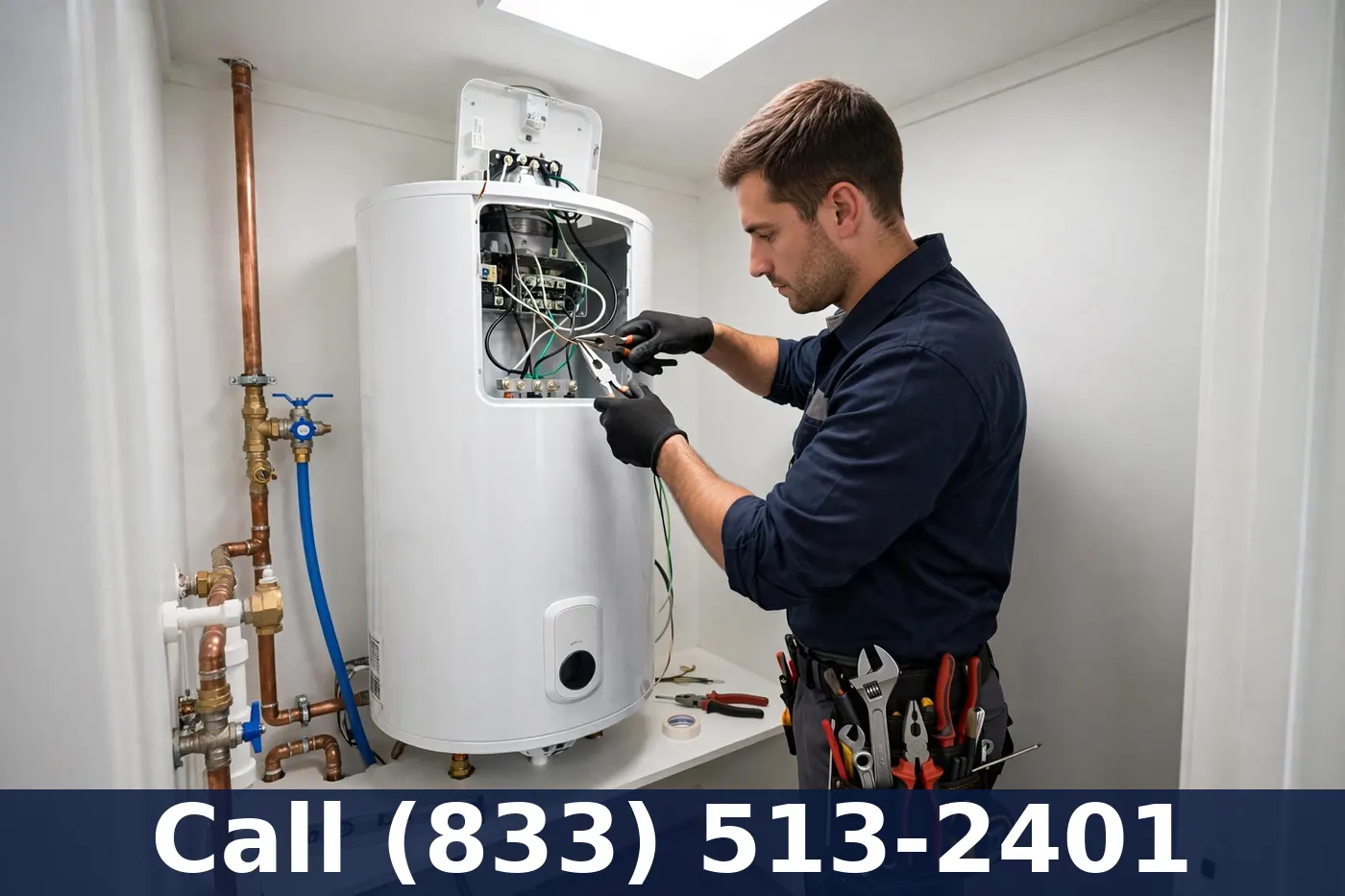
The old tank gets drained first, then disconnected from its water lines and electrical supply and hauled out. The new unit goes into place — leveled, since a tilted tank stresses connections and drains poorly. Water lines are connected with a proper shut-off valve so the heater can be serviced without killing water to the house.
The temperature and pressure relief valve gets its discharge line routed safely, which is a code requirement that protects against the rare but serious case of runaway pressure. Electrical connections are made to the dedicated circuit, the tank fills, and the system is powered up and tested: hot water at the taps, no leaks at any joint, thermostat set to a sensible temperature. Before leaving, the installer walks you through the new unit — where the shut-off is, what the settings mean, and what normal operation looks like.
- Assess the space, electrical setup, and existing connections.
- Drain, disconnect, and remove the old unit.
- Set, level, and connect the new water heater.
- Install relief-valve discharge and shut-off valve.
- Fill, power up, test, and set the temperature.
- Walk through operation and maintenance with you.
What shapes the cost of the installation
The unit itself is one part; the installation conditions are the other. A straight swap — same type, same location, adequate electrical — is the simplest job. Costs move when the electrical panel or circuit needs upgrading, when water lines or the shut-off valve need rework, or when code corrections are required on the existing setup.
Tank size and type play a role too, as does access to the installation spot. Call (833) 513-2401 and describe your current heater — its type, its age, and what it's doing wrong. We'll explain what the installation involves and what shapes the price, based on your actual situation.
Water heater installs around Stockton
Plumbing Services Pros installs electric water heaters for homes across the Stockton area. The pattern here is familiar: hard water that builds sediment in tanks faster than average, aging units in older homes finally giving out, and households that have outgrown the small tank the builder installed. We see a lot of replacements that could have been planned a year earlier — and cost less stress — if the warning signs had been read sooner.
If your hot water is fading, your tank is weeping, or you're just tired of guessing how many showers you get, let's talk. Call (833) 513-2401 and tell us about your current heater — we'll size a replacement to your household and install it right.
Features
- Sizing the unit to your household's hot-water demand
- Draining and removing the old water heater
- Setting and leveling the new tank or unit
- Water line connections and shut-off valve
- Temperature and pressure relief safety setup
- Full system test and homeowner walkthrough
Benefits
- Hot water that shows up when you need it
- A unit sized for your actual household
- Clean, code-minded installation work
- Old tank hauled away, not left in the garage
- Clear explanation of how to run the new unit
- Fewer cold-shower surprises going forward
Frequently asked questions
How do I know my water heater needs replacing?
Water pooling under the tank, rust-colored hot water, rumbling or popping sounds from sediment buildup, hot water that runs out faster than it used to, and repairs that keep coming back. Any one of these is worth a conversation; several together usually mean replacement.
Should I get a standard tank, tankless, or heat pump model?
A standard electric tank is the straightforward choice: reliable, familiar, and sized by gallons to your household. Tankless electric units heat water on demand and take up less space, while heat-pump models use far less electricity. We'll explain the trade-offs and help you pick what fits your home and habits.
How long does installation take?
Usually the same day. Draining and removing the old tank, setting the new one, connecting water and electrical, and testing the system is a single-visit job in most homes. Upgrades that need electrical work or code corrections can take longer, and we'll tell you upfront.
How much does electric water heater installation cost?
The unit's size, whether the electrical setup needs upgrading, the condition of the existing connections, and any code corrections the installation requires. Call (833) 513-2401 and tell us about your current heater, and we'll explain what the installation involves and what shapes the price.
Will my electrical panel handle a new electric heater?
Often, yes. Electric units need a dedicated circuit with the right capacity, and older panels or wiring may need an upgrade first. That's part of what the assessment covers — we'll check the electrical side before recommending a unit.
Do you remove the old water heater?
Yes. The old tank is drained, disconnected, and hauled away as part of the installation. You don't need to arrange disposal yourself.