
Exposed Pipe Insulation Near Me
Starting price: Call for pricing
Exposed pipe insulation from Plumbing Services Pros wraps the water lines running through your crawl space, attic, garage, and other unheated areas in properly fitted insulation. It slows heat loss on hot water lines, helps cold lines resist freezing, and cuts the condensation that drips onto framing and floors. Call (833) 513-2401 to have a plumber assess which runs are exposed and insulate them correctly. It's a straightforward upgrade for homes and small businesses across the Stockton area.
What exposed pipe insulation is
Any water line that runs through an unheated part of your home is losing heat in winter and at risk when temperatures drop. Exposed pipe insulation is the fix: fitted sleeves and wraps that enclose those runs and slow heat transfer between the water and the surrounding air. On hot water lines it keeps heat in, so water arrives at the tap hotter and the heater cycles less. On cold lines it keeps warmth out in summer — which stops condensation — and keeps cold out in winter, which buys the line time against freezing. It's a simple, physical upgrade with no moving parts and nothing to maintain.
Which pipes need it most
Walk your home with fresh eyes and you'll find candidates in a few usual places:
- Crawl spaces — the most common spot for long, bare supply runs
- Attics — lines feeding upstairs bathrooms, exposed to big temperature swings
- Garages — especially along exterior walls or near the garage door
- Unfinished basements — runs along rim joists and foundation walls
- Exterior walls — kitchen and bath lines tucked against cold siding
- Near hose bibs — the short runs feeding outdoor spigots
When you call (833) 513-2401, we survey every one of these areas — not just the run you noticed — so nothing vulnerable gets skipped.
How the installation visit works
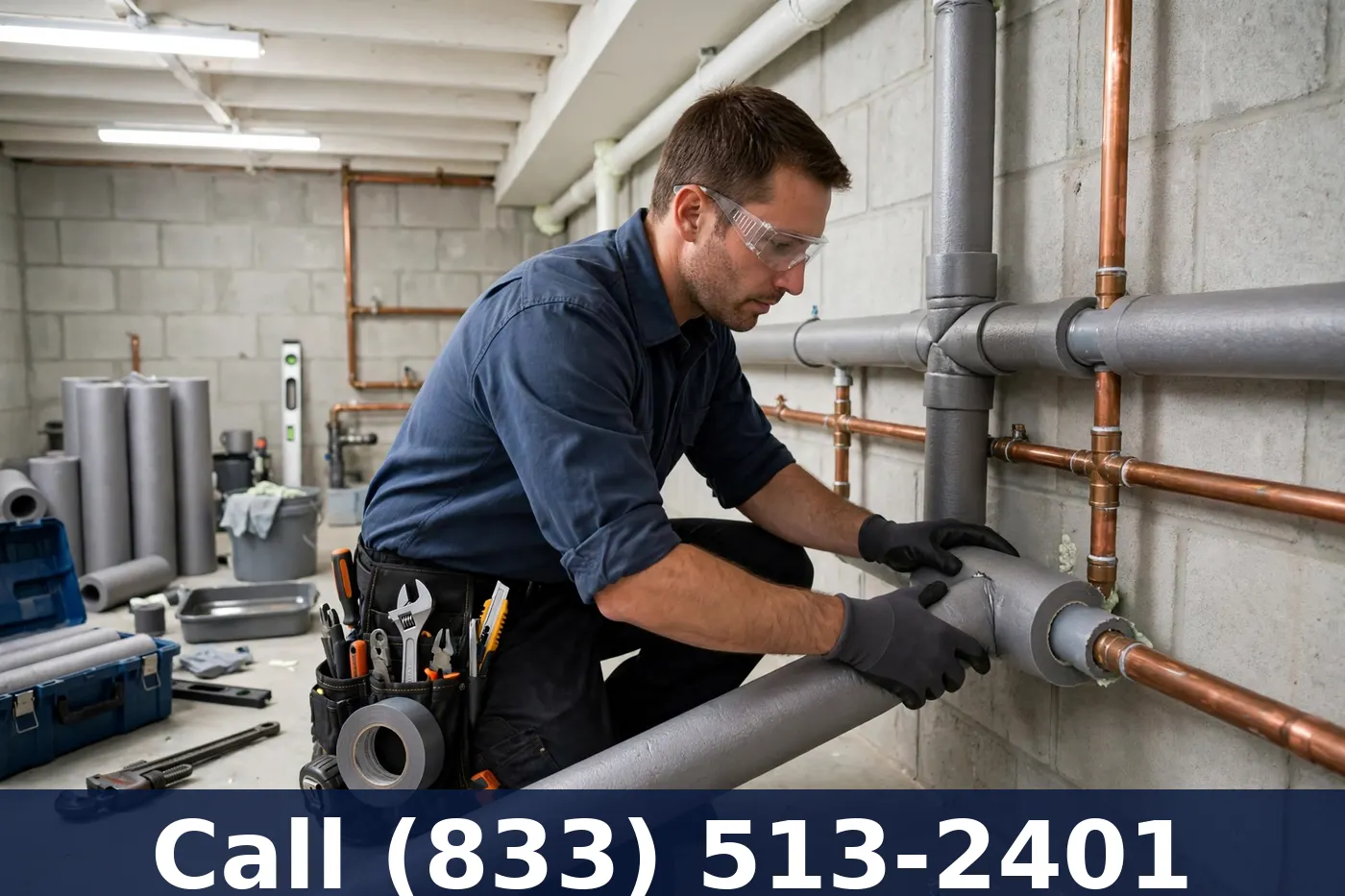
We start by tracing your supply lines through the unheated areas and measuring each run, because insulation only works when it's the right diameter and fully closed. Then we fit pre-slit foam sleeves over the straight runs, sealing each seam so no bare pipe shows through. Elbows, tees, valves, and fittings get formed pieces or careful wraps, since those joints are exactly where cold air finds a way in. Where pipes pass through walls or framing, we seal the gaps around them against drafts. Before we leave, we walk the whole path once more to check for gaps, loose seams, or missed fittings.
What insulation can and can't do
Honesty matters here. Insulation slows heat loss — it doesn't create heat. In mild cold snaps, a well-insulated pipe holds its temperature long enough to ride out the night. In a hard, multi-day freeze with no heat reaching the space, even insulated lines can eventually freeze, which is why we also point out drafts worth sealing and spots where a different strategy makes sense. What insulation reliably does: reduce freeze risk in ordinary cold weather, cut heat loss on hot runs, and stop condensation on cold ones. That's plenty for most homes, and we'll tell you plainly if your situation calls for more.
What affects the cost
The main driver is how much pipe is exposed and where it runs. A few short runs in an accessible garage cost less to cover than a long maze through a tight crawl space, because labor follows access. The number of fittings matters too — elbows, valves, and tees take more time and material than straight pipe. Pipe diameter plays a role, since larger lines need larger sleeves, and sealing wall penetrations or drafty gaps adds a little more. For an exact figure on your home, call (833) 513-2401 and we'll quote it after seeing the runs.
How we serve your area
Plumbing Services Pros insulates exposed pipes for single-family homes, duplexes, and small businesses across the Stockton area — older houses with bare copper in the crawl space, newer builds where the garage lines were never wrapped, and rentals where the owner wants fewer winter surprises. If you're not sure what's exposed under your home, that's exactly what the survey is for. Call (833) 513-2401, and we'll find every run that needs covering.
Features
- Full survey of exposed supply lines in unheated areas
- Pre-slit foam sleeves fitted snugly to each pipe diameter
- Sealed seams and joints so no bare spots are left behind
- Elbows, valves, and fittings wrapped with formed pieces
- Cold-water lines insulated to control sweating and drips
- Hot-water runs insulated to slow heat loss along the line
- Gaps where pipes pass through walls sealed against drafts
Benefits
- Lowers the chance of a freeze-up bursting a pipe
- Hot water arrives hotter, so the heater works less
- Stops cold lines from sweating onto wood and drywall
- Quiets the ticking and knocking of expanding pipes
- Protects lines in spots you'd rather not crawl into yourself
- One visit covers every exposed run, not just the easy ones
Frequently asked questions
Does pipe insulation really prevent frozen pipes?
It greatly lowers the risk in ordinary cold weather by slowing heat loss, giving the line time to ride out the night. It doesn't generate heat, so in a severe multi-day freeze an unheated space can still overwhelm it. We'll tell you honestly if your situation needs more than insulation.
Should cold water pipes be insulated too?
Yes. Cold lines sweat in warm weather, and that condensation drips onto framing, drywall, and stored belongings. Insulating them stops the sweating, and in winter it also slows freezing.
What kind of insulation do you use on pipes?
Plumbing Services Pros uses pre-slit foam sleeves sized to each pipe diameter, with sealed seams, plus formed pieces for elbows, valves, and fittings. The sleeve has to fit snugly and close completely — a loose or gapped sleeve barely helps.
Can I insulate my own pipes instead?
Straight, reachable runs are a reasonable DIY project if you measure carefully and seal every seam. Most people call us because the vulnerable lines are in a tight crawl space or attic, or because they want every fitting and penetration handled in one visit.
What affects the cost of insulating exposed pipes?
Mostly the total length of exposed pipe, how hard it is to reach, the number of fittings, and the pipe diameters. Call (833) 513-2401 for an exact quote after we survey your runs.
Will insulating hot water pipes lower my energy bill?
It slows heat loss along the run, so hot water arrives hotter and the heater doesn't work as hard to make up the difference. The savings build quietly over time — the bigger payoff is usually freeze protection and comfort.