
Flooded Basement Plumbing Response Near Me
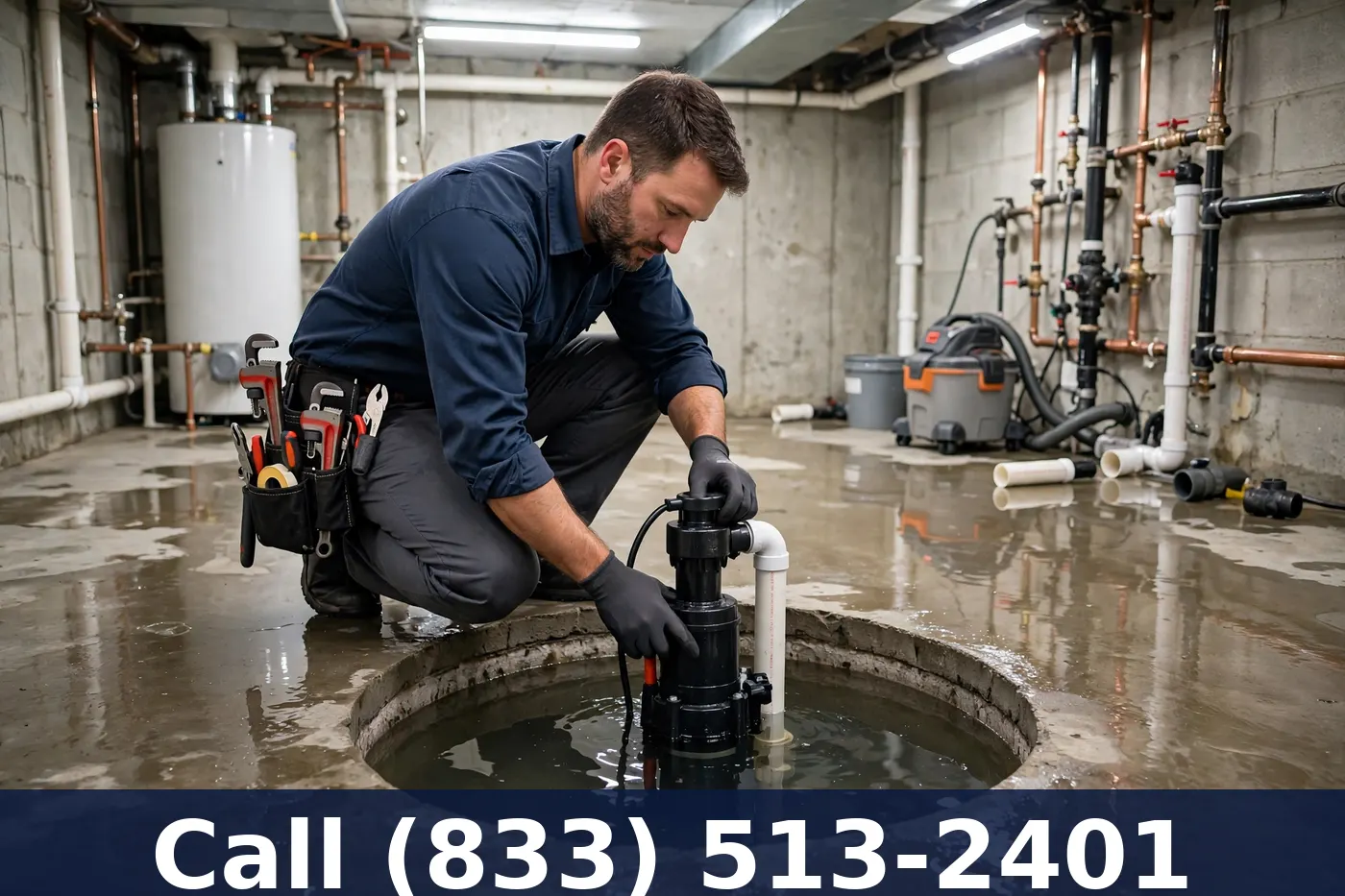
Starting price: Call for pricing
When water is rising in the basement, Plumbing Services Pros's flooded basement plumbing response finds the source and stops it — a burst supply line, a failed water heater, a backed-up sewer, or a dead sump pump. We shut the water down, diagnose the failure, and make the plumbing repair so the flooding doesn't continue. Call (833) 513-2401 and tell us what you're seeing; we'll talk you through the immediate steps while help is on the way.
What a plumber does when the basement floods
A flooded basement has two problems: the water already there, and the source still feeding it. Our job is the second one. Drying, dehumidifying, and rebuilding soaked finishes belong to a water damage restoration company — we'll say that plainly and help you understand the handoff. What Plumbing Services Pros does is find where the water is coming from, stop it at the source, and repair the failed plumbing so the flooding ends. That means burst pipes, failed water heaters, sewer backups, and sump pump failures: the plumbing failures that put water in basements in the first place.
Where basement floodwater comes from
Standing water in a basement usually traces back to one of these:
- Burst or split supply lines — pressurized pipes that let go, often in winter or in uninsulated runs
- Failed water heaters — tank water heaters tend to fail at the bottom seam, releasing the whole tank at once
- Sewer backups — wastewater pushed up through floor drains, tubs, or toilets during a blockage or surcharge
- Dead sump pumps — a burned-out motor, a stuck float switch, or a pump with no power when it's needed most
- Appliance hoses — washing machine supply hoses that burst, especially older rubber ones
If the water is coming through foundation walls during heavy rain rather than from any pipe or fixture, that's a drainage or foundation issue rather than a plumbing one — and we'll tell you that straight instead of selling you a plumbing repair you don't need.
Safety first: what to do before we arrive
Don't walk into standing water until you've thought about electricity. If water is near outlets, appliances, the panel, or the water heater, cut power at the breaker — but only if you can reach it without stepping through water. Shut off the main water valve if the source looks like a supply line or you can't tell where the water is coming from. If it's the water heater, switch it to pilot or off. During a sewer backup, stop running water anywhere in the building and keep people and pets out. Take photos from a safe spot, move what valuables you can reach, and skip chemical drain cleaners entirely.
How the response visit works
When you call (833) 513-2401, we ask where the water is, how deep, whether it smells like sewage, and what you've shut off so far — then we guide your next move while help is on the way. On site, the first job is stopping the source: closing the failed line, shutting down the heater, clearing the backup, or getting a pump moving again. Then we diagnose the actual failure — camera-checking a sewer line, testing a pump, tracing a burst — and explain the repair in plain terms. The plumbing fix happens the same visit whenever possible. Before we leave, you get a clear picture of what's fixed, what still needs drying by a restoration company, and what would prevent a repeat.
What affects the cost
The source of the water drives the price more than the amount of it. Clearing a sewer backup and camera-checking the line is one kind of job; replacing a burst section of supply pipe is another; swapping a failed water heater or sump pump is a third, with the equipment itself as part of the figure. Access matters — a heater in an open basement is simpler than a burst line buried behind finished walls. The condition of related parts counts too: corroded shutoff valves, aging supply hoses, or a sewer line with root intrusion can turn a single repair into a bigger conversation. For an exact number on your situation, reach us at (833) 513-2401 and describe what you're dealing with.
How we serve your area
Plumbing Services Pros responds to basement flooding calls for homes and small businesses across the Stockton area — finished basements with a failed heater, unfinished ones with a burst line nobody noticed for hours, commercial spaces where standing water threatens inventory or equipment. If water is rising where it shouldn't be, call (833) 513-2401, say what you're seeing, and we'll take it from there.
Features
- Phone guidance on shutoffs and safety before we arrive
- Source of the water identified: pipe, heater, sewer, or pump
- Burst supply lines isolated and repaired at the failure point
- Failed water heaters shut down, drained, and repaired or replaced
- Sewer backups cleared with the line camera-checked for the cause
- Failed sump pumps diagnosed and replaced with the right capacity
- Clear handoff notes for the drying and restoration step
Benefits
- The water stops coming in instead of continuing to rise
- You learn whether the source is plumbing or something else
- Sewage treated as the health hazard it is, not just a mess
- One visit addresses the failure instead of guessing at it
- Straight talk on what needs a restoration company next
- Prevention advice so the same failure doesn't repeat
Frequently asked questions
My basement is flooding right now. What should I do first?
Stay out of the water until you've considered electricity — cut power at the breaker if water is near outlets or appliances and you can reach it safely. Shut off the main water valve if the source looks like a supply line, then call (833) 513-2401 for guidance on the next step.
Can a plumber fix a flooded basement, or do I need a restoration company?
Both, for different jobs. A plumber — that's us — finds the source and stops it: the burst pipe, failed heater, backup, or dead pump. A restoration company then handles water extraction, drying, and rebuilding. We'll explain the handoff clearly on every call.
How do I know if the water is from a plumbing failure or groundwater?
Plumbing water usually has a clear source — a spraying pipe, a leaking heater, sewage-smelling backup. Water seeping through walls or up through floor cracks during heavy rain points to drainage or foundation issues instead. We'll help you tell the difference before recommending anything.
Is a sewer backup in the basement dangerous?
Yes. Sewage carries bacteria and contaminants, so keep people and pets away, don't run any water in the building, and don't try to clean it yourself. Call (833) 513-2401 — we clear the blockage and camera-check the line to find what caused it.
My sump pump isn't running. Can you replace it?
Yes. We diagnose whether it's the pump motor, a stuck float switch, a power issue, or a blocked discharge line, then replace it with the right capacity for the pit. If your pump has no backup power, we'll talk through options so one outage doesn't flood you again.
What affects the cost of a flooded basement plumbing response?
The source of the water is the biggest factor — a cleared backup, a repaired burst line, and a replaced heater or pump are very different jobs. Access and the condition of related parts matter too. Describe the situation to (833) 513-2401 for an exact quote.