
Frozen Pipe Prevention Near Me
Starting price: Call for pricing
Frozen pipe prevention from Plumbing Services Pros gets your plumbing ready before a cold snap — insulating exposed lines, winterizing hose bibs, sealing the drafts that let freezing air reach pipes, and showing you exactly where your shutoff is. It's the visit that keeps a burst pipe from turning a cold night into a flooded morning. Call (833) 513-2401 to schedule before the temperature drops.
What frozen pipe prevention covers
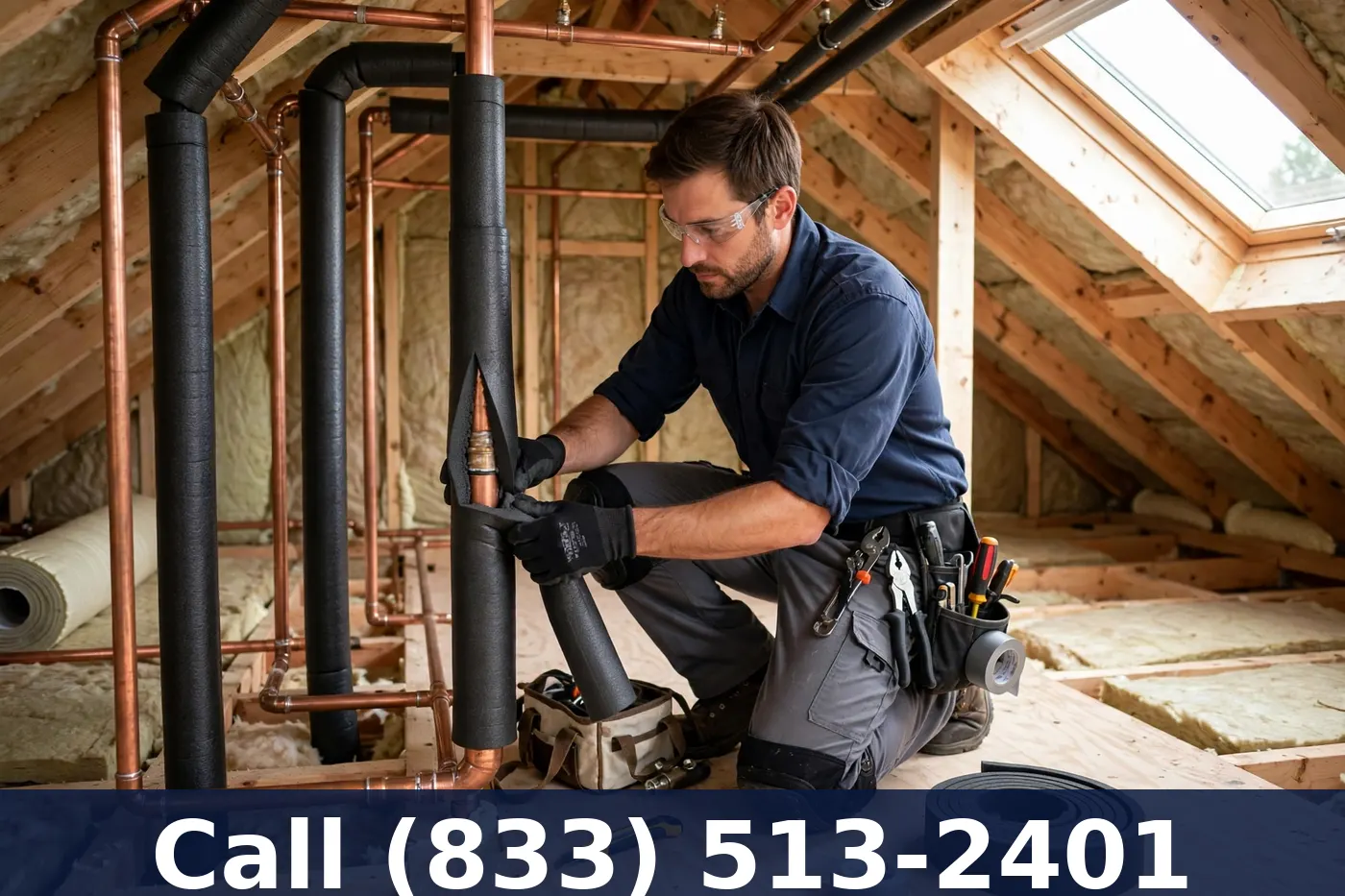
Water expands when it freezes, and a rigid pipe full of water can't expand with it — so the pipe splits, often in the middle of the night, and you discover it when the ice thaws and water starts pouring. Frozen pipe prevention is the work done beforehand to keep that from happening: finding the runs most likely to freeze, insulating them, adding heat tape where insulation alone isn't enough, winterizing every outdoor faucet, and sealing the drafts that deliver freezing air straight to your pipes. It's planned work on your schedule, which beats emergency work on winter's schedule every time.
Where pipes freeze first
Cold doesn't reach every pipe equally. The vulnerable ones are almost always in the same places:
- Crawl spaces — long supply runs with cold air moving freely underneath
- Attics — lines feeding upstairs baths, exposed to the coldest air in the house
- Garages — especially along exterior walls and near the garage door
- Exterior walls — kitchen and bath lines tucked against cold siding
- Hose bibs — outdoor faucets and the short pipe feeding them from inside
- Near drafts — any pipe close to a gap where wind pushes cold air in
When you call (833) 513-2401, we walk all of these areas — not just the obvious ones — because the pipe that bursts is usually the one nobody looked at.
What we do on a prevention visit
The visit starts with the survey: tracing supply lines through every unheated space and noting which runs are bare, which sit near drafts, and which feed outdoor faucets. Then the protection goes on. Exposed lines get fitted foam insulation with sealed seams. The highest-risk runs get heat tape installed to the manufacturer's instructions, adding active warmth where passive insulation isn't enough. Every hose bib gets winterized — hoses disconnected and drained, the indoor shutoff closed where one exists, the line drained, and an insulated cover fitted outside. We seal the gaps and cracks letting cold air reach the plumbing, then finish by locating your main shutoff with you and making sure it actually turns.
What you can do during a cold snap
Our visit sets you up, but a few habits during the coldest nights add real protection. Let faucets on exterior-wall lines run at a thin trickle — moving water is harder to freeze, and the drip keeps fresh water moving through the vulnerable run. Open the cabinet doors under sinks on outside walls so warm room air reaches the pipes. Keep the thermostat steady rather than dropping it overnight; the savings aren't worth a burst pipe. And know where your main shutoff is before you need it — if a pipe does let go, shutting off the water in the first minute is what separates a repair from a flood.
What affects the cost
The scope of the visit sets the figure. A home with a few exposed runs in an accessible garage is a smaller job than a house with a full crawl space of bare pipe, multiple hose bibs, and drafty penetrations to seal. Heat tape adds material and careful installation time on the runs that need it. The number of outdoor faucets to winterize counts too, as does whether your main shutoff works or needs replacing before it can be trusted. For an exact number on your home, call (833) 513-2401 — we'll quote the visit after hearing what we're working with.
How we serve your area
Plumbing Services Pros winterizes plumbing for homeowners, landlords, and property managers across the Stockton area — single-family homes with exposed crawl space runs, rentals where the owner wants the pipes protected between tenants, and small businesses with hose bibs and utility lines facing the weather. Cold snaps here are short but they still burst pipes, usually the ones nobody insulated. Call (833) 513-2401 before the forecast turns, and we'll make sure yours aren't among them.
Features
- Survey of every pipe run in unheated and exterior-wall areas
- Foam insulation fitted on exposed supply lines
- Heat tape installed on the runs most at risk
- Hose bibs winterized: hoses disconnected, lines drained
- Insulated covers fitted on outdoor faucets
- Drafts sealed where cold air reaches plumbing
- Main shutoff located and tested so it works when needed
Benefits
- Burst pipes prevented instead of repaired after the fact
- No middle-of-the-night flooding from a split line
- Outdoor faucets protected without guesswork
- You know exactly where and how to shut off your water
- Insulation keeps working every winter after one visit
- Cold snaps become a non-event for your plumbing
Frequently asked questions
At what temperature do pipes freeze?
Water freezes at 32°F, but there's no single outdoor temperature that freezes every pipe. Location matters most — a bare pipe in a drafty crawl space can freeze while the rest of the house is fine. Duration of cold, wind exposure, and insulation all affect the risk.
Does letting faucets drip really prevent freezing?
It helps during severe cold. A thin trickle keeps water moving through the vulnerable run, and moving water is harder to freeze. It's a supplement to insulation and winterizing, not a replacement — and it's worth doing on faucets fed by exterior-wall or unheated-space lines.
What's the difference between pipe insulation and heat tape?
Insulation slows heat loss passively — it buys the pipe time. Heat tape adds active warmth along the pipe for the runs most at risk. We often use both: insulation everywhere exposed, heat tape where freezing is most likely.
Should I shut off my outdoor faucets for winter?
Yes. Disconnect and drain the hoses, close the indoor shutoff valve for each hose bib if you have one, open the outdoor faucet to drain the line, and fit an insulated cover. A hose left attached can trap water that freezes back into the pipe inside your wall.
What should I do if a pipe freezes despite prevention?
Open the faucet the frozen line feeds, then apply gentle heat — a hair dryer or warm towels — working from the faucet back toward the blockage. Never use an open flame. If you can't find the frozen section or the pipe has split, shut off the main and call (833) 513-2401.
What affects the cost of a frozen pipe prevention visit?
How much pipe is exposed, how accessible it is, whether heat tape is needed, how many hose bibs must be winterized, and whether the main shutoff works. Call (833) 513-2401 for an exact quote on your home.