
Frozen Pipe Thawing Near Me
Starting price: Call for pricing
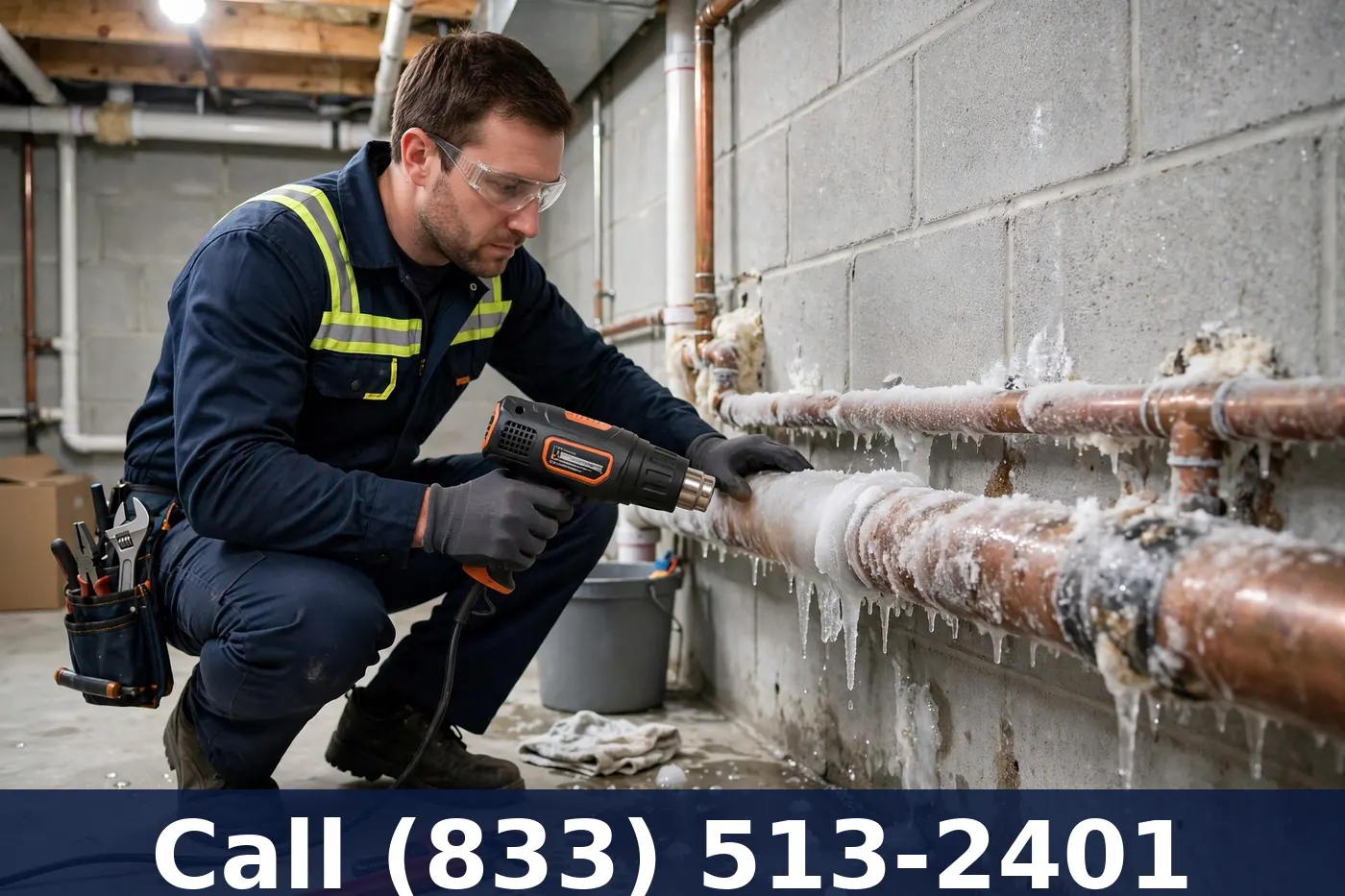
Frozen pipe thawing from Plumbing Services Pros is for when the cold has already won — a faucet that gives nothing but a trickle, or no water at all, on a freezing morning. We locate the frozen section, thaw it with controlled heat, and check the line for cracks before restoring full flow. Call (833) 513-2401 if your water has stopped in a cold snap; the sooner a frozen pipe is thawed, the less chance it splits.
How to tell a pipe is frozen
A frozen pipe announces itself through the faucet. You turn on the tap and get nothing, or just a thin trickle, while other fixtures in the house work normally — that contrast is the giveaway, because it means the blockage is in the line feeding that one fixture. On exposed pipes you might see frost on the outside or feel a section that's ice-cold to the touch. Sometimes there are sounds first: gurgling, banging, or hissing as water tries to push past the ice. If the cold snap just ended and a faucet that worked yesterday gives nothing today, treat it as frozen and act — ice expands, and an expanding blockage is what splits pipes.
What to do right now
Before anything else, open the faucet connected to the frozen line. This gives melting water somewhere to go and relieves the pressure building behind the ice — pressure is what bursts pipes, as much as the ice itself. If you can reach the frozen section safely, apply gentle heat: a hair dryer on a low setting, a heating pad, or towels soaked in warm water, kept moving so no one spot overheats. Always work from the faucet back toward the blockage, so thawed water can flow out instead of getting trapped. Never use an open flame, a torch, or boiling water — extreme heat can crack the pipe or start a fire. And know where your main shutoff is: if the pipe has already split, you'll see water as the ice melts, and shutting off the supply fast is what limits the damage.
How a professional thawing visit works
When you call (833) 513-2401, we ask which fixtures lost water, where the cold hits hardest in your home, and whether you can see the exposed runs — that usually tells us where to start looking. On site, we trace the dead line back from the faucet to find the frozen section, which is often in a crawl space, attic, garage, or exterior wall cavity you can't easily reach. We thaw it with controlled heat applied gradually, keeping the faucet open the whole time so pressure escapes as the ice lets go. The key difference from DIY: we know how much heat a pipe can take, and we can reach the sections buried in walls and crawl spaces where a hair dryer can't go.
After the thaw: checking for cracks
Thawing is only half the job. Ice expands with tremendous force, and a pipe can split without showing it until full pressure returns. So once the line is flowing, we inspect the thawed section and its fittings for cracks, weeps, and damp spots — slowly bringing the line to full pressure and watching every joint. If we find a split, we repair it on the spot: cut out the damaged section and replace it with matching pipe, then pressure-test before we leave. If the line is sound, we talk through why that particular run froze — missing insulation, a draft, an exterior wall — and what would keep it from happening again.
What affects the cost
The biggest factor is access. A frozen section of exposed pipe in an open garage thaws quickly; one buried in a wall cavity or a tight crawl space takes longer to reach and work on. The length of the frozen section matters too — a short blockage near the faucet is simpler than a long run frozen solid. If the thaw reveals a split pipe, the repair becomes part of the visit, priced on the damaged section and the pipe material involved. And if the same run has frozen before, we may recommend insulation or rerouting to end the cycle, quoted separately. For an exact figure, call (833) 513-2401 and describe which fixtures lost water.
How we serve your area
Plumbing Services Pros thaws frozen pipes for homeowners, landlords, and small businesses across the Stockton area — kitchen lines on exterior walls that quit during a cold snap, bathroom runs through unheated crawl spaces, hose bib lines that froze back into the wall. If your water has stopped and the temperature explains why, call (833) 513-2401. We'll find the frozen section, thaw it safely, and make sure it didn't split on the way.
Features
- Frozen section located by tracing which fixtures lost water
- Controlled, flameless heat applied to thaw the blockage
- Thawing worked from the faucet back so pressure can escape
- Faucet left open during thawing to relieve pressure
- Line inspected for cracks and splits once water flows
- Burst sections repaired on the spot when found
- Prevention advice for the run that froze
Benefits
- Running water restored without risking a burst
- No open flames or dangerous DIY thawing near your pipes
- Cracks caught immediately instead of discovered as a flood
- The exact frozen spot found, even when it's hidden
- One visit handles thawing and any repair it uncovers
- You learn how to keep that particular run from freezing again
Frequently asked questions
How do I know if my pipe is frozen or if something else is wrong?
The classic sign is one faucet giving nothing or a trickle while the rest of the house flows normally — that points to ice in that fixture's line. Frost on an exposed pipe, or gurgling when you open the tap, confirms it. If every fixture lost water at once, the problem may be at the main or the meter instead.
Can I thaw a frozen pipe myself?
If the frozen section is exposed and reachable, yes — open the faucet, then apply gentle heat with a hair dryer or warm towels, working from the faucet back toward the blockage. Never use an open flame. If you can't find the frozen section, can't reach it, or the pipe won't thaw, call (833) 513-2401.
Should I shut off my water if a pipe is frozen?
Not necessarily at first — but know where the main shutoff is. If the pipe has split, water will start flowing as the ice melts, and shutting off the supply immediately is what limits flooding. We keep the affected faucet open during thawing so pressure can escape.
Will my pipe burst if it's frozen?
It can. Ice expands and builds pressure, and that pressure — not just the ice — is what splits pipes. The risk is highest when the blockage is complete and pressure has nowhere to go. That's why thawing promptly, with the faucet open, matters so much.
How do you check for damage after thawing?
Keep the faucet open and watch the area around the thawed pipe as full pressure returns — a fresh drip, hissing sound, or damp spot means the ice split the pipe somewhere. If you see active leaking, shut off the main valve and call (833) 513-2401; a split needs the damaged section cut out and replaced.
What affects the cost of frozen pipe thawing?
Mainly how accessible the frozen section is, how long the blockage runs, and whether the thaw reveals a split that needs repair. Call (833) 513-2401 and tell us which fixtures lost water for an exact quote.