
Garbage Disposal Repair Near Me
Starting price: Call for pricing
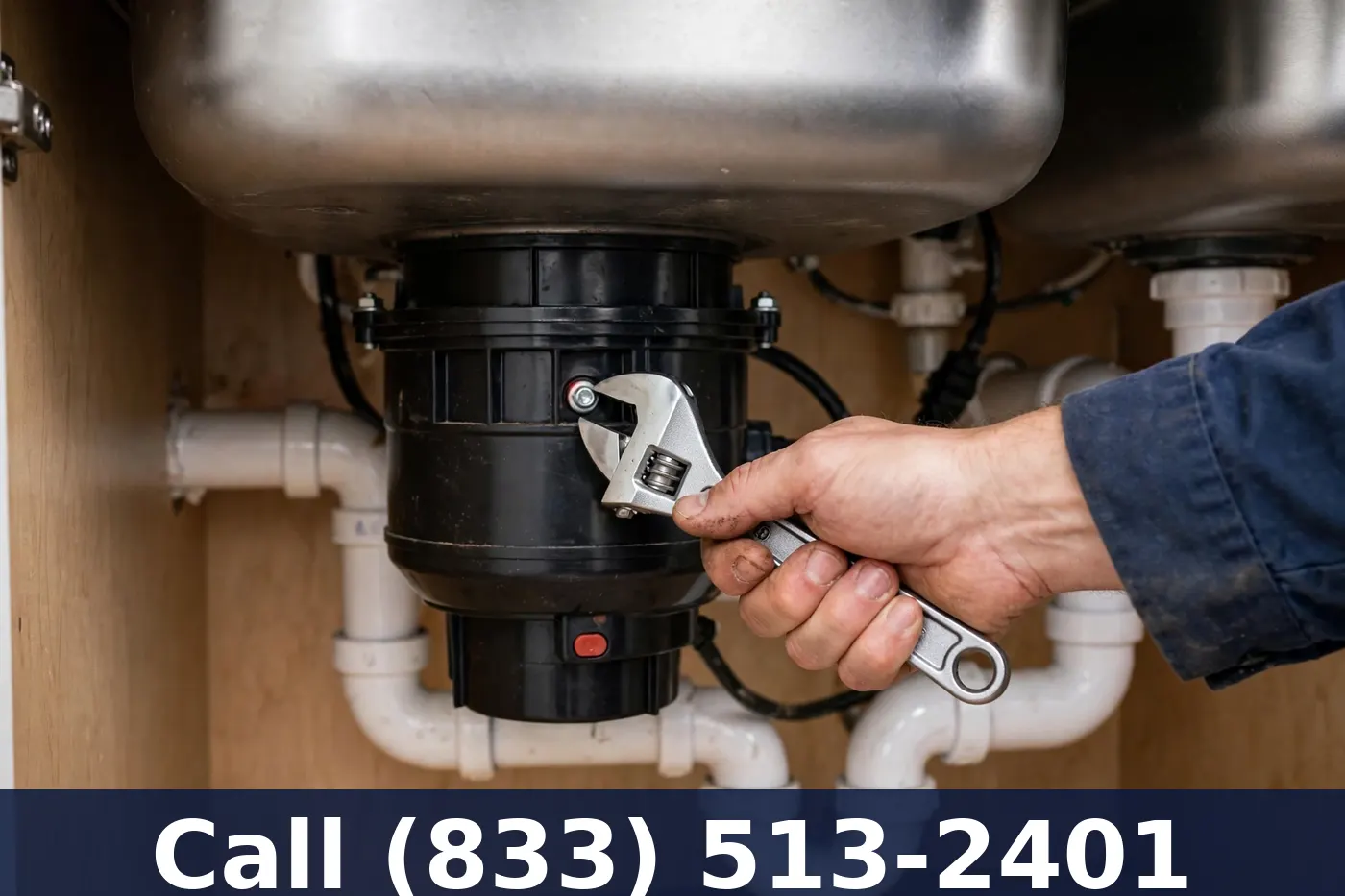
Garbage disposal repair from Plumbing Services Pros gets your kitchen's food-waste unit working again — whether it hums without spinning, trips its reset button, leaks under the sink, or has gone completely silent. A plumber diagnoses the real cause first, then fixes what is actually wrong. Many repairs finish in a single visit.
The Failures a Repair Visit Actually Fixes
Most garbage disposals fail in a handful of familiar ways, and a repair visit from Plumbing Services Pros is built around telling them apart. The classic call is the hum with no spin — the impeller is jammed on something hard, a fruit pit or a utensil that slipped past the splash guard. Then there is the completely dead unit, which traces back to a tripped reset button, a bad wall switch, a GFCI that tripped elsewhere on the circuit, or a burned-out motor. Leaks are the third category: water at the top flange means the mounting seal gave up, a drip at the side points to the discharge connection, and seepage from the body itself means the unit's internal seals are done.
What this service does not cover is the unit that has simply worn out. We say that plainly because a disposal with a cracked housing or a seized motor is not repairable, and spending money trying is a bad deal. Diagnosis comes first, and repair only happens when it makes sense.
When Repair Makes Sense — and When It Doesn't
A disposal that is otherwise solid and only a few seasons into its life is almost always worth fixing. A jammed impeller, a loose flange, a tired splash guard, a bad switch — these are contained problems with clean fixes, and the unit goes back to normal afterward. We clear the jam safely with power off, re-seat or re-gasket the leaking connection, and confirm the grind cycle runs the way it should.
Replacement enters the conversation when the motor is dead, the housing is cracked or rusted through, or the same unit has failed more than once. There is a practical line: when the repair would approach the cost of a new unit, we tell you that before touching a tool. That honest math is the whole point of a diagnosis-first visit — you get the right answer, not the most expensive one.
What Happens During the Visit
The first step is always diagnosis with the power off. We press and test the reset button, check the wall switch and outlet for power, and locate the jam or trace the leak to its actual source — the flange, the discharge gasket, the dishwasher inlet hose, or the body itself. Guessing at a leak's origin is how cabinets end up with water damage twice.
Then the fix, matched to what we found. Jammed impellers get loosened manually through the bottom of the unit — never with fingers inside, never while powered. Loose flanges get removed, cleaned, and re-seated with fresh plumber's putty. Worn splash guards and gaskets get replaced. If the drain line below the disposal is clogged with grease and food buildup, that gets cleared too, because a disposal that runs fine but backs up water into the sink has a plumbing problem, not a disposal problem.
We finish by restoring power, running cold water, and cycling the unit while you listen. A steady low grind with no drips under the cabinet is the sign we are done. Then we walk you through what caused the failure and how to keep it from repeating — like running cold water while the unit is on and keeping fibrous scraps and grease out of it.
What Affects the Cost
The single biggest factor is what actually failed. A jam or a tripped reset is a short visit; a re-seated flange or a replaced splash guard takes more hands-on time. Electrical faults — a bad switch, a dead outlet, a motor that won't turn — add diagnosis time because we have to trace power step by step before knowing whether the fix is small or the unit is done.
The unit's age matters as well. An older disposal with corroded hardware can turn a simple seal job into a longer one when screws and mounts fight back. Access counts too — a packed cabinet with a deep sink makes everything slower than an open, standard one. And if the failure turns out to be downstream, like a clogged trap or drain arm, clearing that is part of the scope.
We diagnose before we quote, so what you hear is based on your unit, not a generic menu. If you are weighing repair against a new unit, call (833) 513-2401 and describe the symptoms — the hum, the leak, the silence — and we will talk through the likely call before we ever roll a truck.
Who Calls Us for Disposal Repair
Most of our disposal repair calls come from homeowners in the Stockton area who cook daily and need the sink back in service — the unit died on a weeknight and the dishes are piling up. Property managers call too, because a jammed or leaking disposal is one of the most common maintenance tickets between tenants, and a quick diagnosis keeps a small problem from becoming cabinet damage.
We also see rental homes and busy households where the disposal gets harder use than average: more fibrous scraps, more grease, more everything. Those units fail in predictable ways, and we know what to look at first. Wherever the call comes from, the visit works the same way — find the real cause, fix what makes sense, and tell you straight if the unit has reached the end.
Features
- Jam clearing and impeller inspection, power off and safe
- Reset button, switch, and outlet electrical diagnosis
- Sink flange re-seating with a fresh watertight seal
- Discharge and dishwasher connection leak repairs
- Splash guard and flange replacement for odor and noise issues
- Grind-cycle test and drain-flow check before we leave
Benefits
- A disposal that starts, grinds, and drains the way it should
- Small jams fixed before they burn out the motor
- Leaks stopped before they damage the cabinet
- No more mystery odors drifting from the sink
- An honest repair-or-replace call, not a sales pitch
Frequently asked questions
My disposal hums but won't spin. What does that mean?
Humming with no spinning means the grinding plate is jammed — something is wedged between the impellers and the shredder ring. Turn it off right away; running a jammed unit can overheat the motor. A plumber from Plumbing Services Pros clears the jam, checks the reset, and tests the grind.
Why does my disposal keep tripping its reset button?
That small red button on the bottom of the unit is a thermal overload protector. Pressing it occasionally is normal, but needing it often means the motor is straining — from dull impellers, a partial jam, or age. We track down the cause so you stop playing reset roulette.
Can you repair a disposal that leaks under the sink?
It depends where the water is coming from. A leak at the top flange usually means a failed putty seal that we can re-seat. A drip at the discharge pipe needs a new gasket. Water seeping from the unit's body, though, means internal seals have failed and the unit is finished.
How do I get rid of a bad smell coming from the disposal?
Often yes. Foul smells usually come from food trapped in the splash guard or the grinding chamber that the unit can't reach. A thorough cleaning of those spots usually ends it. If the odor survives a real cleaning, the unit may be holding debris internally — a sign it is wearing out.
How much does garbage disposal repair cost?
Cost depends on what failed and whether the unit is worth saving. Simple jams and seal fixes are on the lighter end; a dead motor usually points to replacement instead of an expensive repair. The real factors are the unit's age, the failed part, and how hard it has been used — call (833) 513-2401 and we will tell you which side of the line yours falls on.