Gas Appliance Hookup Near Me
Starting price: Call for pricing
Gas appliance hookup from Plumbing Services Pros connects your new gas range, dryer, water heater, fireplace, or outdoor grill to your home's gas supply the right way. We size the line to the appliance, fit a shutoff valve, and leak-test every joint. You get an appliance that fires up safely and runs the way the manufacturer intended.
What a Gas Appliance Hookup Covers
A gas appliance hookup is the work of getting fuel from your home's gas piping to an appliance that is waiting for it — the final stretch that makes a new range, dryer, fireplace, or grill actually work. Plumbing Services Pros plans the route from the nearest point in your existing gas system, sizes the pipe so the appliance gets the volume of gas it needs, installs an accessible shutoff valve in the same room as the appliance, and makes the connection with listed fittings and a sediment trap that catches pipe debris before it reaches the burner.
The hookup does not include the appliance itself or the gas meter work that belongs to your utility. If your home has never had gas and needs a meter set or a main service line, that is utility territory — we handle everything on your side of the meter. When the scope is unclear, we say so during the first conversation and map out who does what.
The Appliances We Connect Most Often
- Gas ranges, cooktops, and wall ovens in kitchen remodels
- Gas clothes dryers, including laundry-room conversions from electric
- Tank and tankless gas water heaters
- Gas fireplaces, inserts, and log sets
- Outdoor gas grills, patio heaters, and fire pits
- Pool and spa heaters
Each of these has its own fuel demand and its own connection quirks. A gas range in a kitchen island needs the line routed under the floor; a dryer conversion needs the line brought to the laundry room; a fireplace needs the connection tucked where the insert hides it. The planning is what makes the finished job look effortless.
Why a Gas Hookup Belongs to a Plumber, Not a Weekend Project
Gas piping is plumbing with consequences. A water fitting that seeps makes a stain; a gas fitting that seeps fills a cabinet, a wall cavity, or a crawl space with fuel. The margin for error is small, and the work rewards people who do it every day: proper pipe sizing so the appliance is never starved, thread sealant rated for gas, fittings torqued to spec, and every joint leak-tested before the appliance ever fires.
Code plays a role too. Gas work in California follows the plumbing code's fuel-gas chapter — permits where the jurisdiction requires them, shutoff valves within reach of the appliance, sediment traps at the connection. A plumber who knows the local requirements gets the job signed off without a second visit. DIY gas work, by contrast, is how slow leaks and failed inspections happen. The hookup is the wrong place to save money.
From First Call to First Flame
It starts with the details: which appliance, where it sits, what fuel your home uses, and how far it is from the existing gas piping. If you are mid-remodel, we talk to your timeline so the gas work lands before the finishes go in — opening a finished wall costs more than routing pipe while it is open.
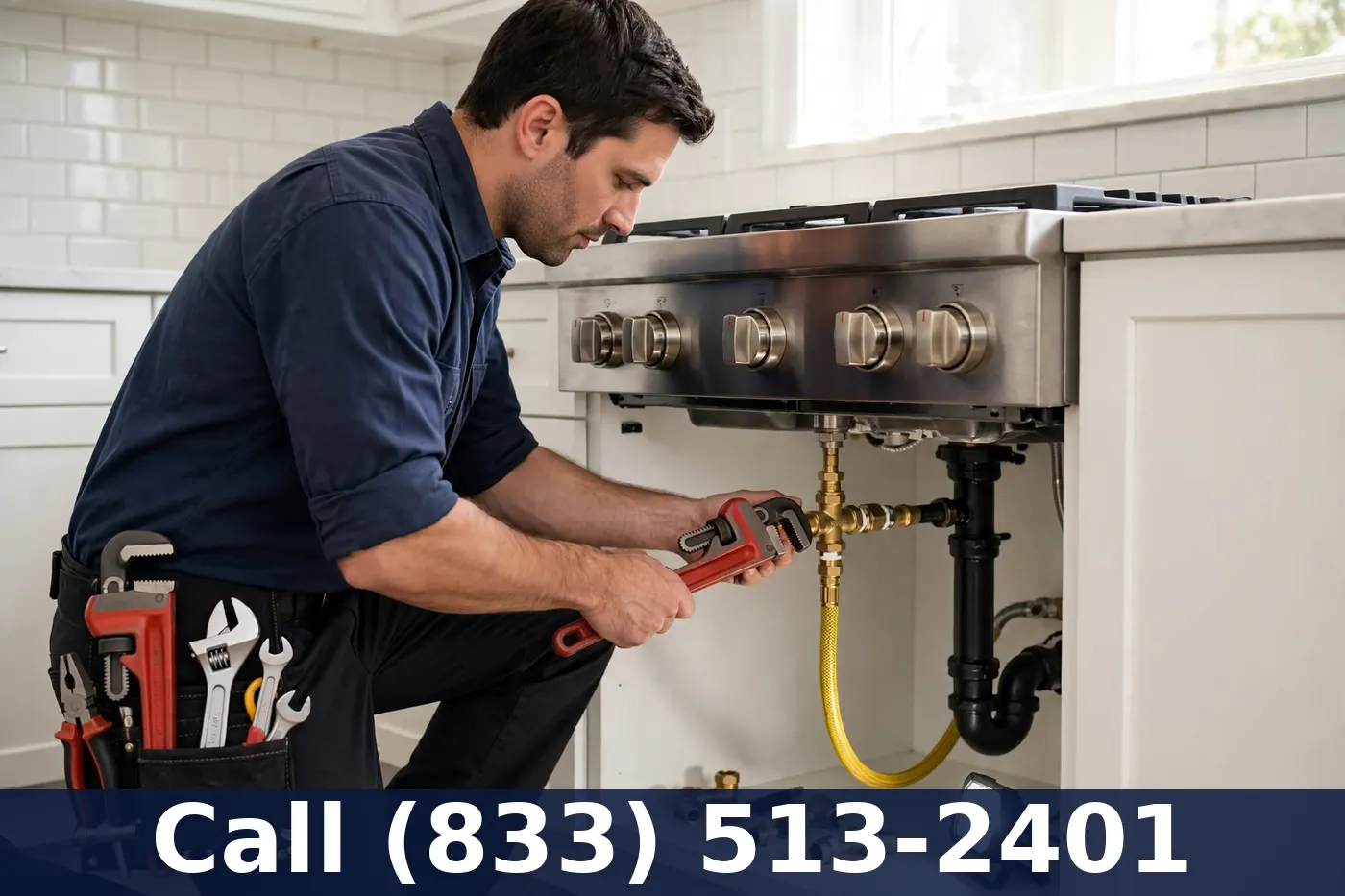
On the job, we shut off the gas supply, run or extend the line to the appliance location, and fit the shutoff valve and sediment trap. The appliance gets connected with a listed flexible connector or hard pipe, depending on the appliance and the local code. Then comes the part that matters most: pressurize and leak-test. We check every new joint with a gauge or a bubble test, watch for any pressure drop, and only then turn the gas back on.
Finally, the appliance fires. We watch the burner flame — steady, blue, and even — and confirm the igniter and controls work the way the manufacturer describes. You get a walkthrough of the shutoff valve's location, because the one day you need it, you should not have to hunt for it.
What Affects the Cost
Distance is the biggest factor. An appliance sitting a few feet from an existing gas stub is a short job; one across the house, in an island, or out by the pool means running new pipe through walls, floors, or a trench — and every foot of routing adds labor and material. The appliance's fuel demand matters too: a high-BTU range or tankless heater may need a larger pipe or even a dedicated run from the meter, which changes the scope.
Access is the next variable. Open framing during a remodel is the easiest scenario; finished walls, slab floors, and tight crawl spaces slow the work down. If the existing piping needs upsizing to carry the new load, that becomes part of the job rather than a simple tee-off. And permits and inspections, where your jurisdiction requires them, fold into the schedule.
Every hookup is different enough that a flat number would be dishonest. Call (833) 513-2401 with the appliance type and its location in the house, and we will give you a real answer.
Features
- Gas line sizing matched to the appliance's fuel demand
- Accessible shutoff valve fitted ahead of the appliance
- Flexible connector or hard-pipe connection, per code and setup
- Sediment trap at the appliance to catch pipe debris
- Soap-bubble and pressure leak testing on every joint
- Burner check to confirm proper flame and ignition
Benefits
- Your new appliance runs on a properly sized, leak-checked supply
- No DIY gas work risking a slow leak behind the wall
- A shutoff valve you can reach if you ever need it
- Combustion that stays safe and efficient, not starved or sooty
- One visit that leaves every connection tested and tight
Frequently asked questions
Can I hook up a gas appliance myself?
Gas connections are not a DIY job. A slow leak at a fitting you threaded yourself can fill a cabinet or wall with gas over weeks. A plumber from Plumbing Services Pros sizes the line, uses the right fittings, and pressure-checks the work so the connection is safe from day one.
Does my gas line need to be bigger for the new appliance?
Often the existing line works if it can carry the new appliance's demand, but not always. A high-BTU range or a tankless water heater may need a larger run or a dedicated line back to the meter. We calculate the load and tell you whether your current piping can handle it.
What's the difference between a natural gas and a propane hookup?
Natural gas comes from the utility line; propane comes from a tank on your property. The connection methods are similar, but pipe sizing and regulator setup differ between the two. Tell us which fuel your home uses when you call (833) 513-2401 and we will plan accordingly.
How long does a gas appliance hookup take?
Most hookups finish in a single visit. The time depends on how far the appliance sits from the gas supply, whether a new line must be run, and whether the wall or floor needs to be opened to reach the piping.
How much does a gas appliance hookup cost?
Cost depends on the distance from the supply line, whether new piping must be run or an existing line extended, and what the appliance itself demands. A short hookup to an existing nearby stub is the simpler end; running a new dedicated line across the house is more involved. Call (833) 513-2401 for a quote on your setup.
Which appliances can you hook up to gas?
Yes — ranges, cooktops, ovens, clothes dryers, water heaters, gas fireplaces and inserts, outdoor grills and patio heaters, and pool or spa heaters. If it burns gas and sits in or around your home, we can connect it.