
Gas Leak Detection Near Me
Starting price: Call for pricing
Gas leak detection from Plumbing Services Pros finds where gas is escaping from your home's lines, fittings, or appliances — using electronic detectors, pressure testing, and old-fashioned soap-bubble checks rather than guesswork. We pinpoint the source, assess how serious it is, and tell you what to do next. If you smell gas right now, leave the house and call your gas utility's emergency line first.
What Gas Leak Detection Is — and What It Isn't
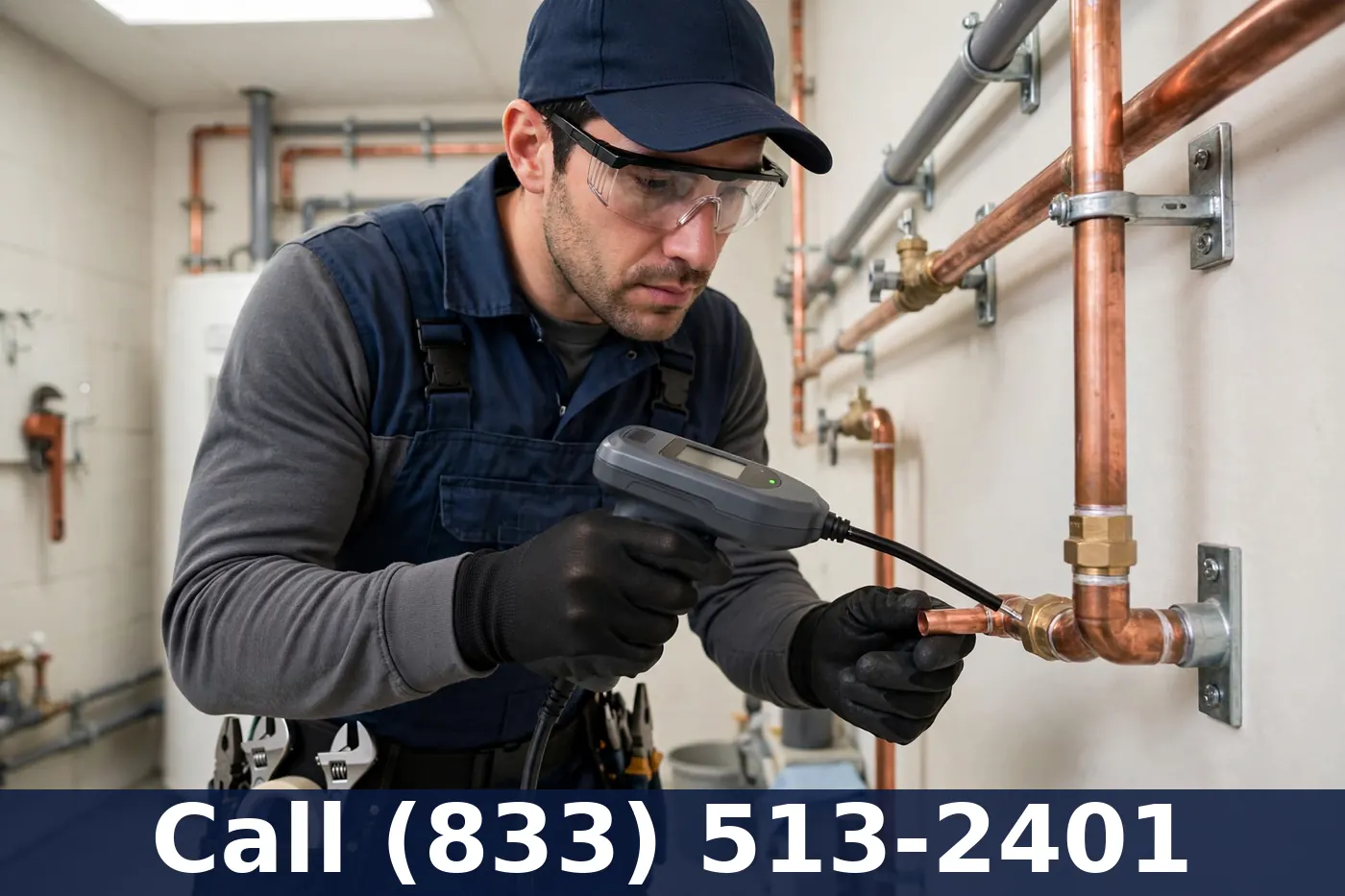
Gas leak detection is a diagnostic service: the systematic hunt for where gas is escaping from your piping, fittings, valves, or appliance connections. Plumbing Services Pros combines three methods. Electronic detectors sweep the air around lines and joints and react to trace amounts of gas far below what a nose catches. Soap-bubble solution applied to a suspect fitting reveals the exact spot — bubbles form precisely where gas pushes through. And pressure testing isolates a section of piping, pressurizes it, and watches the gauge: a steady reading means the section holds; a drop means gas is getting out somewhere.
What detection is not is a guess, a sniff-and-shrug, or a repair by itself. The visit ends with a located source and a clear severity assessment, and then you decide on the repair — which we can also handle. And one critical boundary: if you smell gas right now, this page is not your first step. Leave the house, don't touch switches or phones near the smell, and call your gas utility's emergency line or 911 from outside. Detection comes after the immediate danger is managed.
Warning Signs Worth Taking Seriously
- A rotten-egg or sulfur smell anywhere in or around the house
- A hissing or whistling sound near a gas line, meter, or appliance
- A pilot light or burner that keeps going out for no clear reason
- Dead or discolored vegetation in a line along the yard's pipe route
- A gas bill that climbs without any change in how you use gas
- Headaches, dizziness, or nausea indoors that ease when you leave
- Corrosion or white powdery buildup visible on exposed gas fittings
Any one of these is worth a call. Gas leaks do not heal themselves, and small ones can grow. The faint smell you notice on Tuesday can be the leak that matters by Friday.
If You Suspect a Leak Right Now
First, the safety sequence — this matters more than anything else on this page. Leave the house with everyone in it. Do not turn lights or appliances on or off, do not use a phone inside, and do not light anything. If you can reach the main gas shutoff safely on your way out without passing through the leak area, close it; if not, leave it. From a safe distance, call your gas utility's emergency line or 911.
Do not come back inside until emergency responders or your gas provider say it is safe. Only after the immediate situation is under control does professional detection come into play — locating the source, documenting it, and planning the repair. Plumbing Services Pros handles that second phase: finding exactly where the gas escaped and making the piping right again.
How We Pinpoint the Leak
We start by listening to you. Where did you smell it, when, how strong, what changed recently — a remodel, a new appliance, landscaping work? That history narrows the search before we touch a tool. Then the electronic sweep: a combustible-gas detector moves slowly along every exposed joint, fitting, valve, and appliance connection, and its readings tell us which areas deserve a closer look.
Promising spots get the soap-bubble treatment. Applied to a fitting, the solution sits still on sound joints and blows bubbles exactly where gas is pushing through — down to the specific thread or crack. For smells with no obvious source, we move to pressure testing: isolate a section of piping, charge it with air, and watch the gauge over a set period. A holding gauge clears the section; a falling one proves a leak is in there and tells us to divide the section further.
What you get at the end is a finding, not a mystery: where the gas is escaping, how significant the leak is, and what the repair involves. No tearing open every wall on a hunch — the testing tells us where to look before anything gets opened.
What Affects the Cost
Scope is the main driver. Checking a few connections around one suspect appliance is a contained visit; tracing an intermittent, faint smell through an entire house's piping takes methodical section-by-section testing and more time. The size and layout of your gas system matters — a small home with a short run of piping is quicker to cover than a larger property with long runs, multiple appliances, and buried yard piping.
Access plays a role too. Exposed piping in a garage or crawl space is fast to test; lines hidden behind finished walls or buried underground slow the work because each section has to be reached or isolated. If the visit finds multiple problem areas, documenting and explaining them all takes longer than a single-source finding.
Detection is diagnosis, and its value is certainty — knowing exactly what you are dealing with instead of wondering. To scope your visit, call (833) 513-2401 and describe what you are noticing: the smell, the timing, where in the house. We will tell you what the visit involves.
Features
- Walkthrough interview about the smell, sounds, and timing you noticed
- Electronic combustible-gas detector sweep of lines and fittings
- Soap-bubble testing to pinpoint the exact joint or fitting
- Pressure testing of piping sections to confirm a hidden leak
- Appliance connection and shutoff valve inspection
- Clear written finding of location, severity, and recommended next step
Benefits
- The leak's exact location found instead of guessed at
- A clear picture of how serious the situation is
- Dangerous conditions identified before they escalate
- A documented finding you can act on with confidence
- Direction on the right next step — repair, monitor, or nothing
Frequently asked questions
What should I do if I smell gas right now?
Leave the area first. Do not flip light switches, use phones, or create sparks near the smell. Once you are well away from the house, call your gas utility's emergency line or 911. Once the immediate danger is handled, Plumbing Services Pros can pinpoint the source and make the repair.
Why does leaking gas smell like rotten eggs?
Gas companies add an odorant called mercaptan that smells like rotten eggs, because natural gas itself is odorless. If you smell it, treat it as real until proven otherwise — never assume it is just the stove.
Can you find a leak I can barely smell?
Yes. Small leaks can be slow enough that you only notice a faint, occasional smell, or find it when a detector goes off. We use sensitive electronic detectors that catch traces far below what a nose can pick up, so nothing gets dismissed.
How long does a gas leak detection visit take?
The time depends on the size of the system and how many places need checking. A targeted check of a few appliances and fittings is relatively quick; tracing a faint smell through a whole house takes longer because we test each section of piping in turn.
Can gas leaks happen underground in my yard?
Yes. Underground service lines and yard piping can corrode or shift and leak where you cannot see them. We test those sections too, and signs like dying vegetation along the pipe's path are worth mentioning when you call (833) 513-2401.
What does gas leak detection cost?
Cost depends on how much of the system must be tested and how hard the source is to isolate. A focused check around a suspect appliance is simpler than tracing an intermittent smell through an entire home's piping. Reach out at (833) 513-2401 with the details of what you are noticing, and we will lay out what the visit covers.