
Gas Line Installation Near Me
Starting price: Call for pricing
Gas line installation from Plumbing Services Pros runs new gas piping where your home needs it — to a new appliance, an outdoor kitchen, a pool heater, or a whole addition. We size the pipe to the total demand, route it cleanly, and pressure-test every joint before the gas goes on. The result is a fuel system that is safe, code-compliant, and ready for whatever you connect to it.
What a Gas Line Installation Actually Is
A gas line installation is the design and placement of new fuel piping in your home — the run of pipe that carries gas from the meter or an existing branch to wherever you need it. Plumbing Services Pros handles the whole arc: calculating the pipe size your appliances demand, choosing the route, running black steel pipe or flexible corrugated stainless tubing through walls and crawl spaces or trenching it outdoors, fitting shutoff valves and sediment traps, and pressure-testing the finished run before any gas flows through it.
It is not just connecting an appliance to a nearby stub — that is a hookup. An installation is the piping system itself, new or extended, and it is the part of the job where planning matters most. Get the sizing or routing wrong here and every appliance downstream pays for it.
The Projects That Call for a New Gas Line
Kitchen remodels top the list: a new gas range or cooktop going in, sometimes in an island where no gas has ever run. Laundry conversions follow — swapping an electric dryer for gas means bringing a line to the laundry room. Then there are the outdoor projects: gas grills, fire pits, patio heaters, and outdoor kitchens that turn a backyard into a second living space. Pool and spa heaters are another common driver, since they are among the hungriest residential gas appliances.
Larger jobs include additions and ADUs that need their own branch, standby generators that demand a dedicated high-capacity line, and conversions where a homeowner is moving appliances from electric to gas. Whatever the project, the planning conversation is the same: what is being served, where does it sit, and what is the smartest route to get there.
Sizing, Materials, and Why Code Cares
Pipe sizing is a calculation, not a guess. Every appliance on the line has a fuel demand measured in BTUs, and the pipe must carry the total demand at full load with minimal pressure drop from the meter to the farthest appliance. Undersized pipe shows up as weak burners, appliances that will not run together, sooting, and — in the worst case — incomplete combustion. We run the sizing tables for your specific appliance list and run length before a single fitting is cut.
Materials follow the route. Indoors, standard-weight black steel pipe is the workhorse, threaded and assembled joint by joint; flexible corrugated stainless tubing earns its place where rigid pipe would mean tearing open finished walls. Buried exterior runs use coated steel or approved plastic pipe with proper cover depth and isolation fittings that keep underground metal electrically separated from the rest of the system. Every material choice follows the California Plumbing Code's fuel-gas chapter, which also governs where shutoff valves sit — accessible, in the same room as the appliance, ahead of the connection.
From Plan to First Flame
The visit starts with the plan: the appliance list, the meter location, the rooms the pipe must cross, and whether walls are open or finished. That determines the route and the materials. For buried outdoor runs, we mark the trench line and confirm depth and cover requirements before digging starts.
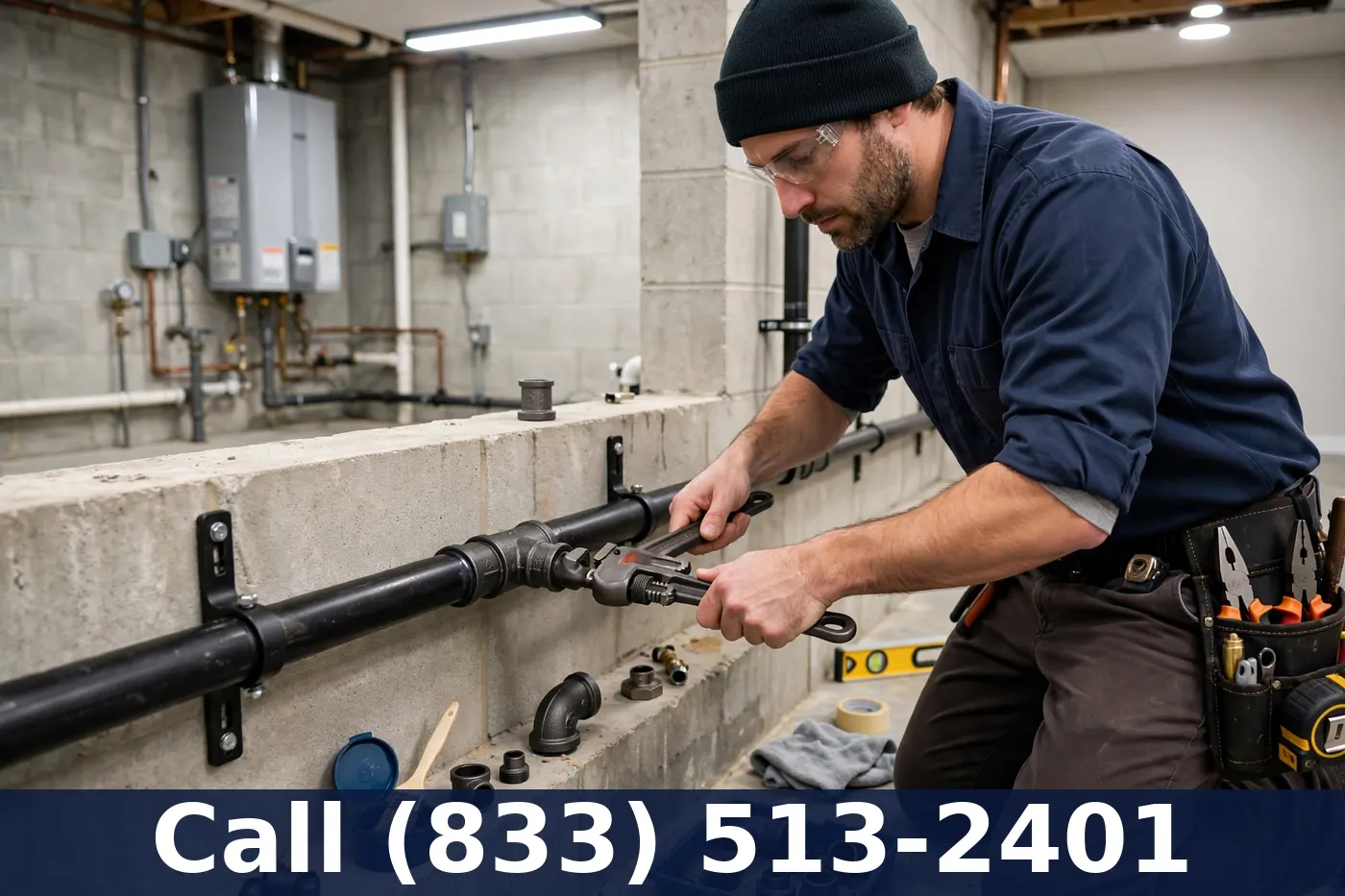
Installation itself is methodical. Pipe is cut, threaded, and assembled — or flexible tubing is routed and secured — with shutoff valves and sediment traps fitted at each appliance drop. Nothing gets covered or buried before testing: the new piping is pressurized and the gauge is watched over a hold period. A steady gauge means the system holds; any drop means we find the joint and fix it before moving on.
Once the test passes and the inspector signs off where a permit applies, the gas goes on and each appliance fires. We check burner operation at every connection and walk you through where the shutoffs are. The finished line should be forgettable in the best way — invisible, silent, and working.
What Affects the Cost
Route length and difficulty dominate. A short indoor extension to an appliance a few feet from existing piping is one kind of job; a long run across a slab home to a backyard pool heater is another entirely. Every foot of pipe, every wall penetration, and every trench foot adds labor and material.
Appliance demand shapes the scope too. A line serving a single cooktop is sized one way; a line feeding a range, a tankless heater, a fireplace, and a pool heater is a much larger calculation and a bigger pipe. Finished spaces cost more to work through than open framing — fishing pipe through closed walls takes real time. Permits and inspections, where required, add a scheduled step. And buried exterior work brings excavation, backfill, and restoration into the picture.
Because no two routes are alike, the honest answer is always specific to your house. Call (833) 513-2401, tell us what you are adding and where, and we will walk the plan with you.
Features
- BTU-based pipe sizing for the full appliance load
- Route planning that avoids finished spaces where possible
- Black steel or flexible stainless piping, per code and route
- Accessible shutoff valve at each appliance connection
- Sediment traps fitted at appliance drops
- Pressure test on the full run before gas is turned on
Benefits
- Every gas appliance gets the fuel volume it actually needs
- Piping routed and supported the way code expects
- Joints pressure-tested before the gas is ever turned on
- A system that is easy to inspect, service, and extend later
- One contractor handling the whole run from plan to flame
Frequently asked questions
Do I need a permit to install a gas line?
Most gas line work needs a plumbing permit, and inspections confirm the piping, sizing, and testing meet code. We handle the permit process and coordinate the inspection so you do not have to chase paperwork.
What kind of pipe is used for gas lines?
Indoors, gas piping is typically black steel pipe; flexible corrugated stainless tubing is also common where routing is tight. Buried exterior lines use coated steel or approved plastic pipe installed by qualified technicians. We choose materials to fit the run and the code.
Can you run a gas line to my backyard for a grill or fire pit?
Yes. Outdoor kitchens, grills, fire pits, patio heaters, and pool or spa heaters are some of the most common reasons homeowners add a gas line. Buried exterior piping gets proper depth, coating, and isolation fittings to survive underground conditions.
How do you know what size pipe my gas line needs?
Pipe size is calculated from the total BTU demand of every appliance the line will serve, the length of the run, and the pipe material. Undersized piping starves appliances — burners run weak, soot up, or fail to light. We run the sizing calculation for your specific setup.
What affects the cost of a gas line installation?
The length and difficulty of the route is the main factor: a short indoor run to a nearby appliance is far simpler than a long buried line to the backyard. Pipe sizing, the number of appliances served, permit requirements, and how much of the route crosses finished walls or slab all shape the job. Call (833) 513-2401 with your plans and we will scope it.
Can I install a gas line myself?
No. Gas piping is not a DIY project — the safety and code stakes are too high. Improper sizing, bad joints, or skipped testing can create leaks that develop slowly inside walls. This is work for a plumber who does gas piping regularly.