
Gas Line Repair Near Me
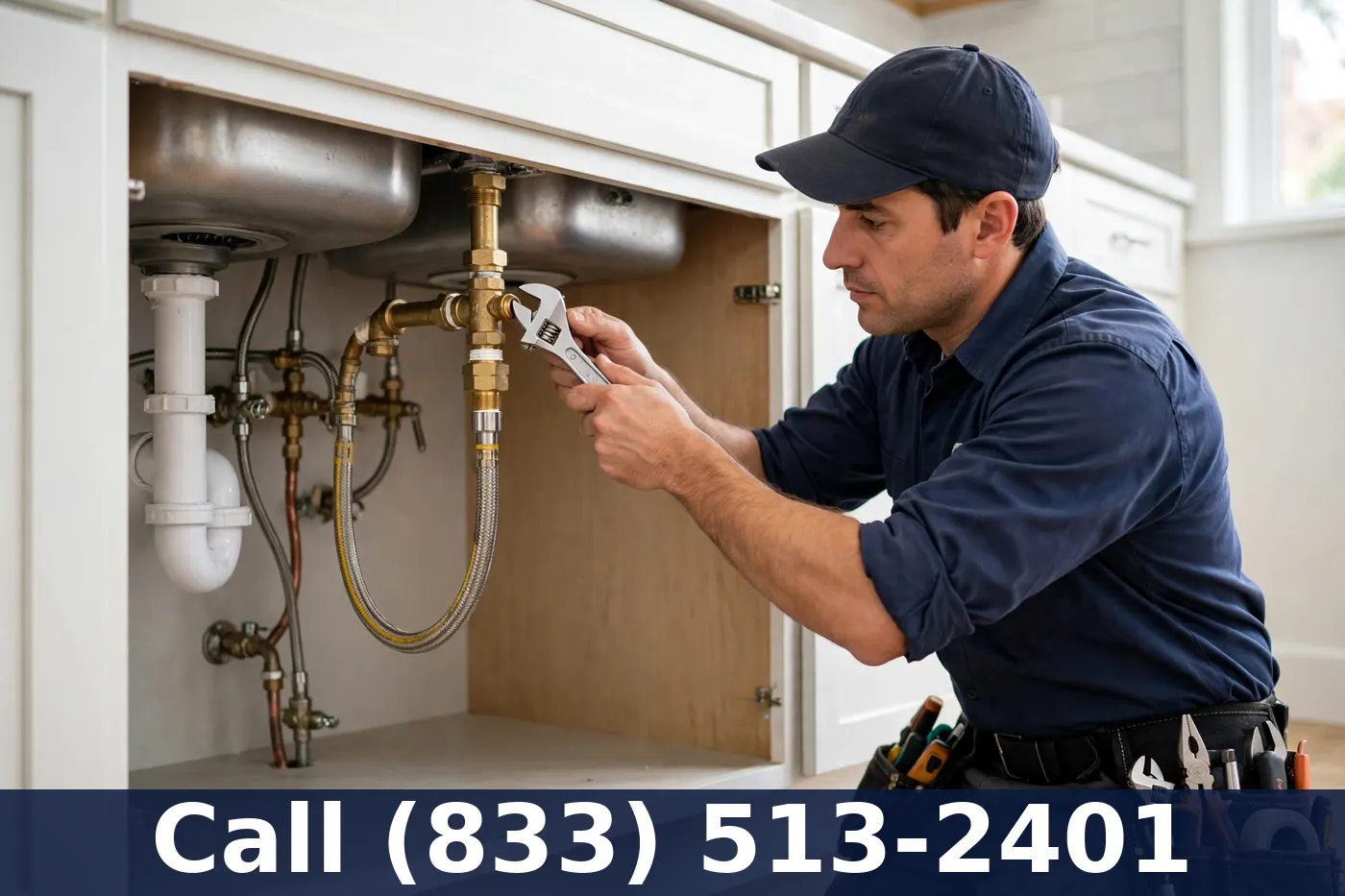
Starting price: Call for pricing
Gas line repair from Plumbing Services Pros fixes damaged, corroded, or leaking gas piping the right way — by finding the actual failure, cutting out what is compromised, and replacing it with properly sized, code-compliant pipe. Every repaired section is pressure-tested before the gas goes back on. If you smell gas now, leave the house and call your gas utility's emergency line first.
What Gas Line Repair Really Involves
Gas line repair is the correction of piping that is damaged, corroded, or leaking — and the operative word is correction, not cover-up. Plumbing Services Pros starts by locating the actual failure with detection tools and soap-bubble testing, because repairing the wrong section is the same as not repairing at all. The compromised pipe or fitting is then cut out or removed, and new properly sized pipe goes in its place, joined to spec and pressure-tested before the gas supply is restored.
This service does not include patching a damaged line with sealant or tape and calling it fixed. Gas piping fails for reasons — corrosion, age, physical damage — and a repair that does not address the damaged material is a repair that fails again. What we leave behind is sound pipe, tested joints, and a system that holds.
The Damage We Run Into
- Corroded fittings and pipe sections where moisture has eaten at the metal
- Loose or poorly sealed joints from older or amateur work
- Cracked pipe in aging systems where the metal has simply worn out
- Physical damage from remodel work — a nail, a screw, a saw that found the line
- Landscaping and digging strikes on buried exterior piping
- Ground shifting that stresses rigid buried lines until they crack
- Undersized piping that cannot carry the home's current appliance load
The pattern is familiar: most failures are not dramatic ruptures but slow-developing weaknesses. A fitting that weeps a little gas for months. A corroded section that finally gives. That is why a faint, recurring gas smell deserves a professional look even when nothing looks broken.
How the Repair Visit Works
Safety and diagnosis come first. If there is any sign of an active leak, the gas supply gets shut off before work begins. Then we pinpoint the failure — electronic detectors to find the area, soap-bubble solution to find the exact joint or crack. We also assess the surrounding piping, because a repair next to a corroded neighbor is a short-lived repair.
The damaged material comes out. Pipe sections are cut out and replaced with new pipe of the correct size and material; bad fittings are replaced and resealed to spec. Shutoff valves get checked for proper operation while we are in there — a valve that will not close is a liability in an emergency. Where the damage runs behind finished walls, we open only what the repair requires and keep the disruption contained.
Then the proof: each fixed section gets a pressure hold test before the supply is restored. The gauge has to hold. Only after the test passes do we restore the supply, fire the appliances served by that section, and confirm normal operation. You get an explanation of what failed, what we replaced, and what to watch for going forward.
Repair or Replace the Run?
Not every damaged line should be repaired in place. The decision comes down to what the rest of the piping looks like. A single compromised fitting on a line that is otherwise sound is a straightforward repair — fix it, test it, move on. But when we find corrosion spreading across multiple sections, joints failing in several places, or piping that was undersized from the start, patching one spot leaves the next failure waiting.
In those cases, replacing the run is the honest recommendation. It costs more up front than a single repair, but it ends the cycle of finding one bad section after another. We lay out both options when the situation calls for it — the repair, the replacement, and what each one buys you — so the decision is yours with full information.
What Affects the Cost
Extent and access, in that order. A single bad fitting on exposed piping in a garage is a compact job. A corroded section buried under a finished wall, or a damaged underground line that has to be dug up, is a bigger one — reaching the damage is often most of the work. The number of compromised sections matters too: one joint versus a run of failing pipe is a different scope entirely.
The condition of the surrounding system factors in as well. If the repair reveals that neighboring sections are in similar shape, addressing them while the wall is open is more efficient than coming back later. Permits and inspections, where your jurisdiction requires them for gas piping work, fold into the schedule.
Gas repairs are priced on what is actually wrong, not on a menu. Call (833) 513-2401, tell us what you are seeing or smelling and where, and we will give you a scoped, honest answer.
Features
- Source-of-leak pinpointing with detectors and soap-bubble testing
- Damaged pipe sections cut out and replaced, not bandaged
- Fittings tightened, resealed, or replaced to spec
- Pressure test on every repaired section before gas is restored
- Corrosion and damage assessment of the surrounding piping
- Clear explanation of what failed and what was fixed
Benefits
- The damaged section fixed, not patched over and hoped for
- Joints tested so the repair is proven before we leave
- Corrosion sources identified so the problem does not repeat
- A system you can run with confidence again
- Clear documentation of what was wrong and what was done
Frequently asked questions
What should I do if I suspect a gas leak right now?
Leave first. Do not touch light switches or phones near the smell, and do not try to find or fix the leak yourself. From a safe distance call your gas utility's emergency line or 911. Once the area is safe, Plumbing Services Pros can locate the damage and make the repair.
Can a damaged gas line be patched?
Usually, no. The right repair replaces the compromised section of pipe rather than bandaging it — a damaged gas line is not a patch-and-hope situation. If only a fitting is at fault, tightening and resealing it can be enough, but damaged pipe itself gets cut out and replaced.
How do I know if I need a repair or a whole new line?
Sometimes the repair is the whole story; sometimes the line is telling you the system is tired. A single damaged fitting on otherwise sound piping is a repair. Widespread corrosion, multiple failing joints, or piping that is undersized for today's appliances can make a larger replacement the smarter move — we will tell you which it is.
What causes gas lines to fail?
Rust and corrosion from moisture, age-related cracking, physical damage from remodel or landscaping work, loose or poorly sealed fittings from old work, and ground shifting under buried lines. We look at the actual damage and trace it to the cause so the fix addresses more than the symptom.
What affects the cost of a gas line repair?
The extent of the damage and how accessible it is. A single bad fitting on exposed piping is on the simpler end; corroded sections behind finished walls or buried underground take more work to reach and replace. Call (833) 513-2401, describe what you are seeing or smelling, and we will scope it.