
Gas Water Heater Installation Near Me
Starting price: Call for pricing
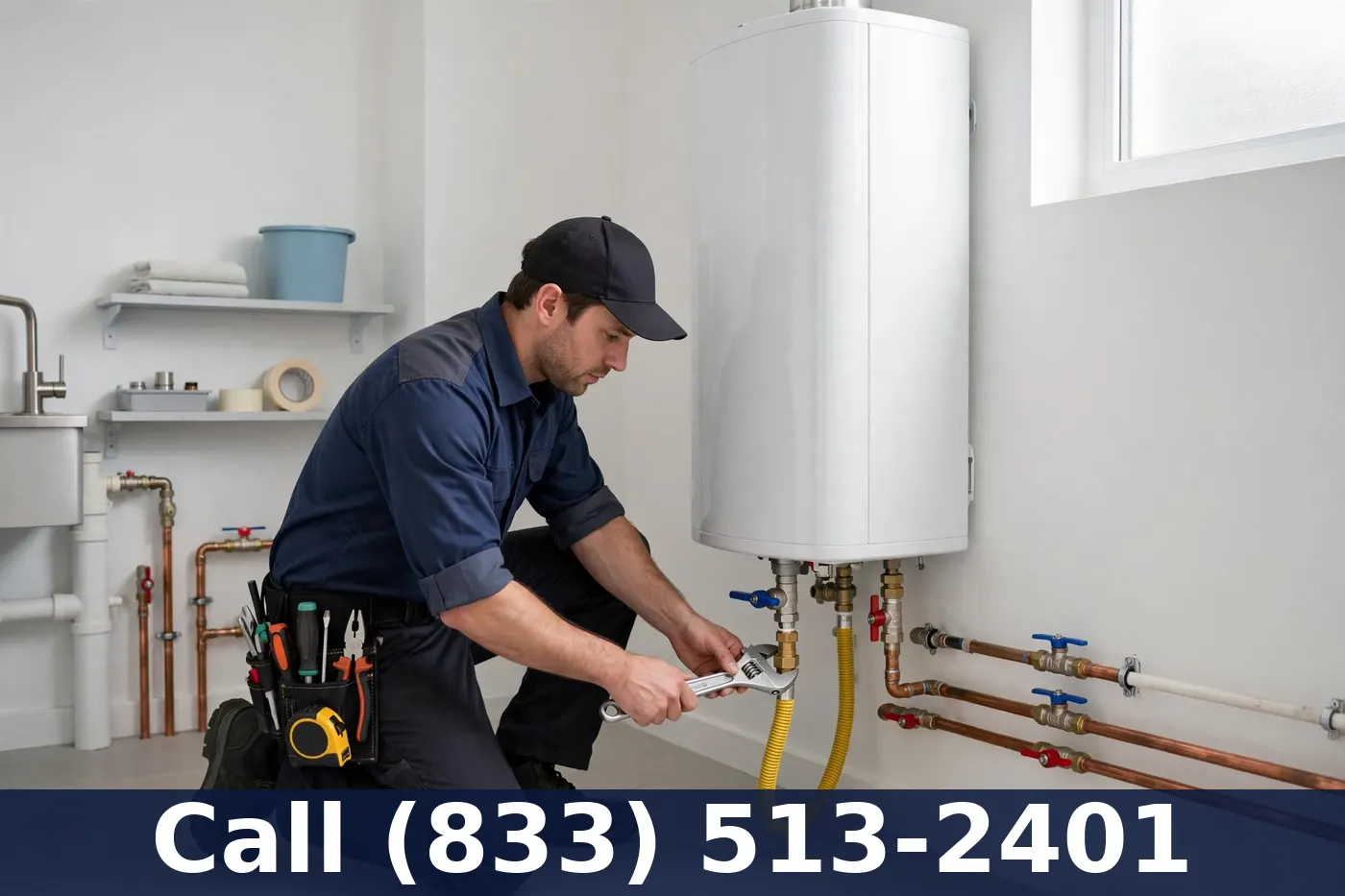
Gas water heater installation from Plumbing Services Pros replaces your worn-out tank heater — or installs one where your home needs it — with the right size, proper venting, and code-compliant connections. We handle the gas line, water lines, venting, and safety valves, then test the full system. You get reliable hot water without the rust, rumble, or lukewarm mornings of a dying tank.
What's Involved in a Gas Water Heater Install
A gas water heater installation is the complete placement of a working tank heater in your home — not just setting the tank down and walking away. Plumbing Services Pros disconnects and removes the old unit, sets the new heater level on a sound surface, connects the gas line with a shutoff valve and sediment trap, ties in the hot and cold water lines with fresh supply valves, installs or upgrades the venting, and fits the temperature-and-pressure relief valve with a proper discharge line. Then the tank fills, the burner fires, and every connection is checked.
What the service does not include is masking problems upstream. If your gas line cannot carry the new heater's demand, or the existing vent is rusted through or improperly sloped, we address that as part of the job rather than connecting a new heater to failing infrastructure. A heater is only as reliable as what feeds it.
Reading the Signs Your Tank Is Failing
Tank water heaters wear out from the inside. Sediment settles at the bottom and the burner cooks it into a hard layer, which is the rumbling or popping you hear. The steel tank itself corrodes slowly, and the anode rod that protects it eventually gives up. The outward signs are hard to miss once you know them:
- Hot water turns rusty or discolored, especially first thing in the morning
- Showers go lukewarm faster than they used to
- The tank rumbles, pops, or knocks while heating
- Water pools or dampness appears at the base of the unit
- The relief valve drips or discharges repeatedly
- Visible rust or corrosion on the tank's exterior or pipe connections
A tank that leaks at the base is finished — internal corrosion cannot be repaired. Catching the other signs early means replacing the heater on your schedule instead of during a flood.
The Sizing and Venting Decisions That Matter
Tank size follows your household, not a rule of thumb. The right capacity covers your peak demand — the morning when showers, dishes, and laundry overlap — without keeping a huge tank hot all day for a small household. We ask about bathrooms, occupants, and routines, and we note how the old unit performed: if it ran out constantly, the replacement should step up.
Venting is the safety-critical half of the job. Atmospheric models need a properly sized metal flue with steady upward slope, clearances from combustibles, and a listed cap at the termination — a corroded or back-pitched vent is a carbon monoxide risk, not a cosmetic issue. Power-vent models use a fan and can exhaust through a side wall, which opens up locations where a roof vent is impractical. Either way, the vent must match the unit's requirements and the local code, and combustion air must be adequate for the space — a heater starved of air burns dirty and soots up.
Gas supply sizing rounds out the trio. The line feeding the heater has to carry the burner's full demand, and we verify that before the new unit fires. An undersized line shows up as weak burners and incomplete combustion — exactly what a new heater should fix, not inherit.
What Installation Day Looks Like
We start with the old heater: gas off, water off, tank drained, connections cut, and the unit hauled out. The new heater's location gets checked — level surface, adequate clearances, protection from freezing, and proper drainage for the relief valve discharge. Seismic strapping goes on where code requires it, because a top-heavy tank in earthquake country needs to stay put.
Connections follow in order: water lines with new supply valves, the gas line with its shutoff and sediment trap, the vent tied into the flue or the power-vent termination, and the temperature-and-pressure relief valve with its discharge line run to an approved spot. On closed plumbing systems, an expansion tank handles the pressure the heating water creates.
Then the tank fills, air is bled from the lines, and the burner lights. We watch the flame, check every joint for leaks, verify the vent drafts properly, and confirm the relief valve is piped correctly. You get hot water before we leave, along with a walkthrough of the new unit — where the shutoffs are, what the temperature setting means, and when to think about flushing sediment.
What Affects the Cost
The heater itself is the largest variable — capacity, venting type, and efficiency tier all move it. Beyond the unit, the condition of your existing infrastructure matters: a sound gas line, solid venting, and accessible water connections make for a straightforward swap, while corroded vents, undersized gas piping, or a difficult location add work.
Code updates are a real factor on replacements. Many jurisdictions now expect expansion tanks on closed systems, seismic strapping, drip pans with drains in certain locations, and proper relief-valve discharge routing — items an older install may lack. If the old heater sat in a tight closet or an awkward corner, access slows everything down.
We quote on your actual setup, not a generic package. Call (833) 513-2401, tell us about the old heater and where it lives, and we will give you a straight answer on scope and cost factors.
Features
- Old heater drained, disconnected, and hauled away
- Tank sized to your household's hot water demand
- Gas line connection with shutoff valve and sediment trap
- Water line connections with new supply valves
- Venting installed or upgraded to match the unit and code
- Temperature-and-pressure relief valve with proper discharge line
Benefits
- Hot water that keeps up with your household's routine
- A heater sized and vented for safe, efficient combustion
- New connections and valves that will not weep or corrode
- Proper relief-valve and drain setup for household safety
- An install that passes inspection without callbacks
Frequently asked questions
What size gas water heater does my home need?
Household size and hot water habits decide it. A couple with one bathroom needs less capacity than a family of five with back-to-back showers and laundry running. We look at your bathroom count, your routine, and the old unit's performance to recommend a tank size that keeps up without wasting energy.
How do I know my water heater is failing?
The dying tank tells you: rusty or discolored hot water, rumbling or popping sounds from sediment buildup, water pooling at the base, lukewarm showers that used to be hot, and a unit pushing past its expected service life. Any of these is worth a call before the tank fails outright.
What's the difference between atmospheric and power venting?
An atmospheric-vent model uses a natural-draft flue that rises through the roof; a power-vent model uses a fan to push exhaust out through a side wall. Power venting suits locations where a proper roof vent is impractical. We recommend the type that fits your home's layout and local code.
Do you haul away the old water heater?
Yes — we disconnect the old unit, drain it, and remove it from your home. The new heater goes in on fresh connections, so you are not left dealing with a heavy, sediment-filled tank.
What affects the cost of installing a gas water heater?
It depends on the heater you choose, the condition of your existing gas line, venting, and water connections, and whether code updates are needed — such as an expansion tank on a closed plumbing system or seismic strapping. Call (833) 513-2401 for a quote based on your home's setup.
How long does a water heater installation take?
Most replacements finish in a single visit. The time depends on how accessible the location is, whether the gas line or venting needs modification, and what the old unit leaves behind.