
High Water Pressure Repair Near Me
Starting price: Call for pricing
High water pressure quietly wears out plumbing fixtures, water heaters, and supply lines long before anything visibly breaks. High Water Pressure Repair from Plumbing Services Pros finds the cause of excess pressure — usually a failing pressure-reducing valve — and brings it back into a safe range. The service is for Stockton-area homeowners and businesses noticing banging pipes, dripping fixtures, or appliances that seem to fail too soon.
What High Water Pressure Does to Your Plumbing
Most plumbing components are built to handle pressure up to about 80 psi, the threshold the plumbing code treats as excessive. When incoming pressure stays above that level day after day, the extra force works on every joint, seal, and flexible supply line in the house. It is not dramatic at first — nothing bursts on day one — but the wear accumulates in places you cannot see.
That strain shortens the working life of washing machine hoses, toilet fill valves, ice-maker lines, and water heater connections. It can also push water past seals in faucets and shower valves that would otherwise hold fine for years. Over time, this constant pressure is one of the most common reasons homes develop slow, hard-to-trace leaks.
Thermal expansion makes the problem worse in homes with a closed plumbing system. When water heats up inside a water heater with no room to expand back into the supply, pressure inside the house spikes every time the burner or element runs. That is why pressure problems and water heater problems so often show up together.
Signs Your Home's Water Pressure Is Running Too High
You do not need a gauge to suspect a pressure problem, though a gauge is how a plumber confirms it. Several everyday symptoms point straight at excessive pressure, and they tend to appear in clusters rather than alone.
- Pipes that bang, knock, or rattle when a faucet shuts off — the classic water hammer effect
- Faucets or showerheads that spit and sputter when first opened
- Toilets that run on their own or refill unexpectedly
- Leaking hose connections at the washing machine or outdoor spigots
- Appliances that fail early, especially ice makers and dishwashers
- A pressure-relief valve on the water heater that drips regularly
One sign alone might mean nothing, but two or three together make pressure the prime suspect. A quick conversation with a plumber about what you are seeing helps narrow it down before anyone touches a wrench.
How a Plumber Diagnoses the Real Cause
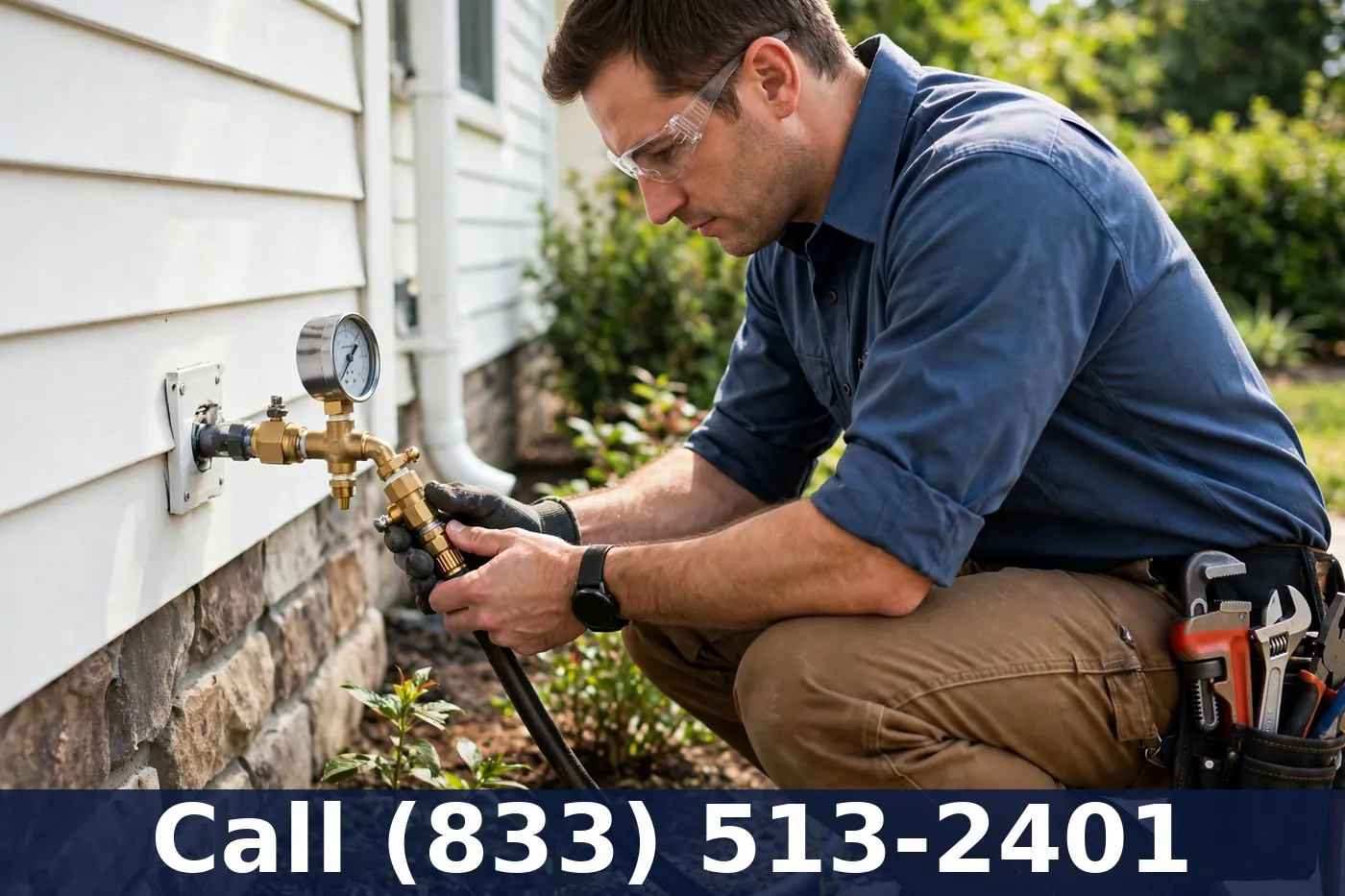
Diagnosis starts with an accurate pressure reading, taken with a calibrated gauge attached to an outdoor spigot or the washing machine connection. The reading is taken with no water running inside the house, because that gives the true static pressure the municipal supply is delivering. Anything consistently above 80 psi means the system needs regulation.
The next question is why. In many homes, a pressure-reducing valve (PRV) is already installed where the main line enters the house, and it has simply failed or drifted out of adjustment over time. In other homes there is no PRV at all, and the house has been absorbing full municipal pressure since it was built. Municipal supply changes can also raise pressure, since utilities sometimes increase delivery pressure to meet demand.
A plumber will also look for a thermal expansion tank on the water heater and check whether it is waterlogged or missing. If the pressure reading spikes after the water heater cycles, expansion is part of the problem. This kind of methodical diagnosis matters because it keeps the repair targeted — you fix what is actually wrong instead of replacing parts and hoping.
What the Repair Actually Involves
For most homes, the repair centers on the pressure-reducing valve. If the existing valve is healthy and just misadjusted, it is recalibrated to hold pressure in the manufacturer's recommended range for residential fixtures. If the valve has failed — a worn diaphragm or stuck internals — it is removed and a new one is installed on the main supply line, with shutoffs and a union so it can be serviced later.
When thermal expansion is contributing, an expansion tank is added or replaced at the water heater. The tank gives heated water a cushion of air to expand into, which absorbs the pressure spikes that occur every time the heater runs. If banging persists after pressure is corrected, water hammer arrestors can be installed near quick-closing valves such as the washing machine supply.
After the work is done, the plumber re-tests pressure at the same test point to confirm the reading now sits in a safe range. Plumbing Services Pros can also advise on how often to have the valve rechecked.
What Affects the Cost of This Service
The cost of high water pressure repair depends on what the diagnosis turns up. Recalibrating an existing, healthy valve is a smaller job than cutting in a new valve on the main line, which requires shutting off water to the house and working in a connection area that may be tight or corroded. Adding an expansion tank or hammer arrestors expands the scope further, as does any access work needed to reach the main line.
Pipe material and the condition of the shutoff valves also play a role. Older galvanized or corroded fittings can take extra time to separate without damaging the surrounding pipe. The clearest way to understand what your repair will involve is a pressure test and inspection — once the cause is known, the scope of the fix is usually straightforward.
Plumbing Pressure Help Across the Stockton Area
Plumbing Services Pros handles high water pressure repair for homes and businesses throughout the Stockton area. Older neighborhoods with original plumbing and no PRV are common candidates, but newer construction can develop problems too when supply pressure changes or a valve fails early. The service covers everything from a simple pressure check to full valve replacement.
If your pipes are banging, your fixtures are dripping, or your appliances seem to fail too soon, pressure is worth investigating. Call (833) 513-2401 to schedule a pressure test and find out exactly what your plumbing is dealing with.
Features
- On-site water pressure testing with a calibrated gauge
- Inspection of the existing pressure-reducing valve (PRV)
- Adjustment or full replacement of a faulty PRV on the main line
- Thermal expansion tank inspection and replacement
- Water hammer arrestor installation where banging persists
- Final pressure verification after the repair is complete
Benefits
- Protects pipes, joints, and fixtures from premature failure
- Reduces nuisance leaks at faucets, toilets, and hose connections
- Helps appliances like dishwashers and water heaters last longer
- Stops banging and rattling noises inside walls and ceilings
- Lowers the risk of sudden supply-line bursts and water damage
- Gives you a measured, documented pressure reading you can trust
Frequently asked questions
How do I know if my water pressure is too high?
Start with the symptoms: banging pipes, spitting faucets, toilets that run on their own, or appliances failing early. A plumber confirms it with a gauge reading — anything consistently above 80 psi means the pressure needs to be regulated.
What is a pressure-reducing valve, and do I already have one?
A pressure-reducing valve (PRV) sits on the main water line and lowers incoming municipal pressure to a level your home's plumbing is built for. Many homes have one where the main line enters, but older homes often do not. Plumbing Services Pros can locate yours and test whether it is working.
Can high water pressure damage my water heater?
Yes. Excess pressure stresses the tank, the pressure-relief valve, and every connection around the heater, and it amplifies thermal expansion spikes. Keeping house pressure in a normal range takes a real load off the water heater and the fixtures it feeds.
Will lowering my water pressure leave me with weak showers?
No — not when it is done correctly. A properly set PRV still delivers full flow; it just caps the pressure at a level your fixtures are designed for. Most homeowners notice no change in shower strength, only that the banging and dripping stop.
Do I need an expansion tank too?
If your plumbing is a closed system — common where a PRV or backflow preventer is installed — heated water has nowhere to expand, so an expansion tank is the standard solution. A plumber checks for this during the pressure diagnosis and adds one only when it is needed.