
Pot Filler Installation Near Me
Starting price: Call for pricing
A pot filler is a swing-arm faucet mounted on the wall above or beside the stove, so you can fill stockpots and kettles right where they cook. Installing one means running a dedicated cold water line inside the wall to the spot behind the range and anchoring the fixture solidly. This service is for homeowners remodeling a kitchen or adding the convenience of stove-side water to the one they have.
What a pot filler is, and what installing one involves
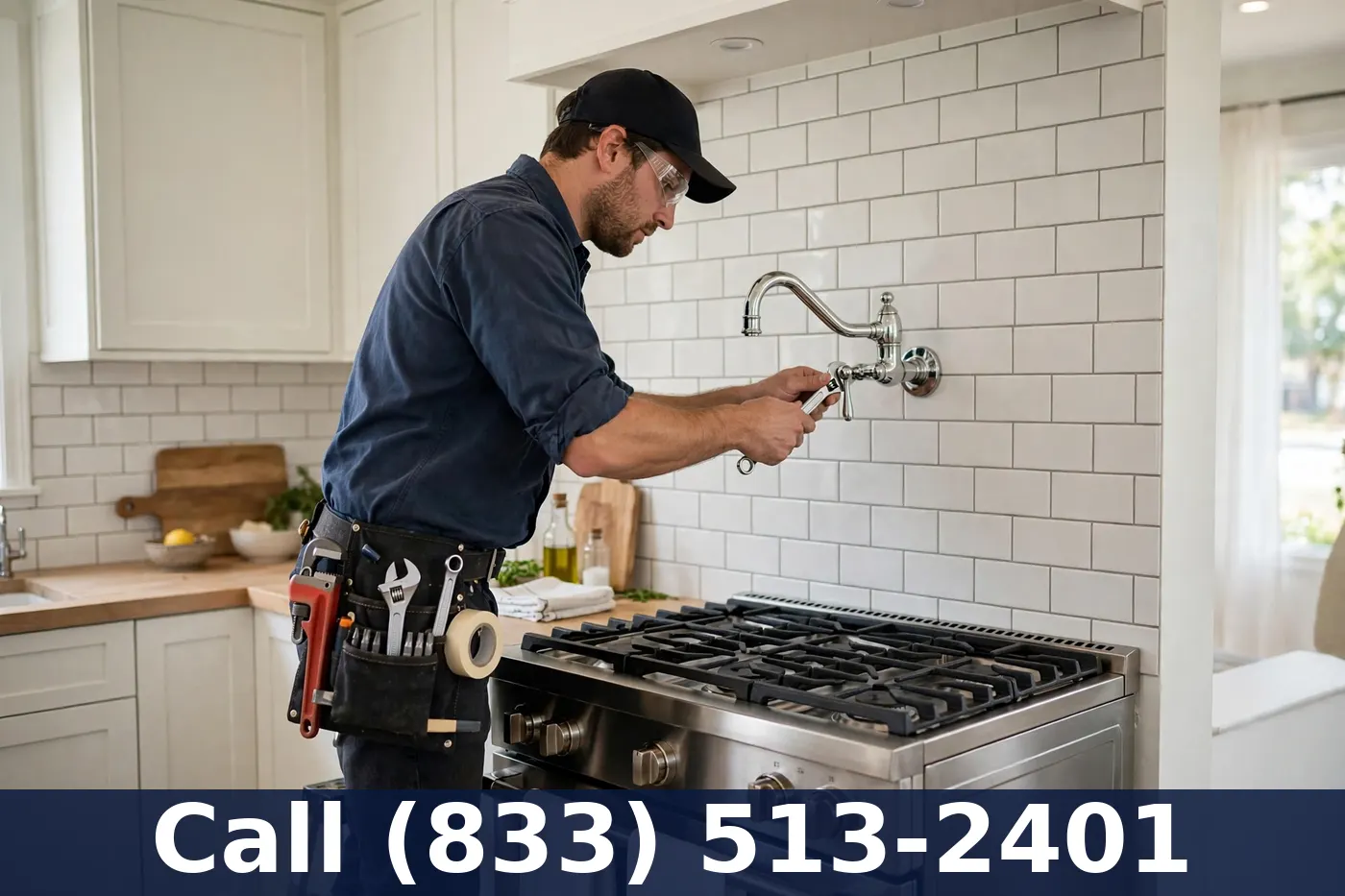
A pot filler is a faucet that lives on the wall above or beside your stove. Its double-jointed arm swings out over the burners so you can fill a stockpot sitting on the grate, then folds flat against the wall when you are done. No more carrying a heavy pot of water from the sink across the kitchen.
Installing one is real plumbing work, not a fixture swap. There is almost never a water line in the wall behind a stove, so we run a new cold water line from the nearest supply to the spot where the faucet will mount. That means opening the wall, setting a solid anchor point between the studs, landing the connection at exactly the right height, and then connecting the faucet after the wall and backsplash are finished. The timing matters — the rough-in has to happen before tile goes up.
Who gets the most from a pot filler
- Home cooks who regularly boil pasta, stock, or canning batches
- Anyone who has ever sloshed water across the kitchen carrying a full pot
- Households where lifting heavy pots is hard on backs or wrists
- Kitchen remodels where the wall is already open and the cost is lowest
- People who want a high-end touch that buyers notice
The rough-in: the part nobody sees but everybody depends on
The visible faucet is the easy part. The rough-in is the permanent foundation, and it has to be right. First we confirm placement: the spout must clear your tallest pot with a few inches to spare, and the arm's reach has to cover the farthest burner. Mount it too low and big pots will not fit; too high and water splashes when it hits the pot.
Inside the wall we install wood blocking between the studs — the arm creates real leverage when it is extended and full of water, and drywall alone will not hold it. A brass drop-ear elbow or a dedicated mounting plate gets fastened to that blocking, giving the faucet a rigid, fixed connection point that will not loosen as the arm swings. The water line itself is typically half-inch pipe run from the nearest cold supply, with a shutoff valve placed where it can be reached.
Why the dual valves matter
A good pot filler has two valves: one at the wall where it mounts, and one at the spout over the pot. The wall valve is the safety habit — you open it to fill, then close it when the arm folds away, so the arm itself holds no pressure while it sits folded. That simple routine is what keeps a slow drip from ever reaching a hot stove.
It is also why the wall connection has to be rock solid. The rotational stress of the swinging arm works on that joint every time the faucet is used. A proper anchor and a proper fitting mean the connection never becomes the weak point.
What affects the cost
The biggest cost driver is access. In a down-to-the-studs remodel, running the line is quick work done before the finishes go in. In a finished kitchen, the wall has to be opened, the line fished or run through, and the wall patched and refinished — more labor, more finishing. The distance from the nearest water supply matters too: a kitchen sharing a wall with a bathroom is an easier run than one on the far side of the house.
Fixture choice moves the number as well, from simple single-arm models to dual-joint designs in specialty finishes. When you call (833) 513-2401, tell us whether you are remodeling or adding to a finished kitchen — that one fact shapes the whole quote.
Kitchens we work in around the Stockton area
Plumbing Services Pros installs pot fillers for homeowners across the Stockton area, most often as part of kitchen remodels where the timing is ideal. We also add them to finished kitchens when the layout allows a clean run — we will tell you honestly if your kitchen's framing makes it impractical.
If you are planning a remodel, bring us in before the tile goes up. If the kitchen is already done, call (833) 513-2401 and we will look at the layout and give you a straight answer on what it takes.
Features
- Running a dedicated cold water line to the stove wall
- Solid wood blocking between studs to anchor the fixture
- Brass drop-ear elbow or mounting plate for a rigid connection
- Setting the rough-in at the right height for your range and pots
- Mounting the faucet level with proper clearances
- Connecting and testing with the wall finished around it
- Verifying the swing arm reaches every burner and folds flat
Benefits
- Fill big pots right at the stove — no carrying sloshing water across the kitchen
- Less strain on backs, shoulders, and wrists for the household cook
- Fewer spills and splashes on floors between sink and range
- A kitchen upgrade that stands out to future buyers
- Water exactly where the cooking happens, when it is needed
- A fixture that folds flat against the wall when not in use
- Clean, professional plumbing work hidden inside the finished wall
Frequently asked questions
Does a pot filler use hot or cold water?
Almost always cold water only. Cold water picks up fewer impurities from household pipes, which makes it the safer choice for cooking, and a modern high-output range brings it to a boil quickly. Hot water is never piped to a pot filler unless a dedicated setup calls for it.
Does a pot filler need a drain under the stove?
No. Because the faucet only runs when someone is intentionally filling a pot, codes do not require a drain underneath. The dual-valve design — one valve at the wall, one at the spout — is the safety practice: close the wall valve when the arm is folded away so the arm never drips onto the stove.
Can a pot filler be added to a finished kitchen?
It depends on the kitchen. In a remodel with the wall open, the line goes in before tile and backsplash, which is straightforward. In a finished kitchen it takes opening the wall, running the line from the nearest supply, and patching afterward. Call (833) 513-2401 and we will look at your layout and tell you what it takes.
How high above the stove should a pot filler go?
The faucet needs to clear your tallest pot with room to spare, and the arm has to reach the farthest burner. Typical mounting lands the spout roughly a foot to a foot and a half above the cooking surface, offset slightly to one side so the folded arm sits flat. We confirm the measurements against your range and cookware before the wall is closed.
What does pot filler installation cost?
Cost follows the distance the water line has to travel, how much wall has to be opened and refinished, and whether the kitchen is mid-remodel or already finished. The fixture itself varies by style and finish. Call (833) 513-2401 for a quote based on your kitchen's layout.
Is a pot filler worth it if I don't cook much?
They are a strong fit for anyone who cooks with large pots often — pasta nights, canning, big family meals. If the stove rarely sees more than a small saucepan, the convenience may not earn its keep. Think about how you actually cook before deciding.