
Pressure Reducing Valve Replacement Near Me
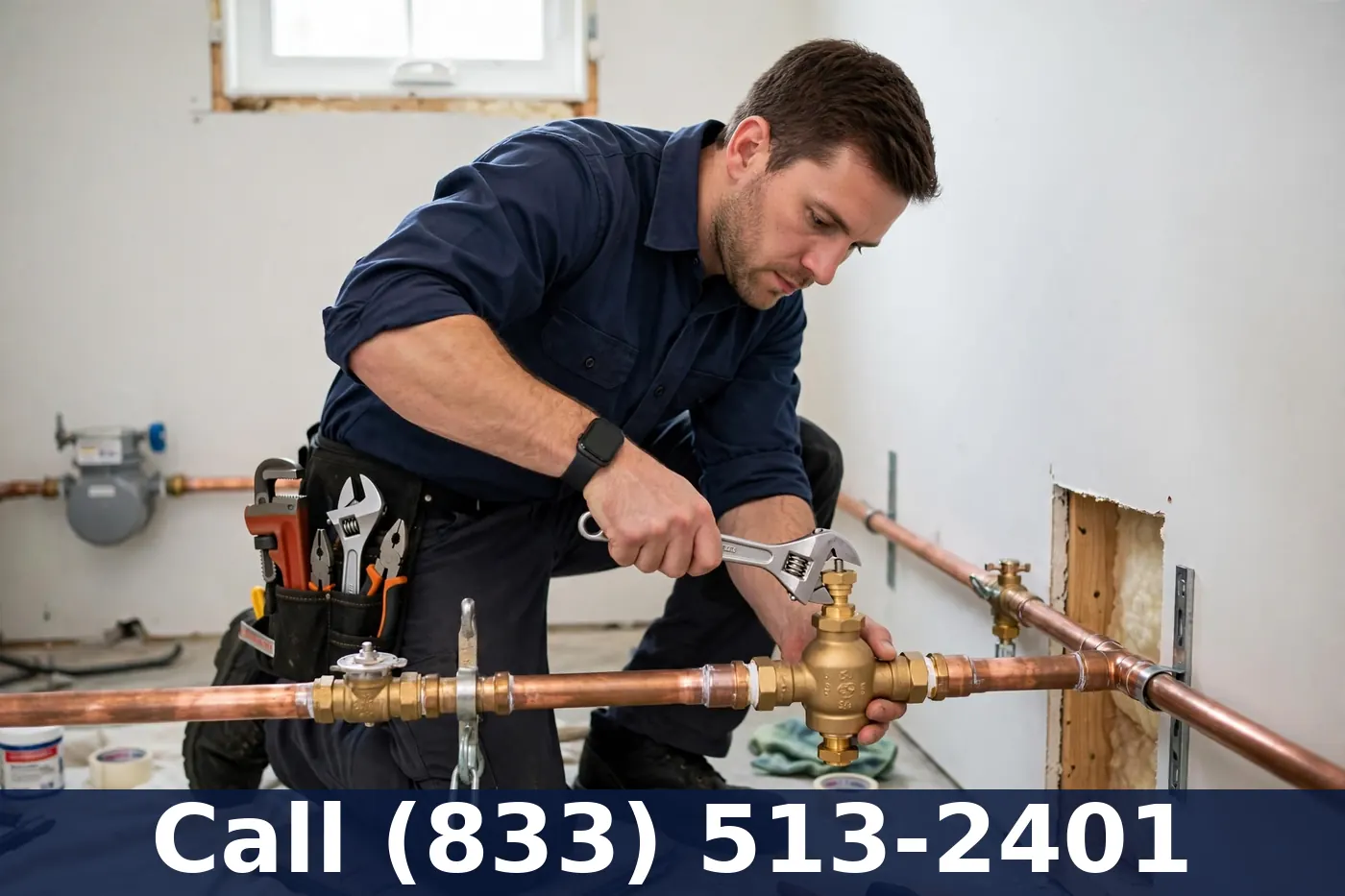
Starting price: Call for pricing
A pressure reducing valve (PRV) sits on your main water line and steps high street pressure down to a safe level for the house. When it wears out, pressure swings high or low — banging pipes, leaking fixtures, and stressed appliances follow. Plumbing Services Pros tests your pressure, removes the failing valve, and installs a properly sized replacement set to the right level. This service is for homeowners seeing pressure problems or whose valve has simply aged out.
What a pressure reducing valve does
Water arrives from the street at whatever pressure the municipal system delivers — often higher than a home's pipes and fixtures are meant to handle. A pressure reducing valve sits on the main water line where it enters the house and steps that pressure down to a safe, steady level for everything downstream. Every faucet, toilet, appliance, and joint in the house lives behind it.
When the valve works, you never think about it. Showers feel consistent, fixtures last their normal span, and pipes stay quiet. When it starts to fail, the symptoms show up all over the house at once, which is why a single small device causes so much confusion when it goes bad.
The signs your PRV is failing
- Pressure that surges and drops while you are using water
- A gauge on an outdoor spigot reads consistently high
- Pipes bang or hammer when a faucet shuts off
- Faucets drip or toilet fill valves keep failing
- Appliances develop leaks or valve problems early
- Water sputters or sprays aggressively from taps
- The valve itself shows moisture, corrosion, or mineral crust
How replacement works
It starts with a pressure test. We put a gauge on a hose bibb and read the static pressure, then watch what happens when fixtures run. That reading, plus a look at the existing valve's condition, tells us whether the valve can be adjusted or needs to go.
Replacement means shutting off the main, cutting out the old valve, and installing the new one sized to your water line — typically with unions or fittings that make future service straightforward. The new valve is set to a safe target level, usually in the 50 to 60 PSI range, and we verify the setting with the gauge. Then we walk the house, running fixtures to confirm the pressure holds steady everywhere, and check the valve and nearby joints for any seep.
Where the plumbing forms a closed system — common with a check valve or backflow device on the main — we also check whether an expansion tank is present and functioning, since a new PRV changes how thermal expansion behaves.
Adjust, repair, or replace: how we decide
Not every pressure complaint ends with a new valve. If the existing PRV is in good shape and simply drifted off its setting, adjusting it back and verifying with a gauge is the honest fix. If the valve is leaking at the body, crusted with corrosion, or no longer holds an adjustment, no amount of turning the screw will save it.
There is also the missing-valve case. Plenty of homes were built without a PRV, and street pressure in the area may have risen since. If your gauge reads high and there is no valve on the main, installing one is the fix — not replacing something that was never there. We show you the readings either way so the decision is based on numbers, not guesswork.
What affects the cost
The valve itself comes in sizes matched to your main line, and larger lines take larger valves. Access is the next factor: a valve sitting in an open garage wall is quick work, while one buried behind finished walls or in a tight crawl space takes longer. Sometimes the piping around the old valve needs reconfiguration to fit the new one cleanly, and that adds labor.
If the system needs an expansion tank added or replaced to work properly with the new PRV, that is part of the conversation before we quote. Call (833) 513-2401 for a pressure test and a quote built around your actual setup.
Who needs this work around Stockton
Plumbing Services Pros replaces pressure reducing valves for homeowners across the Stockton area — often after a water heater install, a remodel, or a run of mysterious fixture failures leads someone to finally check the pressure. Homes on lower-lying streets or near pumping infrastructure tend to see higher street pressure and benefit most.
If your pressure feels wrong — too strong, too weak, or different every time you turn on the tap — call (833) 513-2401. A gauge reading takes minutes, and it answers the question for good.
Features
- Water pressure testing at the main line and fixtures
- Inspection of the existing valve for wear, leaks, and corrosion
- Removal of the failed pressure reducing valve
- Installing a correctly sized replacement valve
- Setting the new valve to a safe, consistent pressure level
- Checking for an expansion tank where the system needs one
- Final pressure test at multiple fixtures to confirm steady flow
Benefits
- Water pressure that stays steady at every fixture
- Less strain on pipes, joints, and appliance valves
- Fewer mystery leaks caused by pressure spikes
- Quieter plumbing with less banging and hammering
- Longer life for water heaters, dishwashers, and washing machines
- A pressure reading you can verify with a simple gauge
- One small device protecting the whole plumbing system
Frequently asked questions
How do I know my pressure reducing valve is bad?
A plumber from Plumbing Services Pros can test it in minutes with a gauge on an outdoor spigot. Readings consistently above 80 PSI point to a valve that is not doing its job. Fluctuating pressure, banging pipes, and fixtures that keep failing are supporting clues.
What if my house doesn't have a pressure reducing valve at all?
Yes. Some homes have no PRV at all, especially if the street pressure was fine when the house was built or the area's supply has changed since. If a gauge shows high incoming pressure and there is no valve on the main line, adding one protects the whole system.
Why do pressure reducing valves fail?
A PRV is a mechanical device with a spring and diaphragm that wear with time, mineral buildup, and constant pressure cycling. Most keep working for a long stretch before they stop holding their setting. When adjustment no longer holds, replacement is the fix.
What does pressure reducing valve replacement cost?
Cost depends on the valve size, where the main line enters the house, how accessible that spot is, and whether the piping needs reconfiguration to fit the new valve. Some installs also call for checking the expansion tank setup. Call (833) 513-2401 for a quote after a pressure test.
Can my old valve be adjusted instead of replaced?
Often, but not always — pressure can be checked and adjusted first. If the valve still holds its setting after adjustment and shows no leaks or corrosion, it may have life left. If pressure creeps back up or the valve no longer responds to adjustment, it is done. We test before we recommend.
Can a bad PRV make my toilet run or my faucets leak?
High pressure can make toilets run intermittently by overpowering the fill valve, and it shortens the life of faucet cartridges and appliance valves. If you are replacing the same fixture parts over and over, the PRV is worth checking before the next repair.