
Root Intrusion Removal Near Me
Starting price: Call for pricing
Tree roots chase moisture and slip into sewer lines through tiny cracks and loose joints, then grow into a dense mat that blocks flow. Plumbing Services Pros removes root intrusions with mechanical cutting and high-pressure hydro jetting, then cameras the line to show what the roots did to the pipe. This service is for homeowners with repeat backups, gurgling drains, or a camera report that already names roots as the problem.
What root intrusion is
A sewer line is full of water and nutrients, and tree roots are built to find exactly that. They start as hair-thin strands slipping through a cracked pipe wall or a separated joint. Once inside, they branch and thicken into a woody mat that catches everything flowing past — paper, grease, waste — until the line chokes. This is not a one-time clog. It is a living blockage that grows back unless the entry point is dealt with.
Clay tile and cast iron lines are the classic victims because their joints and aging walls give roots plenty of openings. But roots are opportunists, not picky: any pipe with a compromised spot is fair game, and a single aggressive tree near the line can do the work.
How you find out roots are in the line
- Several drains back up at the same time
- Toilets gurgle when the washer or shower drains
- Sewage backs up into tubs or floor drains
- A snaking fixed it last month and it is back again
- Soggy, sunken, or extra-green patches in the yard
- Sewage odors rising from drains or cleanouts
How we remove the roots
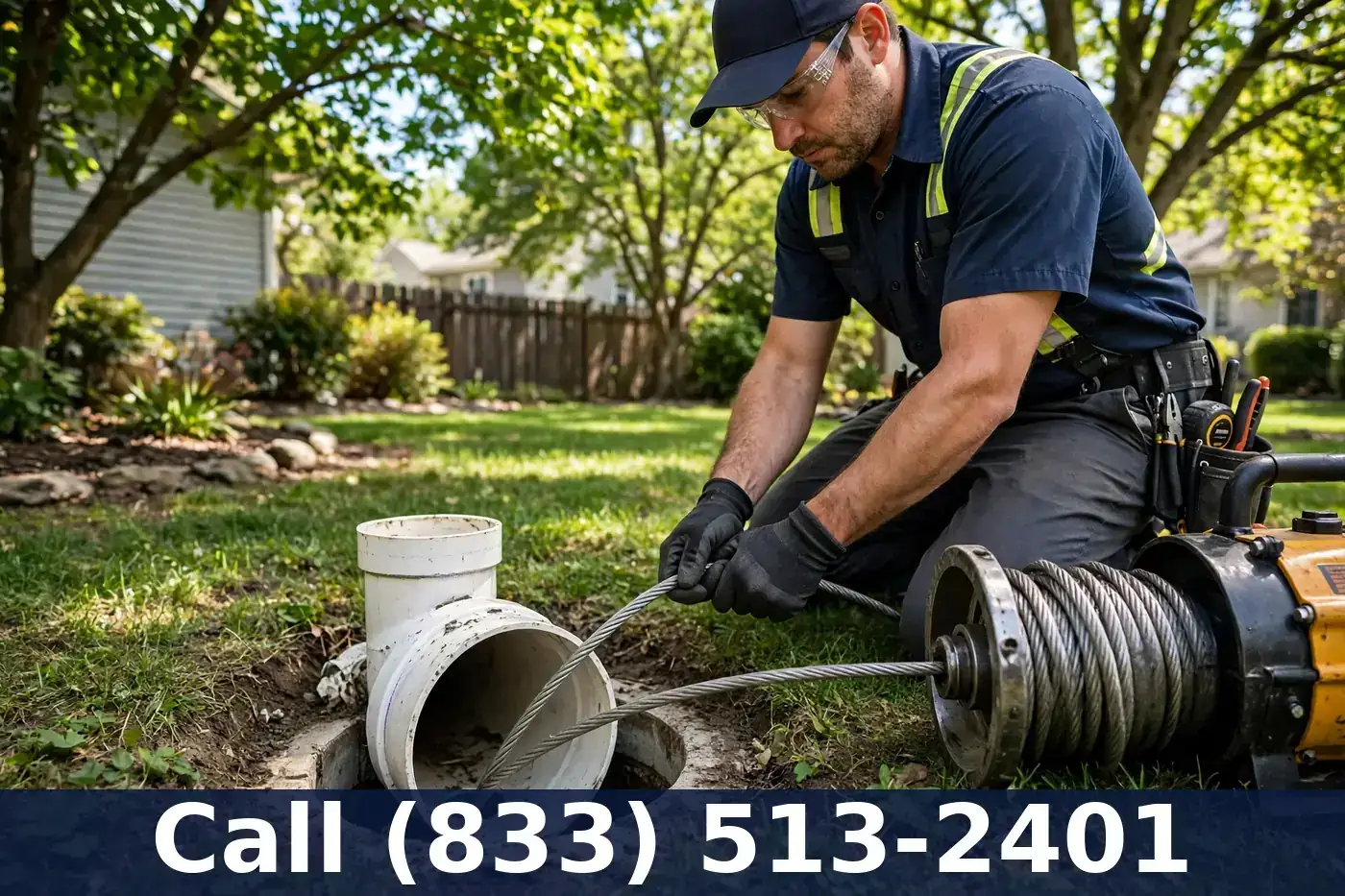
The visit starts with a camera. We need to see where the roots are, how dense the mass is, and what the pipe looks like around it — cutting blind risks damaging a line that is already fragile. With the picture clear, we cut: a rooter cable with a cutting head spins through the mass and chops it apart, restoring flow.
Cutting alone leaves shredded root ends and a dirty pipe wall, so the next step is hydro jetting. High-pressure water on a specialized nozzle cuts through what the blades left, scours grease and scale off the pipe walls, and flushes the whole mess out through the cleanout. The line ends up close to its original flow capacity — and clean enough that a second camera pass shows the pipe's real condition underneath.
That second look is the most important part of the job. It shows whether the pipe survived the intrusion or whether the roots cracked it open, offset a joint, or collapsed a section. What we find there decides the next step.
Clearing versus fixing: the honest sequence
Clearing solves today. Fixing solves the pattern. Mechanical cutting and jetting remove the blockage, but the crack or joint that let the roots in is still there, and roots grow back — many homes fall into a yearly cutting cycle without ever addressing the cause.
The permanent answers are structural. A trenchless epoxy liner builds a new seamless inner wall that seals every crack and joint, leaving roots nothing to enter. A badly damaged section gets replaced, by spot repair or trenchless bursting. We show you the footage, explain what each option does, and let you choose with the full picture. Nobody should pay for a third cutting without being told a fix exists.
What affects the cost
The clearing itself depends on how much of the line is rooted and how dense the mass is — a single intrusion near a cleanout is quick work, while a line packed with roots end to end takes serious jetting time. Access matters: a reachable cleanout versus digging to expose a buried line changes the job.
The bigger cost question is what comes after. If the pipe underneath is sound, clearing plus a maintenance plan is the whole story. If it needs lining or replacement, that is a separate project with its own pricing. We quote each stage on its own so you can decide step by step. Call (833) 513-2401 and tell us what your drains are doing.
Keeping roots out after the work
Plumbing Services Pros helps homeowners across the Stockton area stay ahead of regrowth. The practical moves: know where your sewer line runs before planting anything with aggressive roots, keep large trees at a distance from the line, and consider root barriers between valued trees and the pipe path. A scheduled camera check catches new intrusion early, when it is a quick clearing instead of a crisis.
If your drains keep backing up and you suspect roots, call (833) 513-2401. We will camera the line, clear what is in there, and show you exactly what the pipe looks like underneath.
Features
- Sewer camera inspection to locate the intrusion precisely
- Mechanical root cutting to slice through the root mass
- High-pressure hydro jetting to scour pipe walls clean
- Debris flushed out through the cleanout, not left behind
- Follow-up camera inspection to assess the pipe underneath
- Trenchless lining or spot repair options for damaged sections
- Advice on root barriers and planting to slow regrowth
Benefits
- Drains flow freely again without repeat backups
- The full blockage is removed, not just poked through
- You see the pipe's real condition on camera
- A plan to keep roots from coming back so soon
- Less risk of sewage backing up into the home
- The right fix for the damage — repair only what needs it
- Yard stays intact with trenchless options where they fit
Frequently asked questions
How do tree roots get into a sewer line?
Roots enter through cracks, separated joints, and tiny openings in the pipe wall, drawn by the moisture and nutrients inside. Older clay and cast iron lines are the most vulnerable, but any pipe with a compromised joint can be an entry point. Once inside, the root mass grows fast.
Will the roots just grow back after removal?
Cutting restores flow but leaves the entry points open, so roots grow back — many homes end up on a yearly cutting cycle. The lasting fix is repairing the breach: a trenchless liner seals cracks from the inside, or the damaged section gets replaced. A plumber from Plumbing Services Pros shows you the camera footage and lays out both paths.
What does root intrusion removal cost?
Cost depends on how much of the line is affected, how dense the root mass is, and whether the pipe underneath needs repair after clearing. A straightforward cutting and jetting visit is one thing; a line that also needs lining or section replacement is another. Call (833) 513-2401 for an inspection and a quote.
Do chemical root killers work instead of professional removal?
Chemical root killers can slow regrowth in some cases, but they do not remove an existing blockage and they cannot fix the cracked pipe that let roots in. Think of them as a maintenance aid after professional clearing, not a substitute for it.
What are the signs of roots in my sewer line?
Multiple drains backing up at once, gurgling toilets, sewage smells from drains, wet sunken patches in the yard over the line's path, and backups that return weeks after a snaking. Any one of these is worth a camera inspection — guessing wastes time.
What is the difference between root cutting and hydro jetting?
Mechanical cutting with a rooter slices through the woody mass to restore flow quickly. Hydro jetting then scours the pipe walls with high-pressure water, washing out the full root mass and the grease and scale it was clinging to. Jetting leaves the line clean enough for a follow-up camera to show the pipe's true condition.