
Running Toilet Repair Near Me
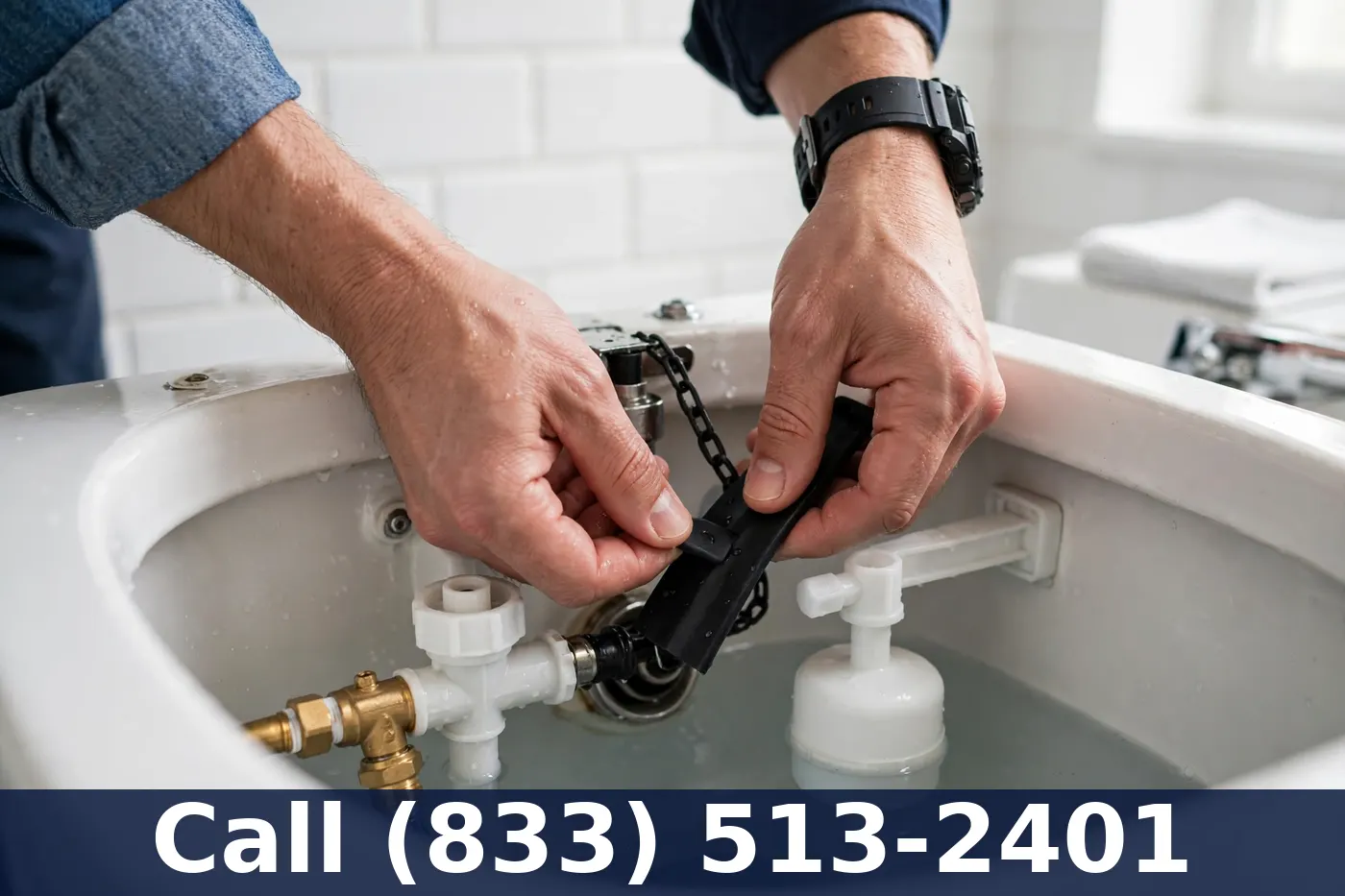
Starting price: Call for pricing
A running toilet is almost always a failed part inside the tank — a worn flapper that will not seal, a fill valve that will not shut off, or a chain and float out of adjustment. Plumbing Services Pros diagnoses which part is at fault and repairs or replaces it, so the tank fills, seals, and stays quiet between flushes. This service is for homeowners hearing constant running, hissing, or phantom refills — and watching the water meter spin.
Why toilets run
A toilet tank is a simple machine: it fills with water, holds it behind a rubber seal, and releases it when you flush. A running toilet means something in that chain is not doing its job. Water is either leaking past the seal into the bowl, or the fill mechanism never gets the signal to stop.
The usual suspects, in order: a flapper that has warped or gone slimy and will not seal against the flush valve seat. A chain with the wrong slack — too tight and it holds the flapper open, too loose and it snags underneath. A float set too high so water spills into the overflow tube forever. A fill valve clogged with mineral scale that cannot shut off cleanly. And the occasional cracked overflow tube or misaligned refill tube creating a siphon. Each one sounds the same from outside the bathroom. The fix depends entirely on which one it is.
The sounds and signs to listen for
- A constant hissing or trickling from the tank
- The toilet refilling on its own every few minutes
- Water visibly moving in the bowl long after a flush
- Having to jiggle the handle to make it stop
- The water bill climbing with no change in habits
- Food coloring placed in the tank showing up in the bowl
How we track down the failed part
We start by listening and watching a full flush cycle. That alone often names the culprit — a flapper leak looks different from a fill valve that will not quit. Then we work through the tank methodically: check the chain slack, inspect the flapper's seal and the seat it rests on, look at the water level against the overflow tube, and test the fill valve's shutoff.
The food coloring test confirms a flapper leak when the signs are subtle. If the shutoff valve behind the toilet is frozen or corroded, we note that too — a valve you cannot close is its own problem waiting for a bad day. Nothing gets replaced until the failed part is identified, because swapping parts blindly is how a simple repair turns into a parts pile.
The repairs themselves
A worn flapper gets replaced with one matched to the toilet — flappers are not universal, and the wrong one seals poorly or flushes weakly. The chain is set with just enough slack for the flapper to drop fully every time. A faulty fill valve is usually replaced rather than rebuilt; the new valve gets its float set so the tank water stops about an inch below the top of the overflow tube.
If the refill tube was shoved too far down the overflow pipe, we reposition it with its clip so it hovers over the opening instead of siphoning. If the shutoff valve crumbles when touched, we replace that as well — there is no point fixing the tank if you cannot turn its water off. Every repair ends with several full flush cycles watched start to finish.
What affects the cost
Most running toilets are small jobs: a flapper, a chain adjustment, or a fill valve. Cost rises when the shutoff valve needs replacing, when the supply line is corroded, or when the tank's internal parts are so far gone that a full rebuild kit makes more sense than piecemeal parts. The toilet's age and model matter — some older or unusual models take parts that are harder to source.
What does not change the price much is the diagnosis itself. When you call (833) 513-2401, describe the sound and the behavior — constant run, phantom refills, handle jiggling — and we will tell you what it likely is and what the visit involves.
Who we fix running toilets for in the area
Plumbing Services Pros repairs running toilets for homeowners across the Stockton area, and it is one of the most common calls we get. Rental owners like it because a running toilet in a rental can waste water for months before anyone reports it. Home sellers get them fixed when a buyer's inspection flags the leak.
A running toilet never fixes itself, and the water it wastes is money on the bill every month. If yours will not stay quiet, call (833) 513-2401 and tell us what you hear. We will find the failed part and fix it properly.
Features
- Diagnosing the flapper, fill valve, chain, and float in order
- Flapper replacement matched to the toilet model
- Fill valve repair or replacement when it will not shut off
- Chain length adjustment so the flapper seals fully
- Float level setting so the tank stops at the right line
- Checking the shutoff valve and supply line condition
- Testing with multiple flush cycles to confirm the fix holds
Benefits
- The running stops and the bathroom goes quiet again
- Water stops draining away when the toilet is not in use
- Lower water bills once the constant flow ends
- A toilet that fills and shuts off the way it should
- Worn parts replaced before they cause a bigger failure
- A quick diagnosis that names the actual failed part
- Confidence the fix was tested, not just guessed at
Frequently asked questions
What is the most common cause of a running toilet?
Nine times out of ten it is the flapper — the rubber seal at the bottom of the tank. It warps, gets slimy, or stops sealing, and water leaks steadily into the bowl. The fill valve is the next most common culprit. A plumber from Plumbing Services Pros checks the flapper, chain, float, and fill valve in order until the fault is found.
How can I tell if my toilet is leaking silently?
The food coloring test: put a few drops in the tank, wait without flushing, and see if color appears in the bowl. If it does, the flapper is leaking. You can also listen — a faint trickle or hiss from the tank between flushes means water is moving when it should not be.
Does a running toilet really waste that much water?
Yes. A toilet that runs constantly can waste a large volume of water over days and weeks, and it shows up on the bill. Fixing a flapper or fill valve is one of the cheapest ways to cut water waste in a home.
What does running toilet repair cost?
Cost depends on which part failed and whether the shutoff valve and supply line are in good shape. A flapper or chain adjustment is a small job; a fill valve replacement or a corroded shutoff adds parts and time. Call (833) 513-2401 and describe what the toilet is doing for a straight answer.
Can you just adjust the chain instead of replacing parts?
Sometimes a chain adjustment is all it takes — the chain should have a little slack so the flapper drops fully. But if the rubber is warped or the valve is worn, adjustment is a temporary patch. We fix the adjustment and replace what is worn so the repair holds.
What if my toilet only runs every so often?
A toilet that runs only sometimes — phantom flushing — usually has a slow flapper leak that drops the tank level until the fill valve kicks on. It is the same family of problem as constant running, just earlier in the wear cycle. Catching it now means a simpler repair.