
Sewage Ejector Pump Installation Near Me
Starting price: Call for pricing
If a basement bathroom, laundry room, or utility sink sits below the level where your home's main drain exits the foundation, gravity alone can't carry waste out. A sewage ejector pump collects that wastewater in a sealed basin below the floor and pushes it up into the main sewer line. Plumbing Services Pros installs complete ejector systems -- basin, pump, vent, check valve, and alarm -- so below-grade fixtures drain the way they should.
What a sewage ejector pump actually does
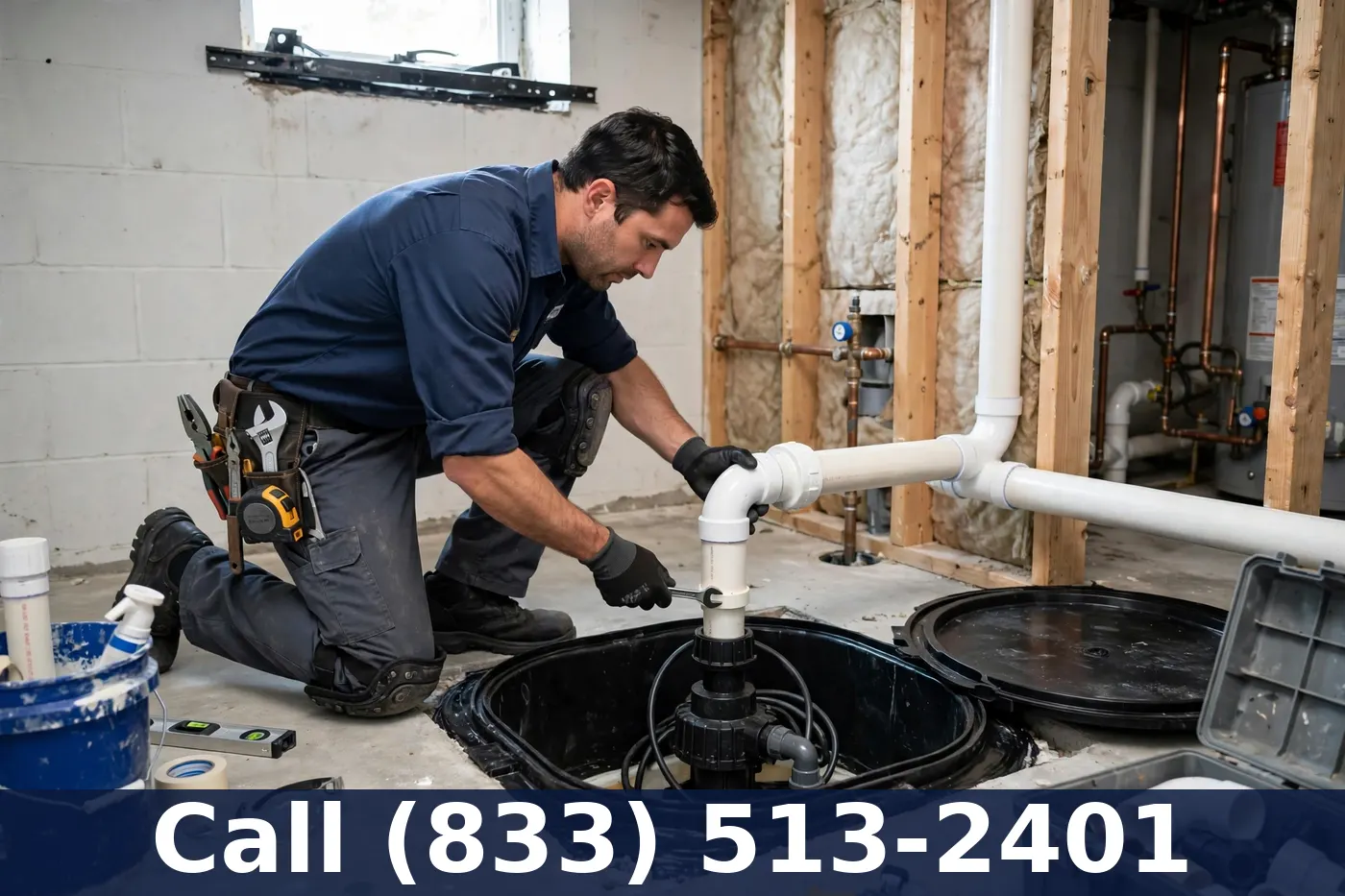
Most of a house drains by gravity: waste falls through the pipes, out the foundation, and into the sewer. That plan breaks down for any fixture that sits below the level where the main drain leaves the house, because water won't flow uphill on its own. A sewage ejector pump closes that gap. Wastewater from the low fixtures flows into a sealed basin set under the floor, and once the water lifts the float switch, the pump fires and pushes everything up through a discharge pipe into the main stack. A check valve keeps each pumped load from draining back down between cycles, and the basin lid is sealed and vented so gases travel up the vent stack instead of into your home.
Signs your basement needs one
Not every basement has one, but if any of these sound familiar, an ejector system is what makes the plumbing down there work:
- There is a toilet, shower, or laundry set below the main drain line's exit height
- You're adding a basement bathroom, bar sink, or laundry during a remodel
- The old setup is failing: the pump runs constantly, odors drift up, or water sits in the pit
- A floor drain backs up whenever fixtures upstairs drain
If you're not sure where your main line exits, that's a normal thing to ask a plumber. The answer decides the whole design.
How the installation works, step by step
A proper install follows a clear order, and skipping steps is how jobs go wrong. First comes an on-site look at the fixture layout, the main line's exit height, and the path the discharge pipe will take. Then the floor is cut and a pit is dug to fit the basin. The basin is set level so the pump sits straight, and inlet pipes from each fixture are connected to its openings.
Next the pump is lowered into the basin, the discharge pipe is attached, and a check valve goes on that pipe to stop backflow. The vent is tied into the vent stack, the electrical connection is made, and everything is sealed. The system is tested by filling the basin with water: the float should turn the pump on at the right level and off at the low level, the alarm should trip if the water is forced past the high mark, and the discharge should flow cleanly into the main line. Only then is the area cleaned up and the system walked through with you.
What affects the cost
Every install is quoted on its own details, and the price moves with a handful of real factors. The size of the basin and the power of the pump matter, because more fixtures and a longer, higher discharge run need a stronger unit. Cutting through the concrete slab, reaching the vent stack, and running electrical to the panel all add labor depending on distance and access. The condition of the existing drain pipes matters too, since brittle or corroded pipe may need replacing as part of the job. Local permits and inspection add a step as well. Call (833) 513-2401 and describe your setup for an exact quote on your situation.
Taking care of the system after install
An ejector pump is mostly hands-off, but a little attention keeps it healthy. Keep the basin lid sealed and don't treat the toilet like a trash can: wipes, grease, and hygiene products are what jam or burn out pumps. Pay attention to sound. A pump that suddenly runs longer than it used to, or never seems to shut off, is telling you something changed. Test the alarm now and then, and if it ever goes off, cut back on water use and call (833) 513-2401 right away.
Who this service is for
This work is for anyone whose plumbing sits lower than the sewer line: finished basements with full bathrooms, laundry rooms, utility sinks, in-law suites, and small shops or offices with restrooms below grade. Plumbing Services Pros handles the whole job for homeowners across the Stockton area, from the first look at the space to the final test with the lid sealed and the alarm checked. If you're adding fixtures below grade or the old pump is past its prime, call (833) 513-2401 and talk through the layout before the concrete work starts.
Features
- Sealed basin set into the basement floor, sized for the fixtures it serves
- Ejector pump matched to the lift height and discharge distance of the run
- Check valve on the discharge pipe that blocks backflow between cycles
- Vented lid tied into the vent stack for pressure and odor control
- Float switch adjusted so the basin can't overfill or run dry
- High-water alarm that sounds if the basin level rises too far
- Dedicated electrical connection wired for the pump motor
Benefits
- Below-grade toilets, showers, and sinks drain without backing up
- Waste moves uphill on schedule instead of sitting in the pipes
- Sealed system keeps sewer gas out of your living space
- Alarm gives you an early warning before any overflow
- A correctly sized pump doesn't overwork or wear out early
- Proper installation keeps the work up to local code expectations
Frequently asked questions
How is a sewage ejector pump different from a sump pump?
A sump pump moves groundwater or rainwater away from the foundation; it never touches sewage. A sewage ejector pump is built to handle raw wastewater from toilets, showers, and sinks, with a sealed basin, a vent, and a check valve that sump systems don't have. The two are not interchangeable, and code treats them differently.
Do I need an ejector pump if my basement fixtures seem to drain fine?
If the fixtures sit below the main sewer line, waste has no natural way out, and what looks like fine drainage today is often a backup waiting for the wrong day. A plumber can confirm where your main line exits the foundation and whether your setup relies on a pump. If there's no pump and there should be one, the next heavy-use day is the risk.
Will the basin smell up my basement?
A properly installed system should not. The basin lid is sealed and the gases are routed out through the vent stack, so odors stay out of the living space. If you smell sewage near the pit, the seal, the vent, or the lid hardware needs attention -- call Plumbing Services Pros and have it checked.
What happens during a power outage?
The pump can't run without electricity, so the basin will fill as fixtures are used. Keep water use to a minimum until power returns, and avoid flushing or running the washing machine. Many homeowners pair the system with a battery-backed alarm so at least the warning still works.
Can one pump handle a whole basement bathroom -- toilet, shower, and sink?
Yes, when the system is sized for it. The basin and pump are matched to the fixture count and the height and distance of the discharge run, so a full bath, a laundry set, or both can share one system. Undersizing is what causes constant running and early failure, which is why the sizing step matters.
How long does installation usually take?
Most installs wrap up in a day or two of on-site work, depending on the concrete cutting, the vent and electrical runs, and whether old pipe needs replacing. The first visit is the assessment and measurement; the crew comes back with the basin and pump sized for your layout.
What drives the price of a sewage ejector pump installation?
Basin size, pump power, the length and height of the discharge run, how much concrete has to be cut, how far the vent and electrical connections run, the condition of the existing drain pipe, and local permit and inspection steps. Call (833) 513-2401 with your layout and get an exact quote rather than a guess.