
Sewer Cleanout Installation Near Me
Starting price: Call for pricing
A sewer cleanout is a capped access point in your main drain line that lets a plumber run a camera, snake, or jetter straight into the pipe from the yard. Many older homes were built without one, which means every sewer problem turns into pulling a toilet or digging blind. Plumbing Services Pros installs one-way and two-way cleanouts on existing sewer lines, so the next blockage is a routine service call instead of a small excavation project.
What a sewer cleanout is (and isn't)
A sewer cleanout is a vertical pipe that taps into your main sewer line and rises to the surface, sealed with a screw-off cap. When the cap comes off, a plumber can feed a camera, an auger, or a hydro-jetter directly into the line -- no toilet removal, no guessing where the blockage sits. What it is not is a fix for clogs themselves. A cleanout doesn't stop roots, grease, or broken pipe from causing trouble; it gives the next service visit a straight, easy path into the pipe so the real problem gets found and cleared faster.
How you know your home is missing one
Most homes built before the modern code era never got a cleanout, and many owners don't realize it until the first big backup. The telltale sign is what the last plumber had to do: if clearing your main line meant pulling a toilet or working through a vent stack on the roof, there's no cleanout. You can also walk the yard and look for a small round or square cap near the foundation or along the path to the street. No cap, no cleanout. Plumbing Services Pros can confirm with a camera locate and mark the line's route before any digging starts.
One-way or two-way: choosing the fitting
A one-way cleanout gives access in a single direction along the pipe -- usually toward the street or the septic tank. A two-way cleanout uses a special fitting with two capped ports angled in opposite directions, so tools can go upstream back toward the house or downstream toward the main. Two-way fittings go in where the line transitions from under the foundation to the yard, and they're the more useful choice when the layout allows it: one access point covers the whole lateral. The right option depends on your pipe's depth, direction, and the space available to dig.
How the installation works
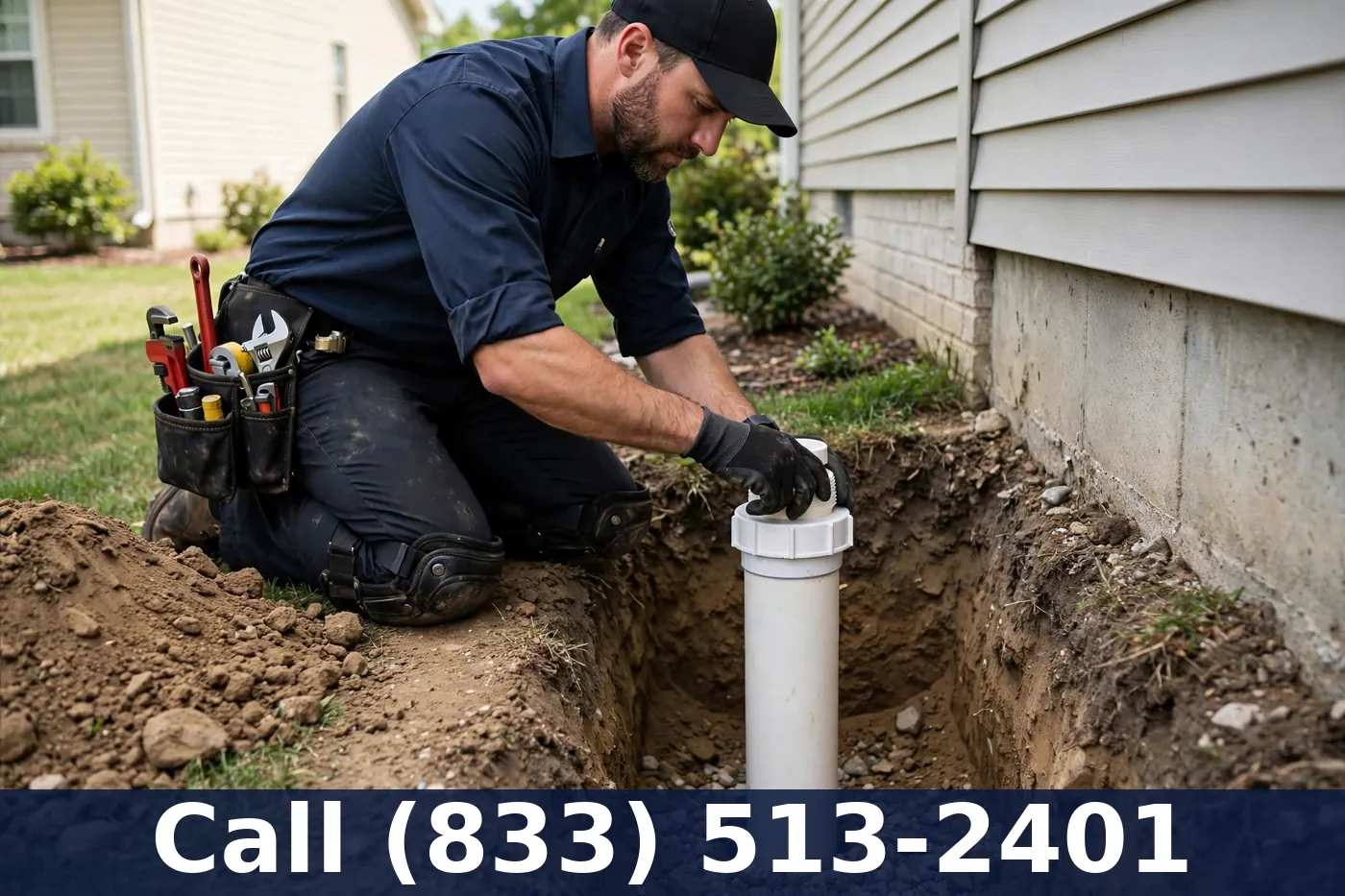
The job starts with locating. A camera or locator traces the main line's path and depth so the crew digs in exactly the right spot. Then the ground is opened -- typically a few feet down for a residential line -- and a section of the existing pipe is exposed. A wye or tee fitting is cut in, a PVC riser is extended up to grade, and a threaded cap seals the top, often with a protective box around it at the surface. After a flush test confirms the joint holds and the line flows, the hole is backfilled, compacted, and graded. Where a permit is required, inspection happens before the final backfill, so the work is documented and code-ready.
What affects the cost
Pricing follows the digging and the details. Pipe depth is the biggest driver: a shallow line is a quick dig, while a deep one means more excavation, more shoring, and more labor. Access matters too -- a clear yard digs faster than one under concrete, pavers, or mature landscaping. The fitting choice (one-way or two-way), the pipe material being tied into, and the condition of the old line all play in, since brittle or collapsed pipe may need repair once exposed. Permits and inspection add a step where required. Call (833) 513-2401 and describe your yard and your line for an exact quote.
Keeping the cleanout accessible after install
A cleanout only helps if the next plumber can find it. Don't bury the cap under new landscaping, pavers, or a shed, and keep the protective box lid visible at grade. If you regrade the yard or add a patio, mark the spot and tell the crew it's there. A crushed or paved-over cleanout is almost as useless as no cleanout at all. When a drain slows down or a backup starts, tell the plumber you have one and where it sits -- the visit goes faster from there.
Who this work is for
This is for homeowners with older sewer lines, anyone who's paid for a main-line clearing that started with a pulled toilet, and buyers or sellers who want the sewer access documented before a sale. It's also the right move before a big landscaping or hardscaping project, while the yard is still open. Plumbing Services Pros handles cleanout installs across the Stockton area on cast iron, clay, and PVC lines. Call (833) 513-2401 to have your line located and get a straight answer on what the install involves.
Features
- Camera locate of the main line to confirm depth, route, and condition
- Wye or tee fitting cut into the existing sewer pipe
- PVC riser brought up to grade with a threaded, watertight cap
- Protective box or cover at the surface so the cap stays findable
- Two-way cleanout option for upstream and downstream access
- Backfill, compaction, and grading of the dug work area
- Permit and inspection handling where the local code requires it
Benefits
- Future drain service without pulling a toilet or cutting floors
- Cameras and snakes go in right at the yard -- faster diagnosis
- Less digging and disruption the next time a blockage hits
- A code-ready access point that helps at inspection or resale
- Routine maintenance visits stay simpler and cheaper
- One install pays off across every future sewer service
Frequently asked questions
Will installing a cleanout prevent sewer clogs?
No. A cleanout doesn't stop roots, grease, or damaged pipe from causing blockages. Its job is access: when a clog happens, the plumber gets into the line quickly through the cleanout instead of pulling a toilet or digging blind, so the clearing costs less and finishes faster.
Where in the yard does the cleanout go?
It goes on the main sewer line's route, usually within a few feet of the foundation for a two-way fitting or near the property line for a downstream access point. Plumbing Services Pros traces the line with a camera or locator first, then places the cleanout where it gives the best access with the least digging.
Can you add a cleanout without replacing the whole sewer line?
Often, yes. A section of accessible pipe is opened and the new fitting is tied in without touching the rest of the line. If the exposed pipe turns out to be collapsed, badly bellied, or crumbling, that section may need repair at the same time -- which the camera locate usually predicts before digging.
How much digging is involved?
The crew digs down to the pipe, which on residential lines is typically a few feet below grade. The hole only needs to be wide enough to cut in the fitting and bring the riser up. The work area is backfilled, compacted, and graded when the job is done.
Do I need a permit for a cleanout installation?
In many areas, yes -- tying into the sewer lateral counts as drainage work that local code wants inspected. Plumbing Services Pros handles the permit and schedules the inspection where required, so the installation is documented and won't cause problems at resale.
What drives the price of a sewer cleanout installation?
Pipe depth, digging access, the fitting type, the pipe material being tied into, the condition of the old line, and permit and inspection steps. Call (833) 513-2401 with your yard layout and get an exact quote instead of a guess.