
Sewer Line Camera Inspection Near Me
Starting price: Call for pricing
A sewer line camera inspection sends a waterproof video camera through your main drain to show exactly what's happening underground -- cracks, roots, offsets, bellies, and blockages. There's no digging and no guesswork: you watch the footage with the technician and see the pipe's real condition. Plumbing Services Pros performs camera inspections for homeowners across the area, with the problem spots located and marked from above ground so any repair hits the right place.
What the camera actually shows you
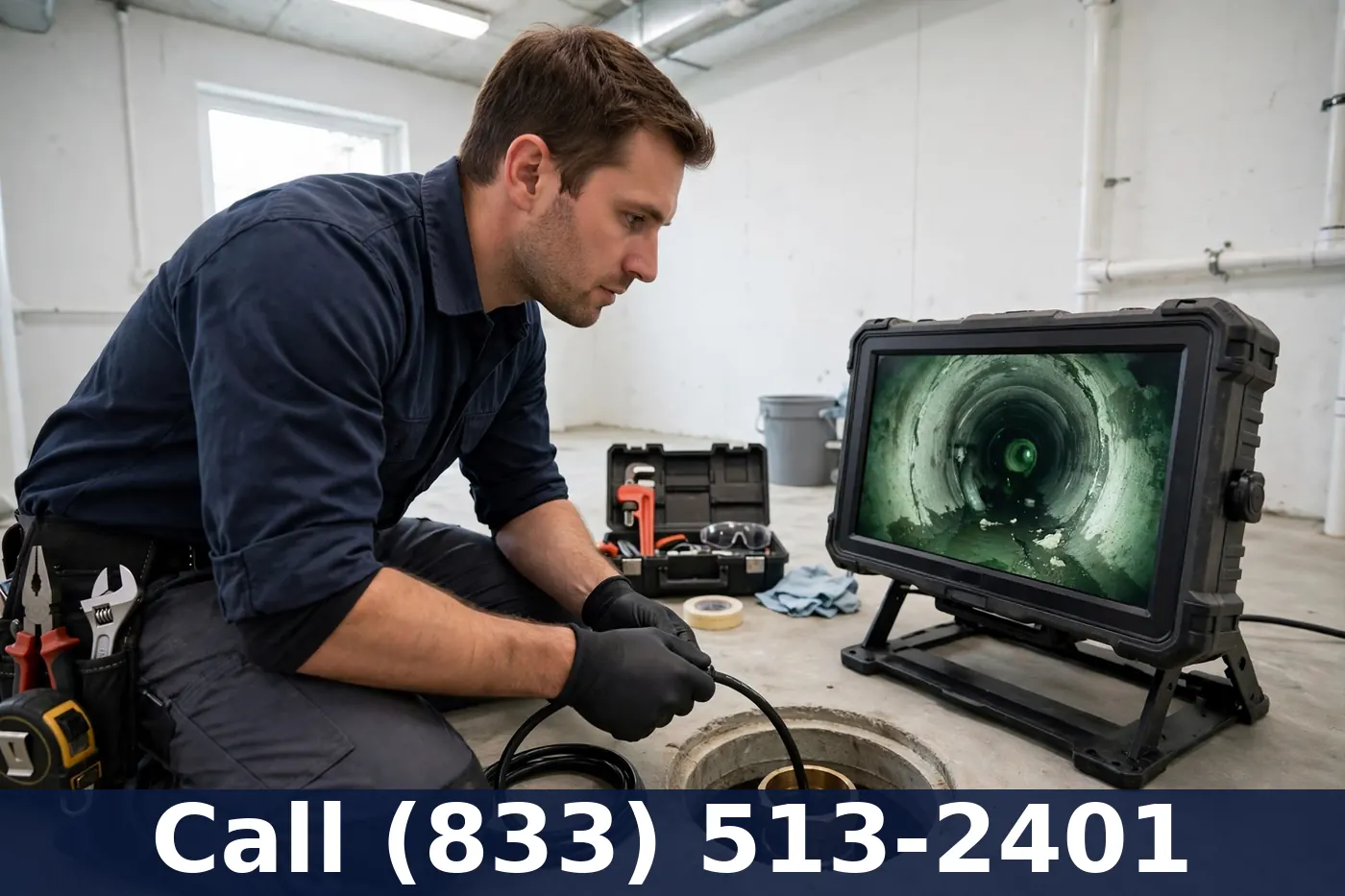
The camera is a small waterproof lens on the end of a flexible push cable, with lights bright enough to film the inside of a pipe even through standing water. As it travels from your cleanout (or a pulled toilet, when there's no cleanout) to the city connection, the monitor shows the pipe wall in real time: cracks, root masses pushing through joints, sections where the pipe has sagged into a belly and holds water, offsets where soil movement has shifted one segment out of line, and grease or debris buildup narrowing the flow. A locator wand above ground reads the signal from the camera head, so every problem gets pinned to an exact spot and depth. You see it all as it happens -- nothing is described to you secondhand.
When an inspection is worth it
A camera inspection earns its keep whenever the same problem keeps coming back. If a drain backs up, gets snaked clear, then backs up again weeks later, the clearing treated the symptom and the camera finds the cause. Multiple fixtures draining slowly at once, gurgling in the toilet when the washer runs, or a soggy patch in the yard over the sewer's path are all classic signs of a structural defect underground. It's also the standard move before buying an older home: a failed sewer line is one of the most expensive surprises a house can hide, and a scope puts it on the table while there's still time to negotiate. After any major clearing, a post-cleaning camera run shows why it clogged and whether the pipe needs repair.
How the inspection works from start to finish
The visit is straightforward and usually wraps up in well under two hours. The technician starts at an existing access point -- a cleanout is ideal, but a floor drain or pulled toilet works too -- and feeds the camera head into the line. Watching the live feed, they push the cable through the full run, noting the pipe material, the distance to each defect, and anything abnormal. When something shows up, the locator confirms its exact position and depth from the surface, often marked with paint so a repair crew can find it later. Everything is recorded. Before leaving, the technician walks you through the footage, explains what each finding means and what it doesn't, and hands over the video and written findings. If the line is fine, you hear that too -- and that's a useful answer.
What the footage usually finds
In older neighborhoods the usual suspects show up again and again. Tree roots work into clay pipe joints and grow into masses that catch everything passing by. Cast iron develops scale and corrosion that narrows the pipe from the inside. Soil movement -- common in areas with shifting or expansive ground -- offsets joints or creates bellies where waste pools instead of flowing. Some homes still have fiber-based pipe from the mid-20th century that deforms and collapses from the inside, which only a camera can see before it fails completely. And new construction isn't exempt: crushed pipe under a footing, construction debris left in the line, or a run installed with too little slope all show up on camera. Each finding points to a different fix, which is exactly why looking first matters.
Inspection first, clearing second -- or the reverse
People often ask whether they need the camera or just a drain clearing. Here's the practical rule: if a drain backs up once and a clearing fixes it for good, the camera wasn't necessary. If the problem returns, if several fixtures are slow together, or if you can smell sewage where you shouldn't, clearing alone is a temporary patch on something structural. Note that a heavily blocked line sometimes has to be cleared before the camera can get through -- roots and debris can stop the lens. Plumbing Services Pros handles that in the right order: clear enough to see, then scope, then recommend based on what the footage shows rather than what anyone guessed.
What affects the cost
A camera inspection is one of the most affordable diagnostic services in plumbing, and the price moves with a few simple factors: how the line is accessed (an existing cleanout is fastest), the length and complexity of the run, and whether the line needs clearing before the camera can pass through. Formal written reports for real estate transactions take more documentation time than a standard findings summary. Call (833) 513-2401 to book the inspection and get an exact quote for your setup.
Features
- Waterproof HD camera fed through the full length of the sewer line
- Live video feed you can watch on the monitor as it happens
- Electronic locator that marks each problem's position and depth
- Recorded footage saved for your records and future estimates
- Written findings that name each defect and where it sits
- Inspection through a cleanout, toilet flange, or drain opening
- Plain-English walkthrough of what the footage means
Benefits
- Know the real cause instead of paying to clear the same clog twice
- Repairs target one spot instead of tearing up the whole yard
- Footage you can share with a buyer, seller, or insurer
- Problems get caught before they become a sewage backup
- No digging, no damage to landscaping for the inspection itself
- Clear evidence for repair quotes -- no taking anyone's word for it
Frequently asked questions
Do you have to dig anything up for a camera inspection?
No. The camera goes in through an existing cleanout, floor drain, or pulled toilet, and the locator reads its position from the surface. The inspection itself disturbs nothing -- no digging, no torn-up landscaping.
How long does a sewer camera inspection take?
Most residential inspections run well under two hours from arrival to findings, including the camera pass, locating any problems, reviewing the footage with you, and producing the written summary. Long or hard-to-access lines can take a bit longer.
Can the camera see through standing water or root masses?
The camera lights are built to film through standing water, and roots show up clearly on the feed. If a blockage is so heavy the cable can't pass, the line is cleared first and then scoped -- you still get the full picture before any repair decision.
Will I get a copy of the video?
Yes. The inspection is recorded and you receive the footage plus written findings naming each defect and its location. Keep it: it's useful for repair quotes, real estate negotiations, and comparing the line's condition over time.
Should I get a camera inspection before buying a house?
For an older home, it's one of the smartest inspection add-ons. A standard home inspection doesn't look inside the sewer line, and a failed lateral is a costly surprise. A scope before closing puts the line's real condition on the table while you can still negotiate.
What drives the price of a camera inspection?
Access method, line length and complexity, whether the line needs clearing before the camera can pass, and how formal the written report needs to be. Call (833) 513-2401 and describe your situation for an exact quote.