
Sewer Line Repair Near Me
Starting price: Call for pricing
When a sewer line cracks, offsets, fills with roots, or collapses in one section, a sewer line repair fixes that damaged stretch without necessarily replacing the whole run. The right method -- a targeted spot repair, trenchless pipe lining, or pipe bursting -- depends on what the camera finds and how much of the line is affected. Plumbing Services Pros diagnoses the line first, then repairs only what needs repairing, keeping the digging and the disruption to a minimum.
What counts as a sewer line repair
A repair is different from a clearing and different from a full replacement. Clearing removes the blockage; replacement swaps the entire line. Repair sits in between: it fixes the damaged section of pipe -- the cracked joint, the root-split segment, the short stretch that collapsed -- and leaves the healthy pipe alone. That makes it the right answer when the camera shows a localized failure in a line that's otherwise sound. If the footage shows the whole run failing at once, or the pipe material itself is disintegrating, the honest recommendation shifts toward replacement, which is a separate service. The camera decides, not the sales pitch.
The three ways a broken line gets fixed
There are really three approaches, and each fits a different kind of damage.
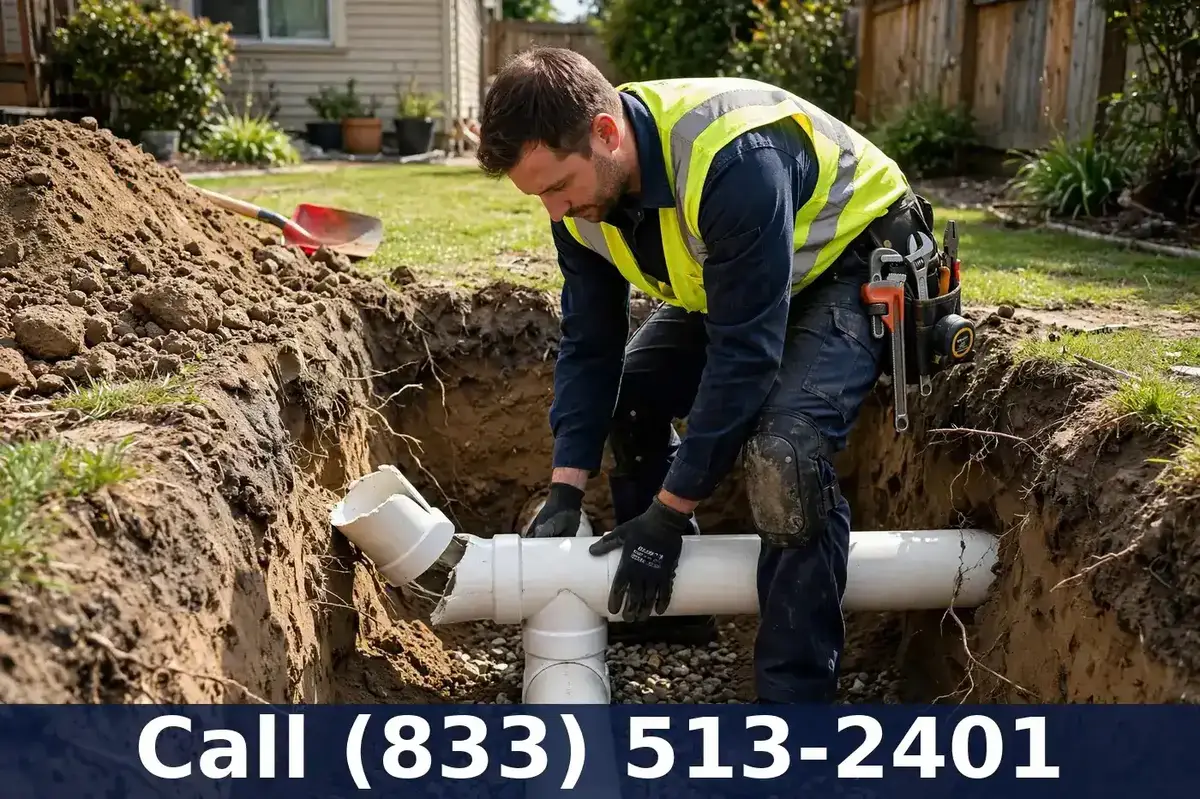
Spot repair is the simplest: dig one hole at the exact problem, cut out the failed section, and put in new pipe with proper joints and bedding. It's ideal for a single cracked or crushed segment in an otherwise healthy line, and it leaves the rest of the yard alone.
Trenchless pipe lining rebuilds the pipe from the inside. An epoxy-soaked liner is pulled or pushed through the damaged stretch and cured in place, forming a seamless new pipe within the old one. It needs access at one or two points -- often an existing cleanout -- and it suits cracked, root-intruded, or joint-leaking pipe that hasn't collapsed.
Pipe bursting replaces the pipe without a full trench. A bursting head is pulled through the old line, fracturing it outward while a new pipe follows right behind. It's the trenchless answer when the old pipe is too far gone to line -- collapsed, badly deformed, or made of a fiber material that won't hold a liner -- and it needs only entry and exit pits instead of an open trench.
How the repair method gets chosen
The decision follows the footage. A single discrete break in a sound line points to spot repair. Widespread cracking or root intrusion in a pipe that's still structurally there points to lining. Collapse, heavy deformation, or a material that can't be lined points to bursting or open replacement. Depth and location matter too: a shallow line under a lawn digs easily, while a deep line under a driveway or patio pushes the math toward trenchless. Plumbing Services Pros walks you through the footage, lays out which methods your line actually qualifies for, and recommends the smallest fix that solves the problem for real.
What the job looks like day to day
Most repairs start with locating and marking utilities, then opening access -- one pit for a spot repair, entry and exit points for trenchless work. The damaged section is exposed or the liner/bursting equipment is set up, the new pipe goes in, and connections are made with proper fittings. The line is then tested: water run through it, joints checked, and a post-repair camera pass to confirm the fix is clean and the grade is right. The excavation is backfilled in compacted lifts and the surface restored. A spot repair is typically a one-to-two-day job; trenchless work often compresses the pipe work into a single day, with restoration following. Open-cut repairs take longer because the trench and the surface repair are both real work.
What affects the cost
Cost follows the damage, the method, and the digging. The extent of the failure matters most: one bad joint costs less than fifty feet of ruined line. Trenchless methods need specialized equipment, while open digging needs more labor and restoration -- the right choice depends on your line, not a price list. Depth is a multiplier, since deeper pipe means more excavation and more safety work. Length, access (a clear lawn versus a driveway or mature trees), the pipe material being tied into, root removal needs, and permit and inspection steps all move the number. Call (833) 513-2401 after a camera inspection and get an exact quote based on your footage, not a guess.
After the repair: what changes
Once the failed section is fixed, the line should drain the way it was designed to -- fixtures emptying without gurgling, no sewage smells in the yard, no mystery backups after heavy use. Keep the post-repair camera footage; it's your proof of the line's condition and it's useful at resale or if another section ever acts up. And keep roots in mind: the new section is sound, but the remaining old pipe ages on its own schedule. If your line is old clay or cast iron, a follow-up camera check down the road is cheap insurance against the next surprise.
Features
- Camera inspection first so the repair targets the actual defect
- Spot repair that opens and replaces only the failed section
- Trenchless pipe lining that builds a new pipe inside the old one
- Pipe bursting that pulls a new line through the failed pipe
- Root removal and cleaning to prepare the line for repair
- New PVC or equivalent pipe on properly bedded, graded runs
- Permit handling and inspection where the local code requires it
Benefits
- The defect gets fixed, not just the symptom cleared again
- Trenchless options keep driveways and landscaping intact
- Repairs sized to the damage -- no paying for a full line you don't need
- Camera proof of the problem before anyone digs
- One repair visit instead of repeat clearing calls
- Work documented for inspection, insurance, or resale
Frequently asked questions
How do I know if my line needs a repair or a full replacement?
The camera footage decides. A localized defect in an otherwise sound line is a repair candidate; widespread failure, collapsed sections, or a disintegrating pipe material point to replacement. Plumbing Services Pros shows you the footage and explains which category your line falls into before quoting anything.
Can a sewer line be repaired without digging up my yard?
Often, yes. Pipe lining and pipe bursting are trenchless methods that work through small access points instead of an open trench. They don't fit every situation -- collapsed or badly deformed pipe may still need excavation -- but the camera inspection shows which options your line qualifies for.
Will the repaired section hold up over time?
A proper repair addresses the actual defect with new pipe and correct joints and bedding, so that section is sound. How the whole line fares long-term depends on the remaining pipe's material, age, and soil conditions, which the camera inspection documents so you know what you're working with.
How long does a sewer line repair take?
A spot repair is typically a one-to-two-day job. Trenchless lining or bursting usually compresses the pipe work into a single day, with surface restoration after. Open-cut repairs take longer because both the trench and the restoration are substantial work.
Will my driveway or landscaping be torn up?
It depends on the method. Trenchless options are chosen specifically to avoid tearing up driveways, patios, and established landscaping. Open-cut repair does disturb the surface above the pipe, and the work area is backfilled, compacted, and restored when the job is done.
What drives the price of a sewer line repair?
The extent of the damage, the repair method the line qualifies for, pipe depth and length, surface access, the pipe material being tied into, root removal needs, and permit and inspection steps. Call (833) 513-2401 with your camera findings for an exact quote.