
Sewer Odor Detection Near Me
Starting price: Call for pricing
Sewer odor detection is the diagnostic work that finds where a sewage smell is actually coming from when you can't see the source -- a dry trap, a cracked vent, a failed wax ring, or a break in the line. Guessing leads to the wrong repair; testing leads to the right one. Plumbing Services Pros traces sewer gas to its entry point with smoke testing, gas detection, and camera inspection, then tells you exactly what needs fixing.
What sewer odor detection actually is
A sewage smell with no visible source is a detective problem, not a cleaning problem. Pouring chemicals down the drain or scrubbing the bathroom doesn't help when the odor is entering through a cracked vent pipe in the wall or a dried-out trap in a floor drain you never use. Odor detection is the methodical process of finding that entry point: checking every trap and seal, testing the vent system, and using smoke or gas detection to make the invisible leak visible. The output isn't a repair -- it's a diagnosis you can trust, naming the exact spot where sewer gas gets in and what it will take to close it.
The usual suspects, in order
Most sewer smells come from a short list, and a good technician works through it in order of likelihood. First: dried traps. Every drain has a U-shaped trap that holds water as a seal against sewer gas, and traps in rarely used fixtures -- guest bathrooms, basement floor drains, laundry standpipes -- evaporate dry. Second: failed seals, especially the wax ring under a rocking toilet or a missing cleanout cap. Third: vent problems. The vent stack carries sewer gas up and out through the roof; if it's blocked by debris, cracked, or disconnected, gas finds another way out -- often into the house. Fourth: actual pipe damage -- cracked drain lines, failed joints, or breaks underground. The smell's location and behavior usually point at which suspect is guilty before any test is run.
How smoke testing finds the leak
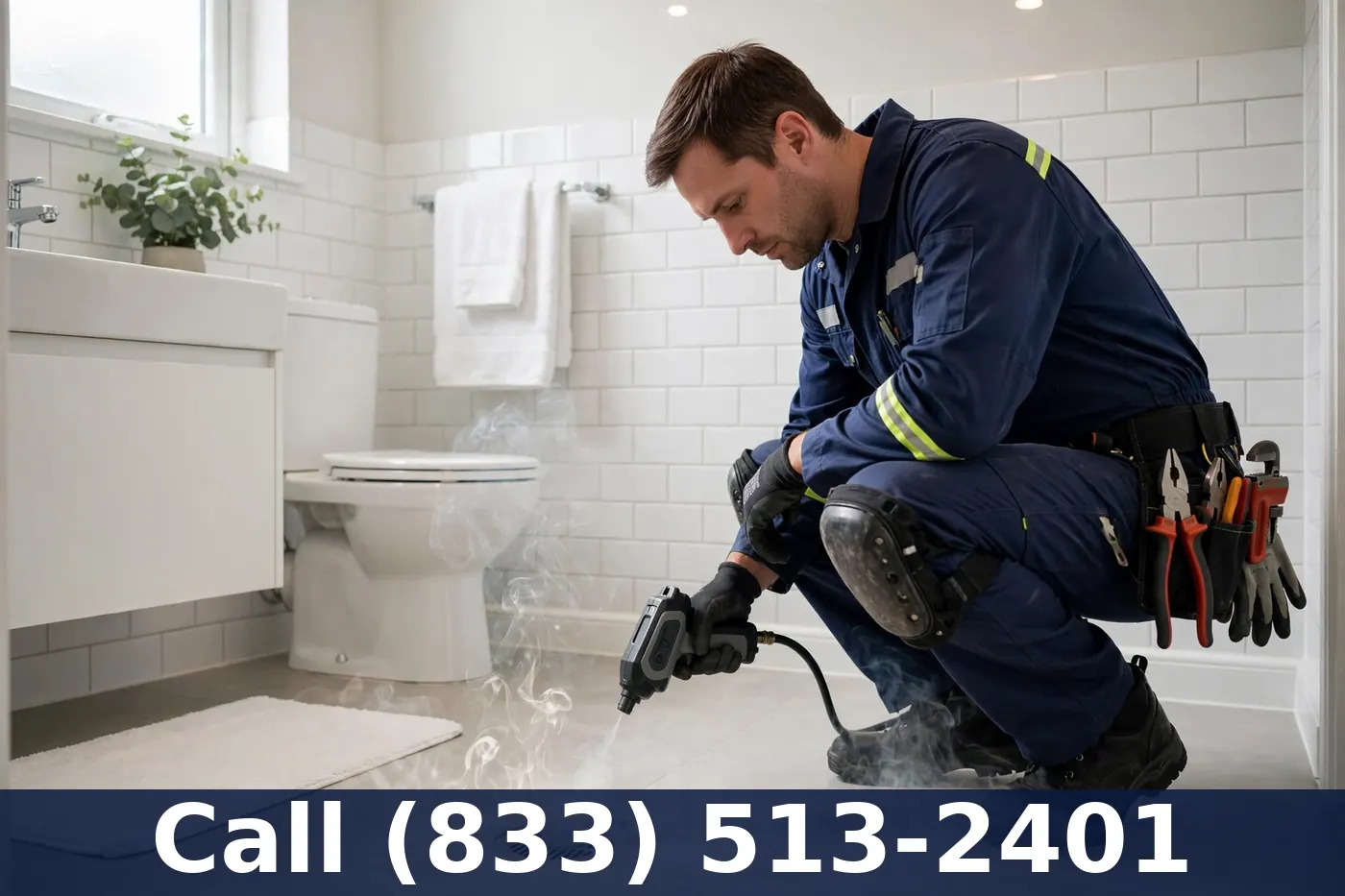
When the quick checks don't reveal the source, smoke testing does. The technician seals the drain openings and introduces non-toxic smoke into the drain, waste, and vent system under light pressure. The smoke follows the exact same paths sewer gas takes -- and wherever it escapes, that's the entry point: a cracked pipe behind a wall, a failed joint, an improper vent connection, a cross-connection that shouldn't exist. Each escape point is marked and documented. The test finds breaks that no visual inspection could reach, without opening a single wall. Paired with electronic gas detectors that pick up trace amounts of hydrogen sulfide and methane, it's how intermittent or faint odors get pinned down even when the smell isn't active during the visit.
Why the smell comes and goes
An odor that appears and vanishes is one of the most useful clues, not a reason to ignore it. Traps lose their seal under specific conditions: an exhaust fan running, a window opened, a change in barometric pressure, or a big fixture draining elsewhere in the house can siphon or push air past a weakened seal. When conditions normalize, the smell fades -- and the underlying gap is still there. Vent issues behave the same way, worse on windy days or when the system is under load. This is exactly why detection matters more than timing: Plumbing Services Pros finds the source whether or not the smell is present when the technician arrives, because the tests reveal the gap itself, not just the moment it leaks.
What affects the cost
Odor detection is diagnostic work, so pricing follows the investigation, not parts. A straightforward case -- a dry trap or a failed wax ring found in the first walkthrough -- is a quick visit. A hidden source that needs smoke testing, gas detection, roof vent inspection, or a camera run takes more time and equipment. The size of the building matters too: tracing an odor through a multi-bathroom house or a commercial space with floor drains everywhere is more methodical work than a single-bath home. Call (833) 513-2401 and describe where the smell shows up and when; that description usually predicts how involved the detection will be, and you'll get an exact quote before the testing starts.
What happens after the source is found
Detection ends with answers, not ambiguity: the entry point, what's wrong with it, and what the repair involves. Common fixes are refreshingly small -- refilling and maintaining a trap, replacing a wax ring, reseating a cleanout cap, clearing a blocked vent. Deeper findings like a cracked vent stack or a broken drain line get their own repair quote, with the marked location making the fix surgical instead of exploratory. Either way, you stop guessing. And once the entry point is sealed, the smell doesn't come back -- because the gas no longer has a way in.
Features
- Full walkthrough to map where the odor is strongest
- Trap and seal check at every fixture, floor drain, and cleanout
- Non-toxic smoke testing that reveals cracks and failed joints
- Electronic gas detection for hydrogen sulfide and methane traces
- Vent stack inspection for blockages, cracks, or disconnections
- Camera inspection of the drain line where a break is suspected
- Written findings that name the source and the recommended fix
Benefits
- The real entry point gets found instead of masked with air freshener
- Testing avoids tearing open walls or digging on a hunch
- One diagnosis points to one repair -- no trial-and-error fixes
- Intermittent smells get traced even when the odor isn't active
- Findings you can act on immediately or get quoted against
- Your home smells like a home again
Frequently asked questions
Is a sewer gas smell dangerous?
At the levels found in homes, sewer gas is mostly unpleasant rather than an emergency, but a persistent sewage smell always deserves attention because it means gas has an entry point it shouldn't have. If the odor is strong, widespread, or comes with headaches or nausea, ventilate the space and call Plumbing Services Pros to find the source promptly.
Why does the sewage smell come and go instead of staying constant?
Intermittent odors usually mean a partial trap seal failure or a venting issue rather than a major pipe break. Exhaust fans, open windows, pressure changes, or a large fixture draining can push or pull air past a weakened seal; when conditions normalize, the smell fades. The gap is still there, which is why detection is worth doing even on a good-smell day.
Can you find the source if the smell isn't there when you arrive?
Yes. Smoke testing, gas detection, and trap and vent checks reveal the entry point itself -- the crack, the dry trap, the failed seal -- not just the moment it leaks. The tests work whether or not the odor is active during the visit.
What is a smoke test, and is it safe?
A smoke test introduces non-toxic smoke into the drain, waste, and vent system under light pressure after sealing the drain openings. The smoke escapes through any crack, failed joint, or bad connection, marking the exact leak points. It's a standard plumbing diagnostic, safe for the home, and it finds breaks without opening walls.
My drains were just cleaned but the smell is still there. Why?
Because cleaning removes blockages, not entry points. If the odor comes from a dry trap, a failed wax ring, a cracked vent, or a broken pipe, no amount of drain cleaning changes that. Odor detection finds the actual entry point so the right repair -- not another cleaning -- ends the smell.
What drives the price of sewer odor detection?
How quickly the source reveals itself. A dry trap or failed seal found in the first walkthrough is a short visit; a hidden source needing smoke testing, gas detection, vent inspection, or camera work takes longer. Building size and the number of fixtures matter too. Call (833) 513-2401 with the smell's location and timing for an exact quote.