
Sewer Pipe Lining Near Me
Starting price: Call for pricing
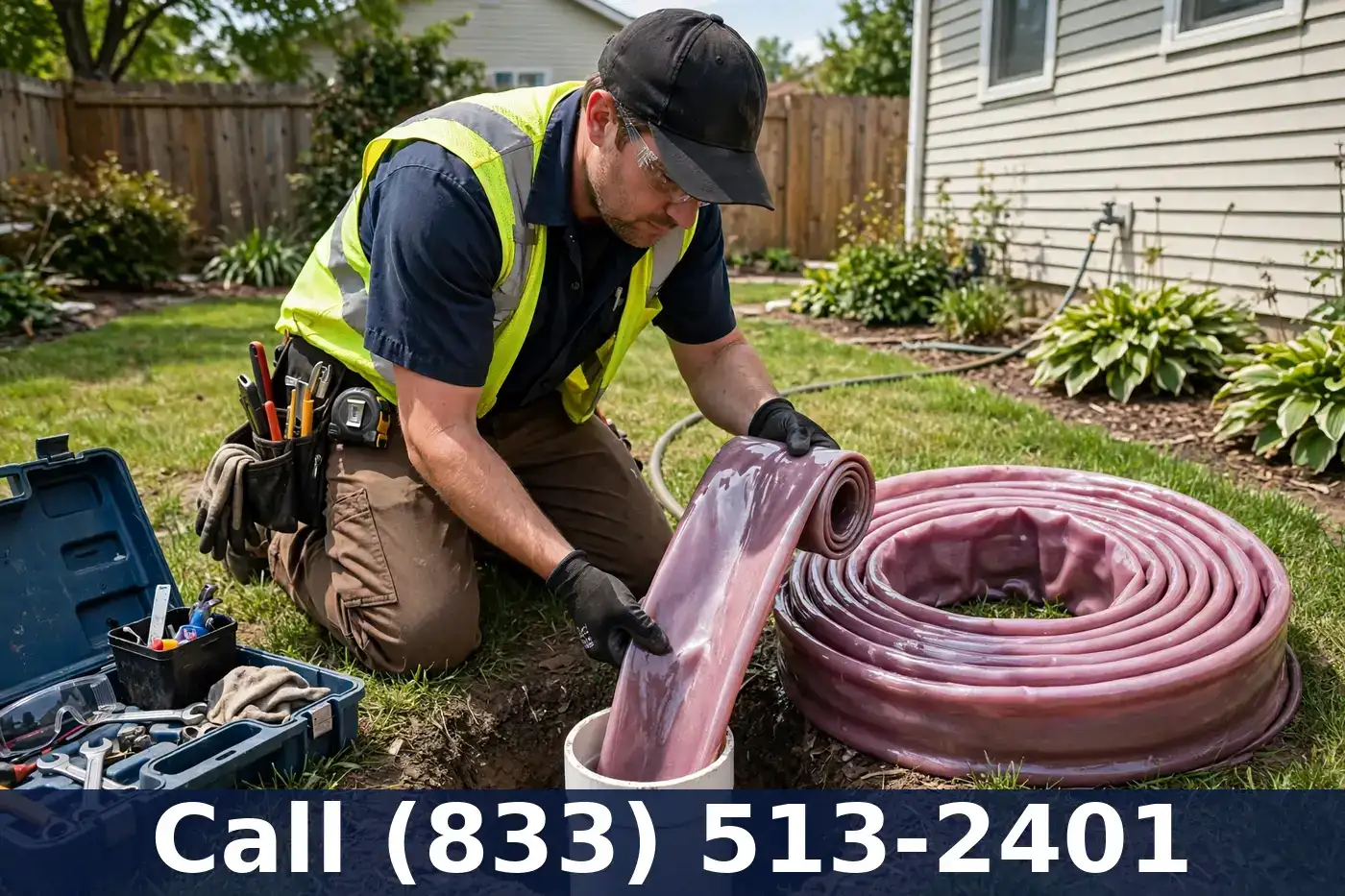
Sewer pipe lining -- also called cured-in-place pipe, or CIPP -- rebuilds a damaged sewer line from the inside by curing a resin-soaked liner into a new, seamless pipe within the old one. The old pipe stays in the ground as a mold; the liner becomes the pipe, with no joints for roots to enter. Plumbing Services Pros lines cracked, root-intruded, and corroded laterals through an existing cleanout, so there's no trench across your yard.
What pipe lining actually does
Pipe lining manufactures a new pipe in place, inside the one that's failing. A flexible tube of felt or fiberglass is saturated with resin, pulled or inverted into the cleaned lateral through a cleanout, and inflated so it presses tight against the old pipe's walls. The resin is then cured -- with hot water, steam, or ultraviolet light -- until it hardens into a rigid, smooth-walled pipe that follows the original alignment exactly. The old clay, cast iron, or ABS becomes nothing more than the mold it was cast in; the liner carries the flow from then on. The key result is a jointless pipe: most sewer failures start at joints, and lining erases them all at once.
Which lines qualify (and which don't)
A liner needs a host pipe that still holds its round shape and its slope. Vitrified clay with open, root-choked joints is the classic candidate -- the pipe walls are nearly indestructible, and only the joints have failed. Cast iron scaled rough inside lines well, because the liner doesn't need the old pipe to be watertight, only to hold its form. Cracked or separated plastic pipe qualifies too. What doesn't qualify is a collapse, a long belly holding standing water, or a line squeezed out of round -- those go to pipe bursting instead. The camera inspection, run before any proposal, is what sorts one from the other. Plumbing Services Pros tells you plainly when a liner isn't the right call.
The lining process, step by step
The job runs in a clear sequence. First the line is camera-inspected and measured so the liner is cut to the exact length. Then the host pipe is cleaned -- roots cut, scale and debris cleared -- because the liner can only bond to a clean surface. The resin-saturated liner goes in through the cleanout and is inflated against the pipe walls. Curing follows: heat or UV sets the resin hard, which is the part of the job that can't be rushed. Once cured, the ends are trimmed, any lateral connections are reopened, and a post-lining camera pass verifies the new pipe is smooth, open, and continuous. The cleanout cap goes back on, and the yard looks exactly as it did that morning.
Lining vs. bursting: how the choice is made
Lining and pipe bursting are both trenchless, but they solve different problems. Lining rehabilitates the existing pipe -- best when the pipe is structurally present but cracked, root-intruded, or leaking at joints. Bursting replaces the pipe entirely -- best when the old line is collapsed, badly deformed, or made of a material that won't hold a liner. Lining keeps the original diameter (the liner takes up a small amount of interior space, but the smooth surface actually improves flow); bursting can even upsize the line. The honest answer to "which is better" is always "it depends on your footage," and the camera decides before anyone quotes.
What affects the cost
Lining is priced on the length of the run, the pipe's diameter, and how much preparation the host pipe needs. A long lateral with heavy root intrusion and thick cast-iron scale takes more cleaning time than a short clay run with open joints. Access matters: a clean, reachable cleanout keeps things simple, while a line with no access point needs one created. The number of lateral connections to reopen after curing adds work, as do permit and inspection steps where required. Call (833) 513-2401 after a camera inspection for an exact quote based on your line's actual condition.
After the liner cures
Once the resin has hardened, the lateral is a single continuous pipe with no joints, no cracks, and a smooth interior that roots can't penetrate. Backups caused by joint intrusion and scale stop happening. The post-lining camera footage is your record of the finished work -- keep it with the inspection documentation. Maintenance stays simple: the new surface resists the buildup that plagued the old pipe, and any future camera check will show a clean, uniform line. If the rest of your property's drainage ever needs attention, that footage is also the baseline everything gets compared against.
Features
- Camera inspection first to confirm the line qualifies for lining
- Cleaning and descaling to prepare the host pipe
- Resin-saturated felt or fiberglass liner installed through a cleanout
- Liner inflated tight against the old pipe wall
- Curing by hot water, steam, or UV until the resin hardens
- Seamless, jointless new pipe formed inside the old one
- Post-lining camera check to verify the finished result
Benefits
- No trench across the yard, driveway, or landscaping
- Every crack and open joint sealed in one operation
- No joints left for tree roots to work into
- Smooth interior that restores full flow
- Most residential jobs finished in a day or two
- The old pipe never has to be dug up and hauled away
Frequently asked questions
How long does a pipe lining job take?
Most residential linings are completed in a day or two: inspection and cleaning, liner installation, curing, and the verification camera pass. The curing stage takes the time it takes -- rushing it would compromise the result -- and the crew gives you a realistic schedule after the initial camera inspection.
Does the liner make the pipe smaller?
The liner takes up a small amount of interior space, but its smooth surface actually improves flow compared to a rough, scaled, or root-choked old pipe. In practice, lined lines drain better than they did before the work.
What if my pipe has already collapsed?
A collapsed section can't be lined, because the liner needs a round host pipe to form against. Collapsed, badly bellied, or out-of-round lines are pipe bursting or open-cut jobs instead. The pre-lining camera inspection identifies this before anyone commits to a method.
How long does a lined pipe last?
A properly installed CIPP liner is a structural pipe designed for a long service life -- it has no joints to fail and resists root intrusion and corrosion. How it performs over time depends on correct installation and curing, which is why the post-lining camera verification matters.
Can you line a pipe that runs under my house slab?
Yes -- that's one of lining's biggest advantages. Because the liner goes in through a cleanout, pipe under slabs, driveways, and patios gets rehabilitated without breaking any of them open. It's the main reason lining exists as an alternative to excavation.
What drives the price of sewer pipe lining?
The length and diameter of the run, how much cleaning and preparation the host pipe needs, access conditions, the number of connections to reopen, and permit and inspection steps. Call (833) 513-2401 with your camera findings for an exact quote.