
Shower Valve Replacement Near Me
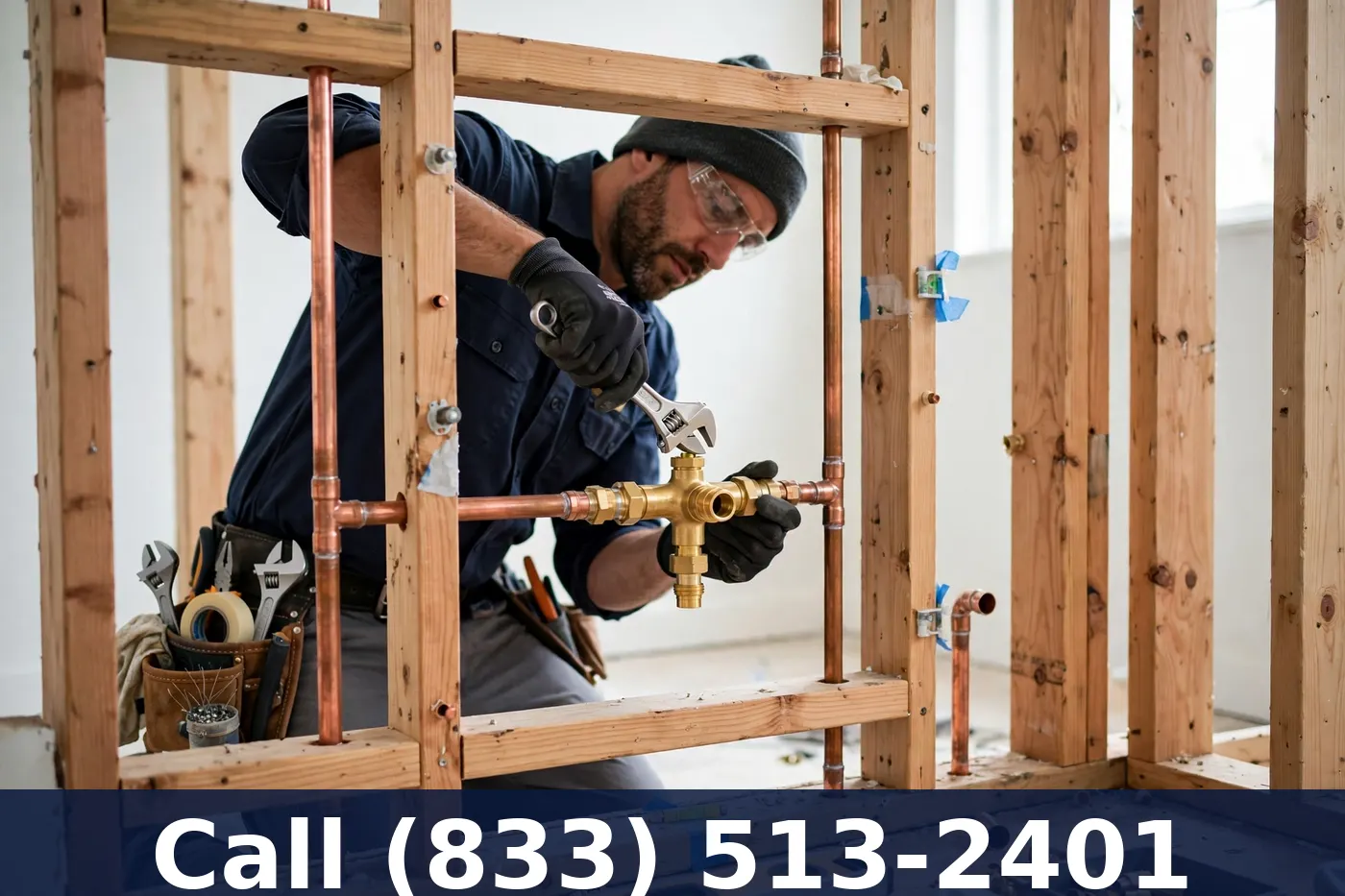
Starting price: Call for pricing
The shower valve is the control center behind your shower wall -- it mixes hot and cold, sets the flow, and shuts the water off. When its cartridge wears out, you get the endless drip, the stiff handle, or the temperature that swings without warning. Plumbing Services Pros replaces worn shower cartridges and, when the valve body itself has failed, full valve assemblies -- matched to your plumbing and tested before the wall is closed up.
What the shower valve does
Behind the trim plate on your shower wall sits the valve -- the part that actually runs the shower. The valve body is the fixed brass housing connected to the hot and cold supply lines; inside it sits the cartridge, the moving part that mixes the two streams, controls the flow, and shuts everything off when you turn the handle. Every drip, every temperature swing, every stiff handle traces back to one of these two components. Understanding which one has failed is the whole job, because a cartridge swap and a full valve replacement are very different operations.
Cartridge replacement vs. full valve replacement
Most valve problems are cartridge problems. The cartridge's seals harden, its internal parts wear, and the result is a drip that won't stop, a handle that's hard to turn, or water that won't hold a temperature. Swapping the cartridge fixes all of that through the existing opening behind the trim plate -- no tile broken, no wall opened. A good plumber tries this first.
Full valve body replacement is the bigger job, and it's needed in specific situations: the brass body itself is cracked or corroded through, a new cartridge doesn't stop the leak, the valve is so old that cartridges are no longer made, or you're switching valve types -- say, upgrading an old two-handle mixer to a pressure-balancing valve. That work means opening the wall, cutting out the old body, soldering or connecting the new one to the supply lines, and patching the wall afterward. Plumbing Services Pros diagnoses first and recommends the smaller fix whenever it will genuinely solve the problem.
Signs your valve needs attention
The symptoms are hard to miss once you know what they mean. A showerhead that drips after the handle is fully off is the classic worn-cartridge sign. A handle that's stiff, loose, or gritty to turn means the cartridge's internals are degrading. Temperature that swings hot and cold on its own -- especially when a toilet flushes or a faucet opens elsewhere -- points to a failing pressure-balancing mechanism inside the cartridge. Water leaking from behind the trim plate, or a stain spreading on the wall or ceiling, suggests the valve body or its connections are compromised and needs a closer look. Any of these is worth a service call before the drip becomes a leak inside the wall.
How the replacement works
For a cartridge swap, the visit is straightforward: water to the shower is shut off and the lines are drained, the handle and trim plate come off, the old cartridge is pulled, and a matching new one goes in. Everything is reassembled, the water comes back on, and the valve is tested -- full hot, full cold, mixed, and fully off, with no drip.
A full valve replacement takes more doing. After shutoff and drain-down, the wall is opened around the valve -- from the shower side or, when possible, from the closet or room behind, which keeps the tile intact. The old valve body is cut out of the supply lines, the new body is connected and secured at the correct depth for the finished wall, and the lines are pressure-tested before anything is closed up. Then the wall is patched, the trim kit goes on, and the shower is run through its full range. The testing matters more than the patching: a valve verified under pressure before close-up is a valve that won't surprise you later.
What affects the cost
The single biggest cost driver is which job it is: a cartridge replacement is a parts-and-labor visit, while a full valve replacement involves wall opening, pipe work, and patching. Valve brand and age matter -- common cartridges are readily available, while obsolete or obscure valves take more sourcing. Access changes the math too: a valve reachable through a closet wall is simpler than one buried behind finished tile with no access panel. Upgrading valve types (adding pressure-balancing or thermostatic control) adds the cost of the new valve and the re-piping to fit it. Call (833) 513-2401, describe the symptom, and get an exact quote once the valve is identified.
After the new valve is in
A fresh cartridge or valve changes the daily experience more than people expect: the handle moves like it should, the temperature stays put, and the shower is silent when it's off. Keep the trim plate's caulk line intact -- it's the small seal that keeps shower spray from getting behind the wall. If the handle ever stiffens again or a drip returns down the road, it's the cartridge talking, and catching it early keeps it a small job. And if your old valve never had pressure-balancing and the new one does, you'll notice the difference the first time someone flushes while you're in the shower.
Features
- Diagnosis that separates cartridge failure from valve body failure
- Cartridge replacement through the existing wall opening
- Full valve body replacement with new supply connections
- Pressure-balancing or thermostatic valve upgrades where supported
- Matching cartridges sourced for major valve brands
- Water shutoff, line draining, and clean work-area protection
- Full testing of flow, temperature, and shutoff before sign-off
Benefits
- The drip stops instead of running up the water bill
- Handles turn smoothly instead of fighting you
- Temperature stays where you set it
- No more surprise scalding when another fixture runs
- The right fix the first time -- cartridge or full valve, not a guess
- Work tested under pressure before the wall goes back together
Frequently asked questions
How do you decide between a cartridge replacement and a full valve replacement?
The valve body gets inspected first. If the brass housing is sound and the symptoms match wear -- dripping, stiffness, temperature swings -- a cartridge swap is the fix. A full replacement is needed when the body is cracked or corroded, a new cartridge doesn't stop the leak, cartridges are discontinued, or you're changing valve types. Plumbing Services Pros diagnoses before quoting either.
Will you have to break my tile to replace the valve?
A cartridge replacement never touches the tile -- it's done through the trim opening. A full valve replacement needs wall access, and when there's a closet or room on the other side of the shower wall, the opening goes there instead, leaving your tile untouched. The access plan is part of the quote.
How long does a shower valve replacement take?
A cartridge replacement is typically a single visit of an hour or two. A full valve body replacement takes longer -- wall opening, pipe work, pressure testing, and patching -- usually wrapped up within a day or two depending on access and the wall finish.
Should I upgrade to a pressure-balancing valve while I'm at it?
If your current valve predates pressure-balancing and the shower goes scalding or cold when other fixtures run, upgrading during a full valve replacement is the natural time -- the wall is already open. A plumber can confirm whether your plumbing supports the upgrade before you commit.
Can I still use the shower while waiting for the repair?
A dripping shower is usable, just wasteful -- but don't ignore it, since the wear only progresses. If the valve is leaking into the wall, limit use until it's fixed. Once the appointment is set, Plumbing Services Pros will tell you whether to keep the water on or shut it off at the fixture stops.
What drives the price of a shower valve replacement?
Whether it's a cartridge swap or a full valve body replacement, the valve's brand and parts availability, wall access, and whether you're upgrading valve types. Call (833) 513-2401 with your valve's symptoms and get an exact quote after diagnosis.