
Sump Pump Installation Near Me
Starting price: Call for pricing
A sump pump sits in a pit at the lowest point of your basement or crawl space and pumps groundwater out before it can flood in. Plumbing Services Pros installs submersible and pedestal sump pumps, sized to your home's water load, with battery backup options for when storms knock out power. If water is finding its way in, this is the system that pushes it back out.
What a sump pump installation includes
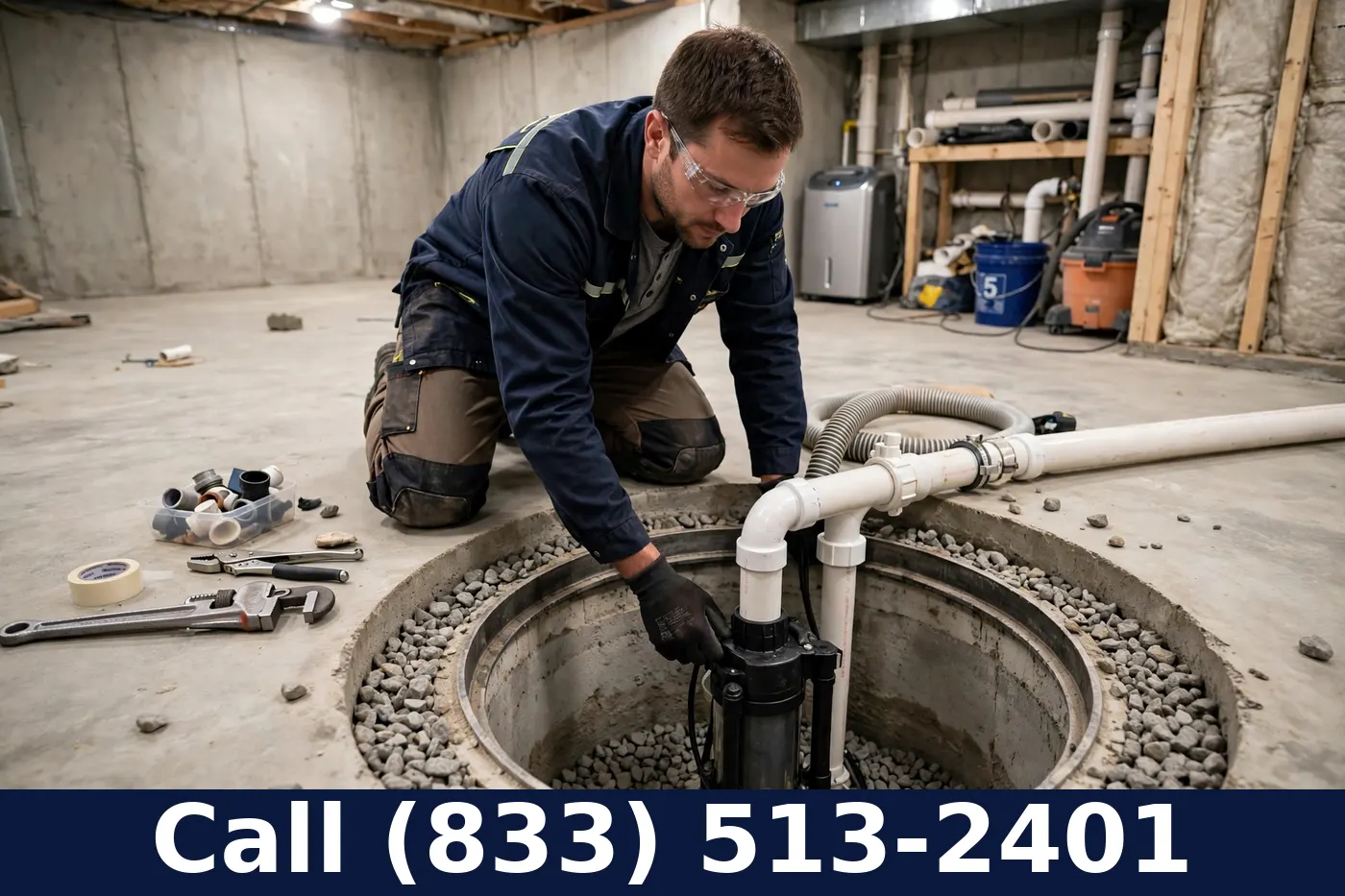
A sump pump system has four parts: a pit (also called a basin) dug at the lowest point of the basement or crawl space, the pump itself, a discharge pipe that carries water outside away from the foundation, and a check valve that keeps pumped water from flowing back down. Installation means digging or fitting that pit, setting the pump level inside it, running the discharge line out, and testing the whole thing by filling the pit with water.
It does not include waterproofing the walls or fixing foundation cracks — those are separate jobs. The pump handles water that collects at the low point. If water is coming through the walls themselves, say so when you call and we will be straight about what a pump can and cannot do.
Homes that need one
- Water pools in the basement or crawl space after rain
- The floor joint where wall meets slab stays damp
- You can see a high water table or the yard slopes toward the house
- A finished basement with a lot to lose from one flood
- No existing pump in a home that sits low or near irrigation
- A previous pump that died and left the pit doing nothing
How the installation goes
Our plumber starts by finding the lowest point where water collects — that is where the pit goes. The pit is dug and lined with a basin, gravel goes around it for drainage, and the pump is set level inside. The discharge pipe runs up and out through the foundation wall to a spot well away from the house, with a check valve on the line so water cannot drain back into the pit after each cycle.
Power comes next: the pump plugs into a GFCI-protected outlet, and if you chose a battery backup, that system gets installed and tested too. Then the real test — water poured into the pit until the float switch trips, the pump kicks on, and water moves out through the discharge. We watch a full cycle before we leave. To get started, call (833) 513-2401 and tell us what the water is doing.
What affects the cost
Whether a pit already exists is the biggest factor — dropping a pump into an existing basin is a much smaller job than digging a new pit through a concrete floor. The pump type and size matter too, as does adding a battery backup. Discharge routing can add work if the line has to travel far or go around obstacles to reach a safe drainage point. And electrical work adds a step if there is no suitable outlet near the pit. Call (833) 513-2401 and describe your basement for an exact quote.
Where we install around Stockton
Plumbing Services Pros installs sump pumps for homes across Stockton and the surrounding valley — houses with basements that take on water in wet winters, crawl spaces that stay damp, and properties where irrigation and grading push water toward the foundation. The Central Valley does not flood like the Midwest, but low spots, high water tables, and heavy winter storms still put water where it does not belong. Homes, duplexes, and small commercial buildings with below-grade space all benefit. If water is showing up where you do not want it, call (833) 513-2401.
Features
- Sump pit location assessment and excavation
- Submersible and pedestal pump installation
- Proper pump sizing for your water volume
- Discharge line routed safely away from the foundation
- Check valve installation to stop backflow
- Battery backup systems and pump alarms
Benefits
- Basement stays dry through heavy rain
- Protection that works even in a power outage
- Less mold and musty air from standing water
- A pump matched to your home, not a guess
- Quiet operation with the right pump type
- Fewer surprises from groundwater and runoff
Frequently asked questions
What is the difference between a submersible and a pedestal sump pump?
A submersible pump sits inside the pit under water — quieter and better for high water volume. A pedestal pump has its motor above the pit — easier to service and a fit for narrow pits. Plumbing Services Pros will recommend the right type for your setup.
Do I need a battery backup?
It is worth serious thought. The storms that flood basements are the same storms that knock out power, and a pump without power is just sitting there. A battery backup kicks in automatically when the power or the primary pump fails.
How long does installation take?
Installing a pump in an existing pit is usually a short visit. Digging a new pit through concrete and running a new discharge line takes longer. We will give you a straight timeline when you call (833) 513-2401.
Where does the discharged water go?
The discharge line runs outside to a point well away from your foundation — a storm drain, dry well, or a low area of the yard where water can disperse safely. Our plumber picks a route that does not send water back toward the house.
How much does sump pump installation cost?
It depends on whether a pit already exists, the pump type and size, battery backup, and the discharge routing. Call (833) 513-2401 and describe your basement or crawl space for an exact quote.
How often should I test my sump pump?
Pour a bucket of water into the pit every few months and make sure the pump kicks on and empties it. Catching a stuck float or a dead pump during a test beats discovering it during a storm.