
Tank Water Heater Repair Near Me
Starting price: Call for pricing
No hot water, lukewarm showers, rumbling noises, or water pooling at the base — most tank water heater problems come down to a handful of parts. Plumbing Services Pros repairs gas and electric tank water heaters: thermostats, heating elements, thermocouples, gas valves, relief valves, and anode rods. Our plumber diagnoses the actual failure and fixes it, and tells you straight when replacement is the smarter move.
What tank water heater repair covers
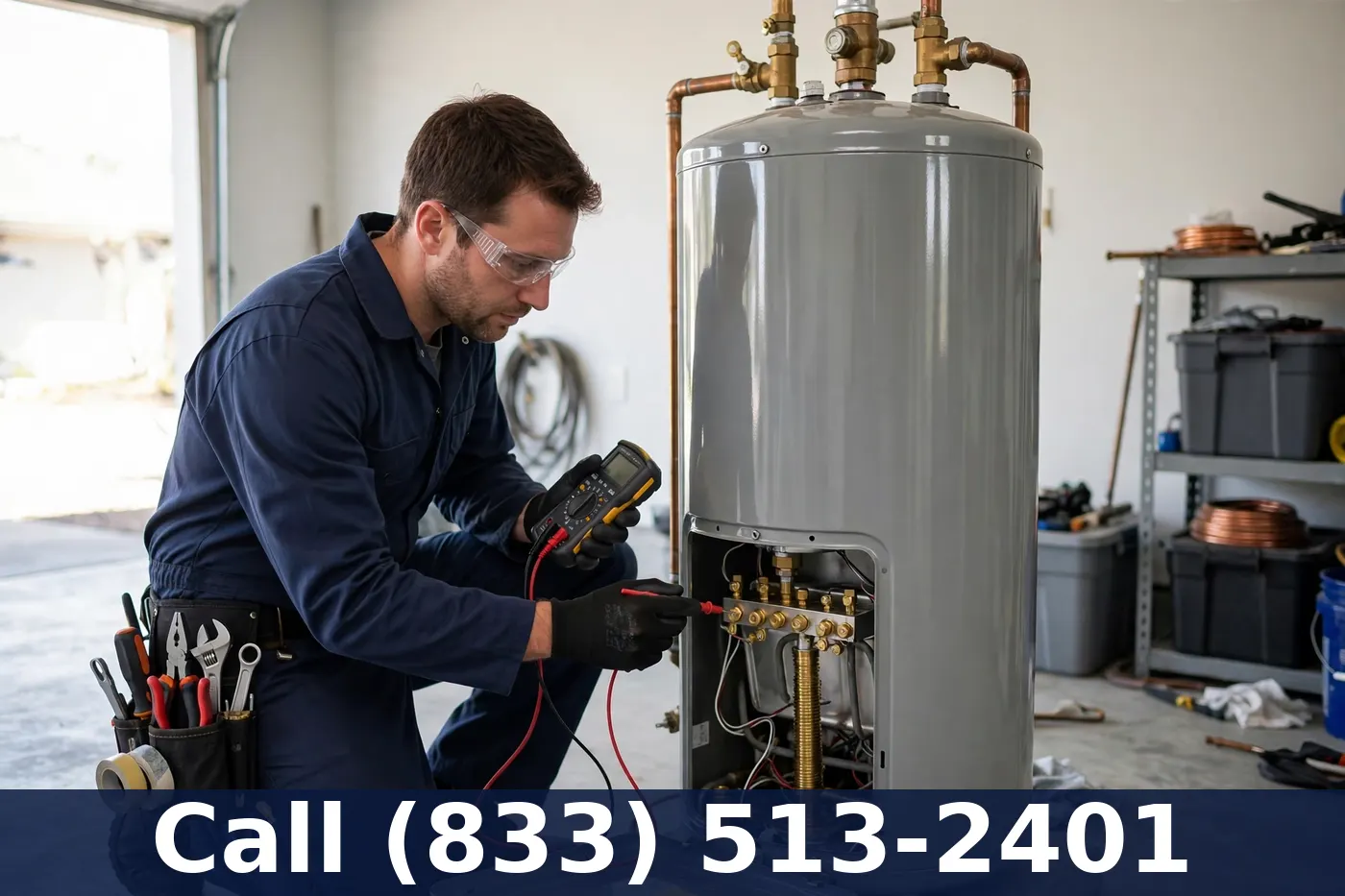
A tank water heater is a simple machine with a short list of parts that fail: heating elements and thermostats on electric units, thermocouples and gas valves on gas units, the temperature-and-pressure relief valve on both, and the anode rod that sacrifices itself to protect the tank from rust. Repair means testing those parts, finding the one that has failed, and replacing it — plus flushing out the sediment that builds up on every tank over time.
There is one thing repair cannot fix: a tank that is leaking from the body itself. When the steel tank corrodes through, no part swap saves it — that is a replacement, and a good plumber says so instead of selling you parts.
Symptoms that point to a repair
- No hot water at all
- Water that is lukewarm or runs out too fast
- Popping or rumbling sounds from the tank
- Rust-colored hot water at the tap
- Water dripping from a valve or fitting
- A pilot light that will not stay lit (gas units)
How the repair visit works
Call (833) 513-2401 and describe the symptom — that tells our plumber where to start. On an electric unit, the elements and thermostats get tested; on a gas unit, the pilot, thermocouple, and gas valve get checked. The relief valve gets a look, the anode rod gets inspected, and the tank gets flushed if sediment is part of the problem.
The failed part comes out and the new one goes in, then the tank refills and reheats while we watch. Before leaving, our plumber checks every connection for leaks and makes sure the water coming out is properly hot. If the tank itself is the problem, you will hear that plainly — along with what replacement would involve.
What affects the cost
Which part failed is the main factor — a thermostat or thermocouple is a smaller job than a gas valve. The tank's age matters too: putting a new part in a tank that is already corroding through is money wasted, and we will tell you when that is the situation. Access plays a role — a garage tank is easy to work on, a cramped closet less so. And sediment flushing adds a step but often pays for itself in efficiency. For an exact quote, call (833) 513-2401 and describe what is happening.
Repairing tanks around Stockton
Plumbing Services Pros repairs tank water heaters all over Stockton and the surrounding valley, where hard water makes sediment buildup and anode rod wear a constant battle. Garage and closet tanks, old and new, gas and electric — the failure patterns are the same everywhere, and most are fixable. Homes, rentals, and small commercial buildings all get the same honest diagnosis: fix what is broken, and say so when the tank itself is done. If your hot water is not right, call (833) 513-2401.
Features
- Diagnosis of no-heat, poor-heat, and leak problems
- Heating element and thermostat replacement
- Thermocouple, pilot, and gas valve repair
- Temperature and pressure relief valve replacement
- Anode rod inspection and replacement
- Sediment flushing to restore efficiency
Benefits
- Hot water back without replacing the whole unit
- Repairs targeted at the failed part, not guesswork
- Quieter operation after sediment is cleared
- Longer tank life from a fresh anode rod
- Leaks caught before they damage floors
- Honest call on repair versus replacement
Frequently asked questions
Why do I have no hot water at all?
On electric units it is usually a failed heating element, thermostat, or tripped breaker; on gas units it is often the pilot, thermocouple, or gas valve. Plumbing Services Pros will test each one and fix what is actually broken.
My water heater is making rumbling noises. What is that?
That is sediment — mineral deposits hardened on the tank floor, with water boiling up through them. A professional flush usually quiets it down and restores efficiency.
There is water pooling under my water heater. Can it be repaired?
It depends on where it is coming from. Drips from a valve or fitting are repairable; water seeping from the tank body itself means the tank has failed and needs replacing. Our plumber will identify the source before recommending anything.
How much does water heater repair cost?
It depends on which part failed and the condition of the tank. A thermostat or thermocouple is a smaller job than a gas valve replacement. Call (833) 513-2401 and describe the symptoms for an exact quote.
Should I repair my water heater or replace it?
If the tank is sound and a part has failed, repair is usually the smart move. If the tank is leaking from the body, heavily corroded, or near the end of its life, replacement saves you from paying twice. We will give you an honest read either way.
How often should a tank water heater be flushed?
Once a year is a good rule, especially with hard water. Regular flushing clears sediment before it hardens, protects the elements or burner, and helps the tank last longer.