
Tankless Water Heater Repair Near Me
Starting price: Call for pricing
When a tankless water heater stops delivering hot water, the cause is usually a specific part — a scaled heat exchanger, a failed igniter, a sensor reading wrong, or a venting problem — not the whole unit. Plumbing Services Pros diagnoses the real fault, repairs or replaces the failed component, and tests the system so hot water comes back steady. Most breakdowns are fixable without replacing the heater.
What tankless repair actually covers
A tankless water heater is a tightly engineered appliance, and when it fails the failure is usually one part, not the whole machine. Scale choking the heat exchanger, an igniter that no longer sparks, a flow sensor misreading demand, or a blocked vent — each has a signature symptom and a matching fix.
Tankless repair means finding that signature. A plumber reads the error code, tests the suspect components, and repairs or replaces what actually failed. The rest of the unit — burner, controls, housing — stays put.
How your unit tells you something is wrong
Modern tankless units are talkative. A digital display flashes a code when ignition fails, the unit overheats, airflow is restricted, or a sensor drops out. That code narrows the search enormously compared to old-school guesswork.
Even without a code, the symptoms speak clearly. Lukewarm water that never gets hot points at the burner or gas supply. Water that surges hot and cold points at sensors or flow. A unit that fires then shuts off points at flame sensing or venting. Noticing exactly what yours does helps the diagnosis go faster.
The fixes that solve most breakdowns
Descaling is the single most common fix. Mineral scale coats the heat exchanger in hard-water homes, and the unit overheats, short-cycles, or throws codes. A proper flush with descaling solution restores heat transfer and often ends the problem in one visit.
Ignition components come next — igniters, flame rods, and gas valves wear out and stop the unit from firing. Sensors fail too: flow sensors, thermistors, and pressure switches all have finite lives. Venting blockages from nests, debris, or ice round out the usual suspects, and each is a straightforward repair once found.
A look inside a typical service visit
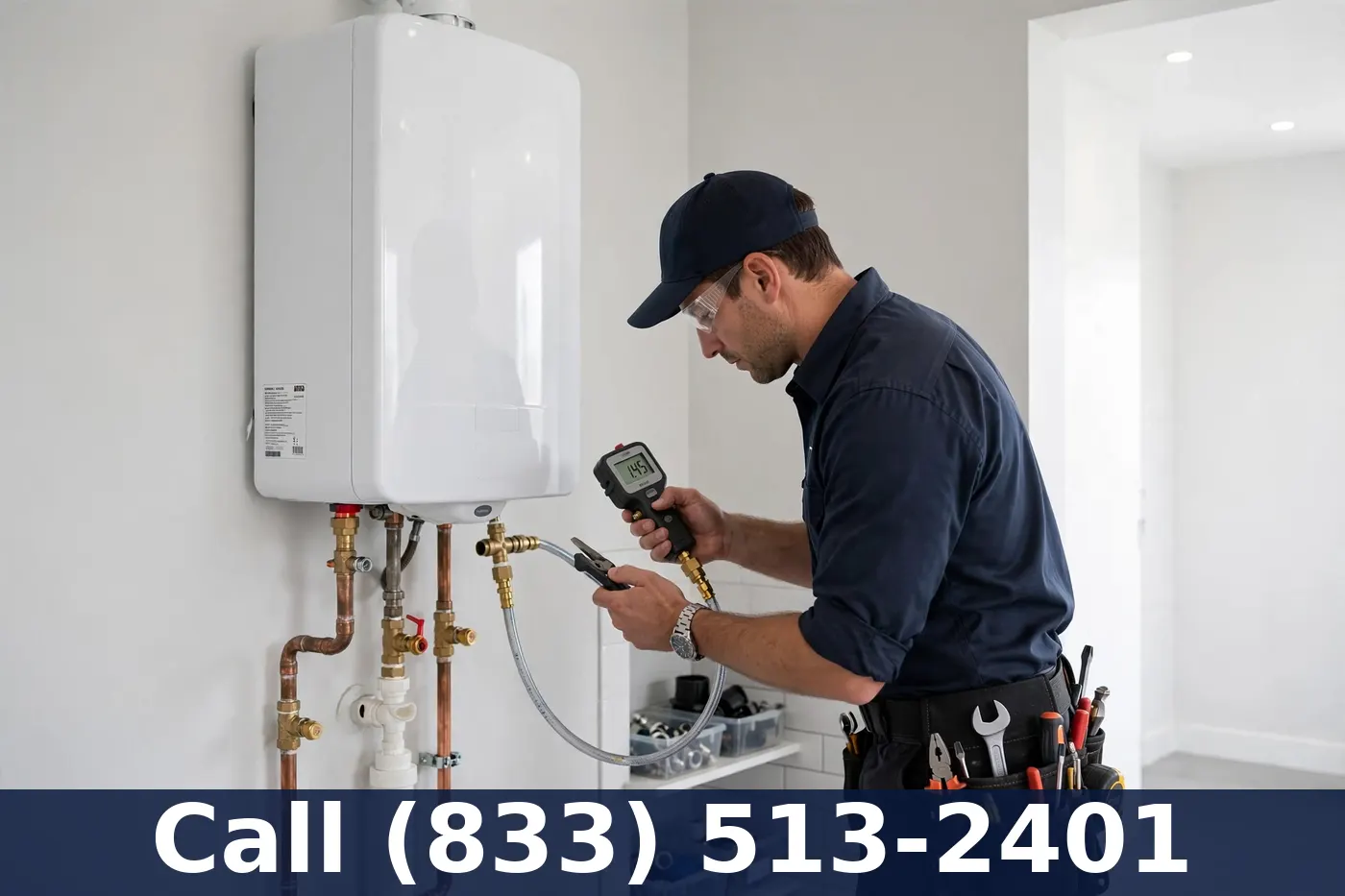
The visit starts with your description of the symptoms and a look at the display code. Then the plumber works through the system in order: gas or electrical supply first, then ignition, then water flow and sensors, then venting.
Once the fault is found, you hear what failed and what the fix involves before any work begins. The repair itself might be a cleaning, a part swap, or a flush — and it ends with the unit fired up, the code cleared, and hot water running steady at the tap while you watch.
What affects the cost of a repair
The part that failed is the biggest factor: a cleaning or sensor swap is a smaller job than replacing a heat exchanger or control board. Access matters too — a unit mounted in a tight closet takes longer to service than one with clear working room.
The unit's condition plays in as well. Heavy scale may call for a longer flush, and an older unit with multiple worn parts may need more than one fix to run right. For a straight answer about your situation, call (833) 513-2401 and describe what the unit is doing.
Keeping the unit healthy after the repair
Most tankless breakdowns are preventable, and the prevention is simple: flush the unit on schedule. A yearly descale keeps the heat exchanger clean, the sensors reading true, and the error codes away.
Between flushes, watch the display and listen to the unit. New noises, longer waits for hot water, or a code that appears once and clears are early warnings. Calling Plumbing Services Pros at that stage usually means a small fix instead of a no-hot-water morning.
Features
- Reading and interpreting the unit's error codes
- Descaling and flushing the heat exchanger
- Cleaning or replacing igniters and flame sensors
- Checking venting and combustion air for blockages
- Repairing leaks at fittings, valves, and connections
- Replacing failed flow sensors, valves, and control parts
- Full startup test to confirm steady hot water
Benefits
- Hot water back without waiting on a full replacement
- Small problems fixed before they become expensive failures
- Efficiency restored when scale or sensors drag performance down
- Error codes diagnosed properly instead of guessed at
- A longer useful life from the unit you already own
- Fewer repeat breakdowns after the root cause is fixed
Frequently asked questions
Why is my tankless water heater showing an error code?
The code is the unit telling you which system failed — ignition, overheating, airflow, or a sensor. Write down the exact code and call (833) 513-2401; a plumber can read it, test the related parts, and fix the underlying cause rather than resetting and hoping.
How often should a tankless unit be flushed?
About once a year in most homes, more often if your water is hard. The flush circulates a descaling solution through the heat exchanger to dissolve mineral buildup. Skip it and efficiency drops while error codes become more common.
My water goes hot, then cold, then hot again — what causes that?
That hot-cold-hot pattern usually means a sensor or flow issue — the unit misreads demand and modulates the burner wrong. It can also come from a scaled heat exchanger or a unit sized too small for simultaneous use. A diagnostic visit finds which one.
Is it worth repairing my tankless unit, or should I replace it?
If the heat exchanger is intact and the fault is a failed igniter, sensor, valve, or control board, repair is usually the sensible call. When the exchanger itself is cracked or leaking, replacement makes more sense. Plumbing Services Pros will tell you honestly which situation you are in.
How much does tankless water heater repair cost?
The failed part, the unit's age and condition, how easy the part is to reach, and whether the line needs cleaning or descaling during the visit all factor in. Call (833) 513-2401 and describe the symptoms for a clear answer.
Do you repair all brands of tankless water heaters?
Yes — gas and electric models from all the major manufacturers. The diagnostic approach is the same across brands: read the code, test the suspect components, and repair what actually failed.