
Toilet Flange Repair Near Me
Starting price: Call for pricing
The toilet flange is the ring fitting that bolts your toilet to the floor and seals it to the drainpipe — and when it cracks or corrodes, the toilet rocks, leaks, or lets sewer gas seep in. Plumbing Services Pros pulls the toilet, inspects the flange and the floor beneath it, and either reinforces the ring with a repair kit or replaces the flange entirely. The toilet goes back on solid, sealed, and level.
The small part that holds your toilet down
Under every toilet sits a ring fitting called the closet flange. It does two jobs: it bolts the toilet to the floor so the fixture cannot shift, and it holds the seal — usually a wax ring — that keeps flush water and sewer gas inside the drainpipe.
Flanges are made of plastic, cast iron, or brass, and all of them can fail. Plastic cracks where the bolts pull against it. Metal corrodes over the years, especially in older homes. And every time someone sits down hard or the toilet shifts, the flange takes the stress.
Telltale signs the flange is failing
A rocking toilet is the classic symptom. If the base moves when you sit or push it, the flange's mounting points have likely cracked and the toilet is no longer anchored. Water pooling around the base after a flush is the next sign — the seal has broken and wastewater is escaping.
Sewer odors are the third warning. When the flange or its seal fails, gases that should stay in the drainpipe drift into the bathroom. Any one of these signs deserves a look before the leak reaches the subfloor, because a slow seep can rot wood for months before anyone notices the damage.
Repair ring or full replacement — how we decide
Not every broken flange needs to come out. When the damage is limited to the top ring — cracked bolt slots or a partially split collar — a repair ring laid over the old flange gives the bolts a fresh, solid surface to grip. It is sturdy, it is fast, and it solves the most common failures.
Full replacement is the answer when the flange is badly corroded, the drainpipe connection itself is damaged, or the surrounding subfloor has rotted. A plumber makes that call only after the toilet is off and everything is visible — never from a guess over the phone.
What the repair visit looks like
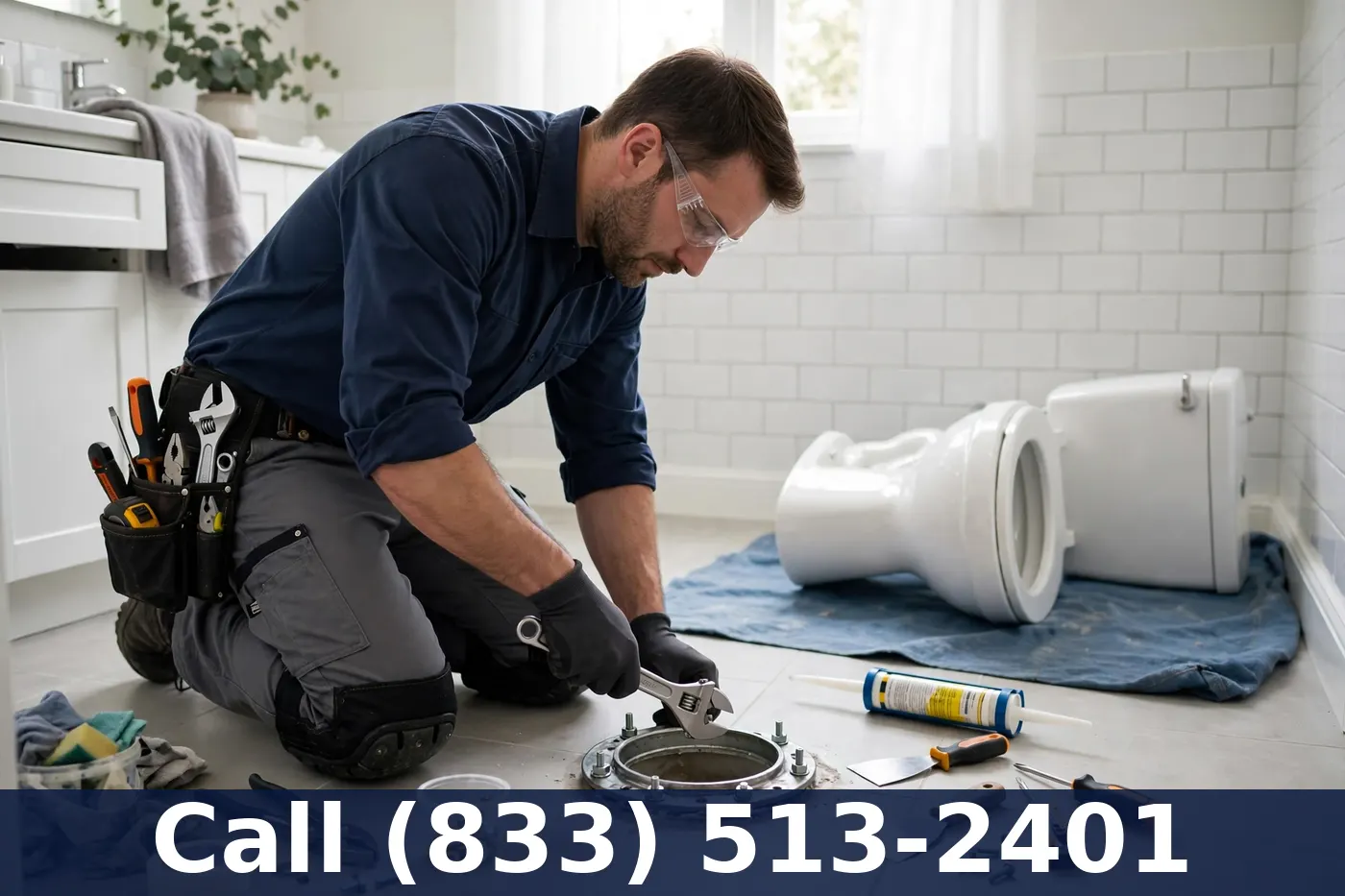
The water supply is shut off, the tank is drained, and the toilet is lifted off and set aside. With the flange exposed, the old wax is scraped away and the fitting is inspected closely.
Then the fix goes in: a repair ring screwed to solid flooring, or a new flange seated and fastened to the drainpipe. A fresh seal is set, the toilet is lowered straight down onto the bolts, and the nuts are tightened evenly so the porcelain seats without cracking.
The last steps are the ones that matter most. The supply line is reconnected, the toilet is flushed several times, and the base is checked for any sign of water or movement. Nothing leaves until it is solid and dry.
What affects the cost
The deciding factor is whether a repair ring solves it or the flange must be replaced outright. The pipe material in your home matters too — older cast iron connections can take more labor than modern plastic.
Subfloor condition is the other variable. If leaking has softened the flooring around the flange, that section needs attention before the new fitting goes down. Call (833) 513-2401, describe what your toilet is doing, and you will get a straight answer about what the job involves.
Protecting your floors after the fix
A flange repair is also a health check for the bathroom floor. Once the toilet is up, the subfloor around the drain gets inspected for the soft spots and staining that signal hidden leaks.
After the repair, keep an eye on the base for the first few weeks — any dampness means something needs a second look. And if the toilet ever starts rocking again down the road, call Plumbing Services Pros before the movement breaks the seal a second time.
Features
- Removing the toilet and inspecting the flange
- Checking the subfloor for leaks and rot
- Reinforcing cracked flanges with a repair ring
- Full flange replacement when the damage runs deeper
- New bolts, wax or waxless seal, and level reset
- Testing for leaks and rocking after reinstall
Benefits
- A toilet that sits solid with no rocking
- Leaks at the base stopped before the floor rots
- Sewer odors sealed out of the bathroom
- A repair matched to the real damage — no more, no less
- Peace of mind knowing the subfloor was checked
- A toilet that flushes like it should, without wobbling loose again
Frequently asked questions
What exactly is a toilet flange?
It is the ring-shaped fitting — also called a closet flange — that connects the toilet to the drainpipe in the floor. It anchors the toilet with bolts and holds the wax or waxless seal that keeps water and sewer gas in the pipe. You never see it, but everything about how your toilet sits depends on it.
Can I still use the toilet if the flange is broken?
You should not. A broken flange lets the toilet rock, which breaks the seal and lets wastewater seep under the flooring where it rots the subfloor. It can also let sewer gas into the bathroom. Take it out of service and call (833) 513-2401 until it is fixed.
How do I know if it is the flange or just the wax ring?
Often you cannot tell without pulling the toilet, which is exactly what the visit includes. A rocking toilet with water at the base usually means flange damage; a leak with a steady toilet more often means a failed wax ring. Plumbing Services Pros inspects both and fixes whichever failed.
How long does a toilet flange repair take?
Most flange repairs are completed in a single visit. A repair-ring reinforcement is the quicker job; a full flange replacement takes longer, especially if the subfloor needs attention. You will know the plan before work starts.
How much does toilet flange repair cost?
It depends on whether a repair ring will do or the flange needs full replacement, the condition of the subfloor underneath, and the type of drainpipe in your home. Call (833) 513-2401 and describe the symptoms for a clear answer.
Will you check the subfloor for water damage?
Yes. Once the toilet is up, the exposed subfloor gets a look for soft spots, staining, or rot from any leaking. Catching that damage now is far better than discovering it after a new flange is bolted down.