
Toilet Replacement Near Me
Starting price: Call for pricing
Some toilets are past the point where another repair makes sense — cracked porcelain, chronic clogs, a water bill that keeps climbing, or a model so old that parts are hard to find. Plumbing Services Pros handles full toilet replacement: the old fixture comes out and is hauled away, the flange and shutoff valve are checked, and a modern efficient toilet goes in, sealed, level, and tested. One visit, and the toilet problem is behind you.
When fixing it stops making sense
Every toilet has a point where another repair is just postponing the inevitable. A hairline crack in the tank or bowl is the clearest sign — porcelain does not heal, and cracks grow. Chronic clogs that survive augering point to a worn trapway or a design that never flushed well to begin with.
Then there is the math. Add up the service calls over the last couple of years and compare it to a new fixture. And consider the water: an old toilet can use several times the water per flush of a modern one, which shows up on every single bill. When the numbers tilt, replacement is the rational move.
What a new toilet does better
The headline improvement is the flush. Redesigned bowls, larger flush valves, and glazed trapways move waste with far less water than the toilets of decades past. The result is fewer clogs and a cleaner bowl with every use.
Comfort has improved too. Taller comfort-height bowls make sitting and standing easier. Elongated bowls fit most adults better. Quieter fill valves, slow-close seats, and dual-flush options are standard features now, not luxuries. A replacement is not just a fix — it is an upgrade to the most-used fixture in the house.
Choosing your replacement
Start with fit: measure the rough-in, the distance from the wall to the flange bolts, so the new toilet actually lines up with your drain. Most homes are standard, but older bathrooms sometimes are not, and this measurement prevents an expensive mistake.
Then pick your priorities. Water efficiency matters most to some households; a powerful single flush matters more to others. One-piece designs clean up easier and look modern, while two-piece models cost less and are easier to maneuver into tight bathrooms. There is no wrong answer — only the one that fits your bathroom and your habits.
How the swap goes
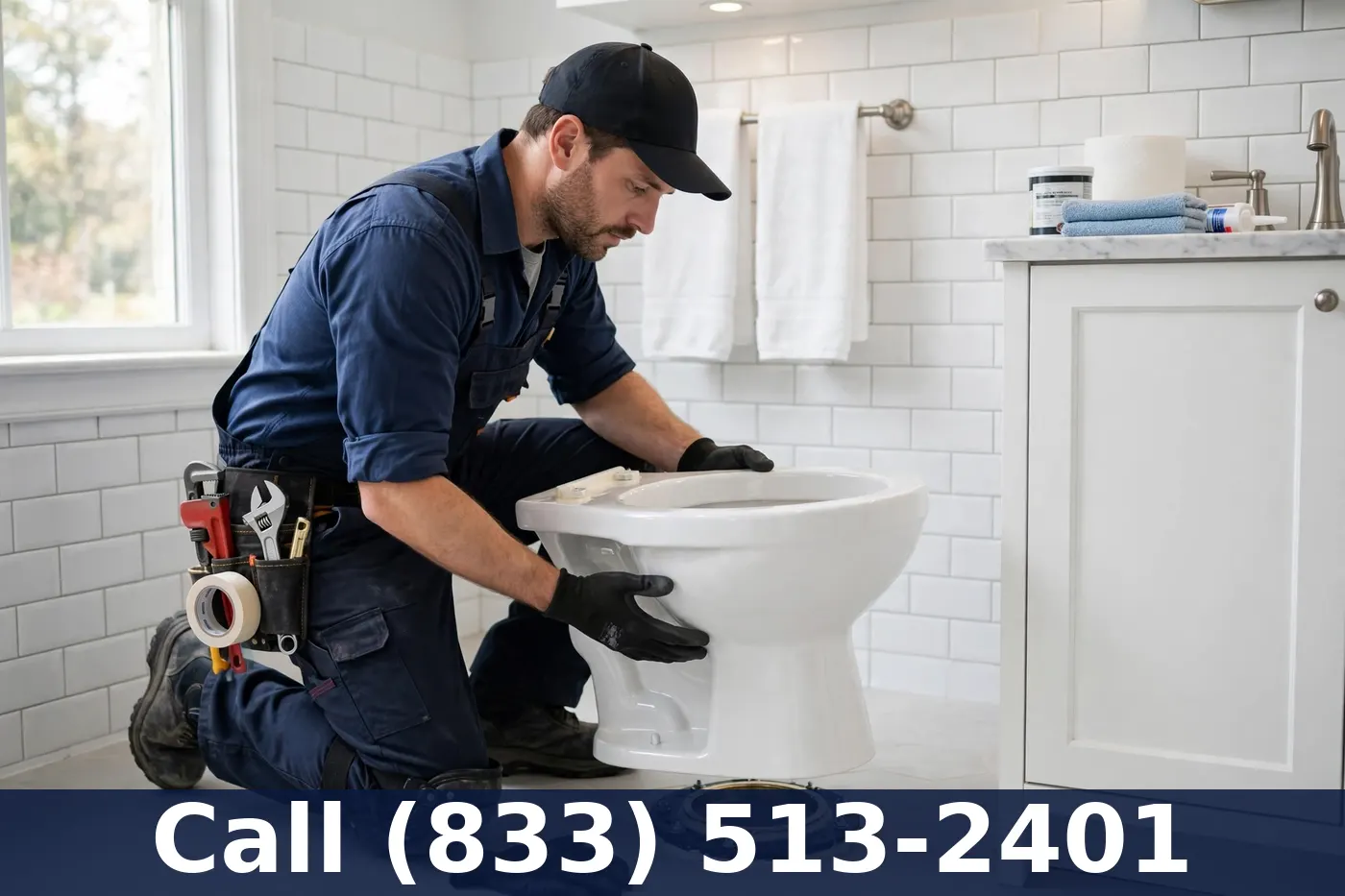
The old toilet is disconnected, drained, and lifted out — and this is when the hidden stuff gets its inspection. The flange is checked for cracks, the subfloor for soft spots from old leaks, and the shutoff valve for corrosion.
Whatever needs attention gets handled before the new fixture goes down. Then the new toilet is set: fresh seal, bowl lowered straight onto the bolts, nuts tightened evenly, supply line connected. The tank fills, the toilet is flushed repeatedly, and every connection is watched for drips.
The old unit is hauled away, the bathroom is left clean, and you get a quick walkthrough of the new toilet — fill valve adjustment, dual-flush buttons if it has them, and what normal sounds like.
What affects the cost
The toilet model is the largest variable, from straightforward two-piece units to feature-rich one-piece designs. What the floor reveals matters next: a sound flange and a working shutoff valve keep the job simple, while repairs underneath add labor.
Disposal is usually included, and extras like a bidet seat or a premium supply line adjust the total. For an exact figure on your bathroom, call (833) 513-2401 and describe what you have now and what you want.
Getting the most from your new toilet
A new toilet asks almost nothing of you. Skip the harsh chemical cleaners that can eat at internal rubber parts — mild cleaners keep the finish and the seals happy. Check the base once in the first weeks for any dampness, just as good practice.
If the flush ever weakens years from now, it is usually just mineral buildup in the rim jets, a quick clean away. And if anything ever seems off, Plumbing Services Pros knows your installation and is one call away at (833) 513-2401.
Features
- Removing and hauling away the old toilet
- Inspecting the flange and subfloor underneath
- Checking and replacing the shutoff valve if needed
- Setting a new seal and leveling the new bowl
- Connecting the supply line with fresh fittings
- Testing the flush and every connection for leaks
- Walkthrough of the new toilet's features
Benefits
- An end to the cycle of repeat repairs
- Noticeably lower water use with every flush
- A stronger, more reliable flush
- A bathroom that looks and feels updated
- New internal parts with years of life ahead
- One visit that solves the problem for good
Frequently asked questions
How do I know it is time to replace instead of repair?
When the porcelain is cracked, when you are calling for repairs over and over, or when the toilet uses far more water than current models. A good test: if the next repair costs a meaningful share of a new toilet, replacement is the better investment.
Will a new toilet really use less water?
Yes. Toilets made before the mid-1990s can use several times the water per flush of today's models. A modern high-efficiency toilet clears the bowl with a fraction of the water — and you will see it on the bill.
Can you install a toilet I already bought?
Of course. Buy the toilet you want and Plumbing Services Pros will install it properly — flange check, new seal, level set, and full testing included. If you want guidance before you buy, just ask.
What happens to my old toilet?
It is disconnected, removed from your home, and hauled away as part of the replacement. You never have to wrestle a porcelain fixture to the curb yourself.
How much does toilet replacement cost?
The model you choose, the condition of the flange and shutoff valve underneath, and whether disposal or extras are included. Call (833) 513-2401 for a quote tailored to your bathroom.
Should I get a dual-flush toilet?
For many households, yes. The light-flush option handles liquid waste with less water, and the full flush is there when you need it. If everyone in the house will actually use both buttons, the savings add up.