
Trenchless Sewer Repair Near Me
Starting price: Call for pricing
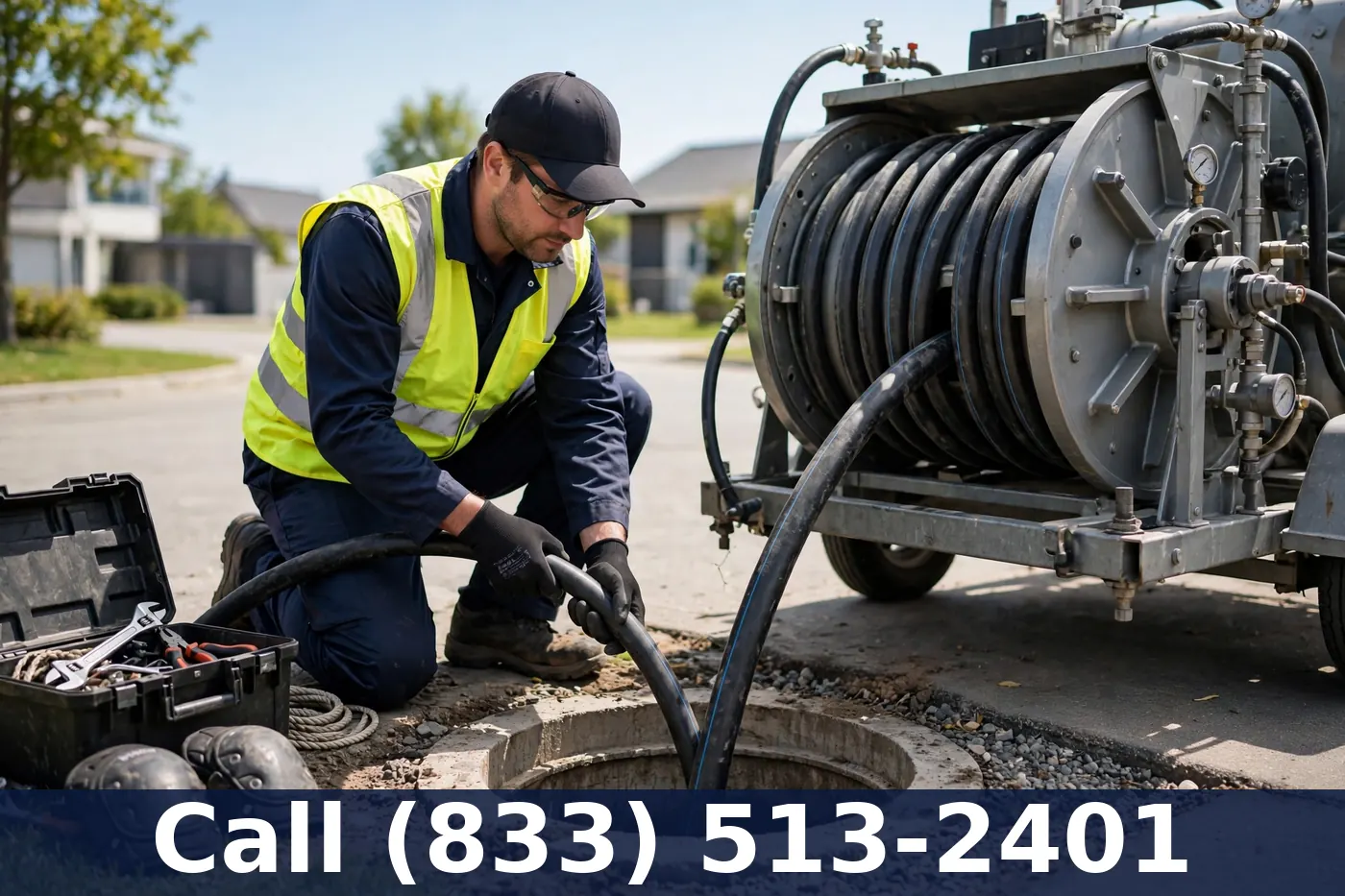
Trenchless sewer repair fixes a failing underground sewer line without digging it up. Plumbing Services Pros uses two no-dig methods: pipe lining, which cures a new seamless pipe inside the old one, and pipe bursting, which pulls a brand-new pipe through while breaking the old one apart. Both happen through small access points instead of an open trench, so your yard stays a yard. It starts with a camera inspection to confirm your line is a good candidate.
What trenchless actually means
A sewer line runs from your house to the street, buried under the yard — and for decades, fixing it meant an excavator, a trench, and a landscaping bill on top of the plumbing bill. Trenchless repair changed the equation.
The idea is simple: fix or replace the pipe from the inside, reaching it through small access points instead of opening the ground along its whole length. The pipe gets repaired. The yard stays a yard. The driveway stays a driveway.
The two ways we fix pipe without digging
Pipe lining — technically cured-in-place pipe, or CIPP — builds a new pipe inside the old one. A flexible liner soaked in epoxy resin is pulled into the damaged pipe, inflated tight against the walls, and cured until it hardens. What remains is a seamless, jointless pipe-within-a-pipe.
Pipe bursting is the heavier option. A bursting head is pulled through the old line, fracturing it outward, while a brand-new HDPE pipe follows right behind it into the same path. The old pipe is gone; a continuous new pipe takes its place. Both methods start and end at small pits — nothing like a trench.
Signs your sewer line is failing
Sewer problems announce themselves if you know what to listen for. Multiple drains backing up at once, toilets gurgling when the washer drains, or sewage smells in the yard all point past the fixtures to the main line.
Outside, watch for a suspiciously green patch of grass over the line's path, soggy ground that never dries, or a sinkhole forming where soil is washing into a broken pipe. Inside, repeated backups that keep coming back after snaking mean the pipe itself is damaged — roots, cracks, or a partial collapse — not just clogged.
How a trenchless job unfolds
Every job starts with a camera inspection. A small camera travels the line and the footage shows exactly what is wrong and where — roots at a joint, a cracked section, a belly holding water. This is also how the crew confirms trenchless will work for your pipe.
Next the line is cleaned, usually with hydro jetting, so the liner bonds properly or the new pipe pulls through cleanly. Then comes the repair itself: the liner is installed and cured, or the bursting head makes its run. A final camera pass verifies the new pipe from end to end before the access pits are closed up.
What affects the cost
Length and depth of the line are the big ones — more pipe means more liner or more new pipe, and deeper lines take more work at the access points. The method matters too: bursting involves more equipment than lining.
Condition plays a role as well. Heavy root intrusion or scale may need serious cleaning before the repair can start. Access conditions — a cleanout already in place versus needing to create entry points — also factor in. For a real number, call (833) 513-2401 and start with a camera inspection.
When trenchless is not the answer
Honesty matters here: trenchless is not universal. A pipe that has fully collapsed into itself, sections that have separated and shifted far out of line, or a line with severe bellies that hold standing water may not take a liner or a bursting head.
That is exactly why the camera inspection comes first — it keeps anyone from selling you a method your pipe cannot use. If trenchless is not right, Plumbing Services Pros will tell you what is, and the inspection footage makes the reason plain to see.
Features
- Sewer camera inspection to map the damage
- Hydro jetting to clean the line before repair
- Cured-in-place pipe (CIPP) lining
- Pipe bursting with new HDPE pipe
- Small access pits instead of open trenches
- Final camera pass to verify the repair
- Restoration of the access points
Benefits
- Your yard, driveway, and landscaping stay intact
- Most jobs finish far faster than open-trench digging
- A seamless new pipe surface roots can't push through
- Corrosion-resistant materials built for decades of service
- Less mess, less heavy equipment, less disruption
- A repair sized to the damage — lining or full replacement
Frequently asked questions
How does trenchless sewer repair work?
Instead of excavating the whole pipe, the work happens through one or two small access points. A resin-soaked liner is pulled into the old pipe and cured hard, or a bursting head pulls new pipe through while fracturing the old line outward. A camera inspection before and after confirms the result.
Will trenchless repair work on my sewer line?
Most lines qualify — clay, cast iron, and older plastic with cracks, root intrusion, or general deterioration. A camera inspection shows the pipe's real condition; fully collapsed sections or severe bellies may need a different approach. Plumbing Services Pros will show you the footage and give you a straight answer.
How long does a trenchless repair last?
The materials used — cured epoxy liners and HDPE pipe — are built to resist roots, corrosion, and ground movement for decades. They have no joints for roots to exploit, which is what kills most old clay and cast iron lines.
Will you have to dig up my yard?
Not the way traditional repair does. Trenchless work uses small access pits at the ends of the run rather than a trench along its whole length. Landscaping, driveways, and patios above the pipe stay in place.
How much does trenchless sewer repair cost?
The method needed, the length and depth of the line, access conditions, and the pipe's condition all factor in. Trenchless often compares well once you account for the landscaping and concrete restoration a trench would require. Call (833) 513-2401 for an assessment.
Pipe lining or pipe bursting — which does my line need?
Lining suits pipes that are damaged but still holding their shape — cracks, root intrusion, minor offsets. Bursting is for lines too far gone to line: collapsed, crushed, or severely deteriorated pipe. The camera inspection decides which one your line needs.