
Wall Leak Repair Near Me
Starting price: Call for pricing
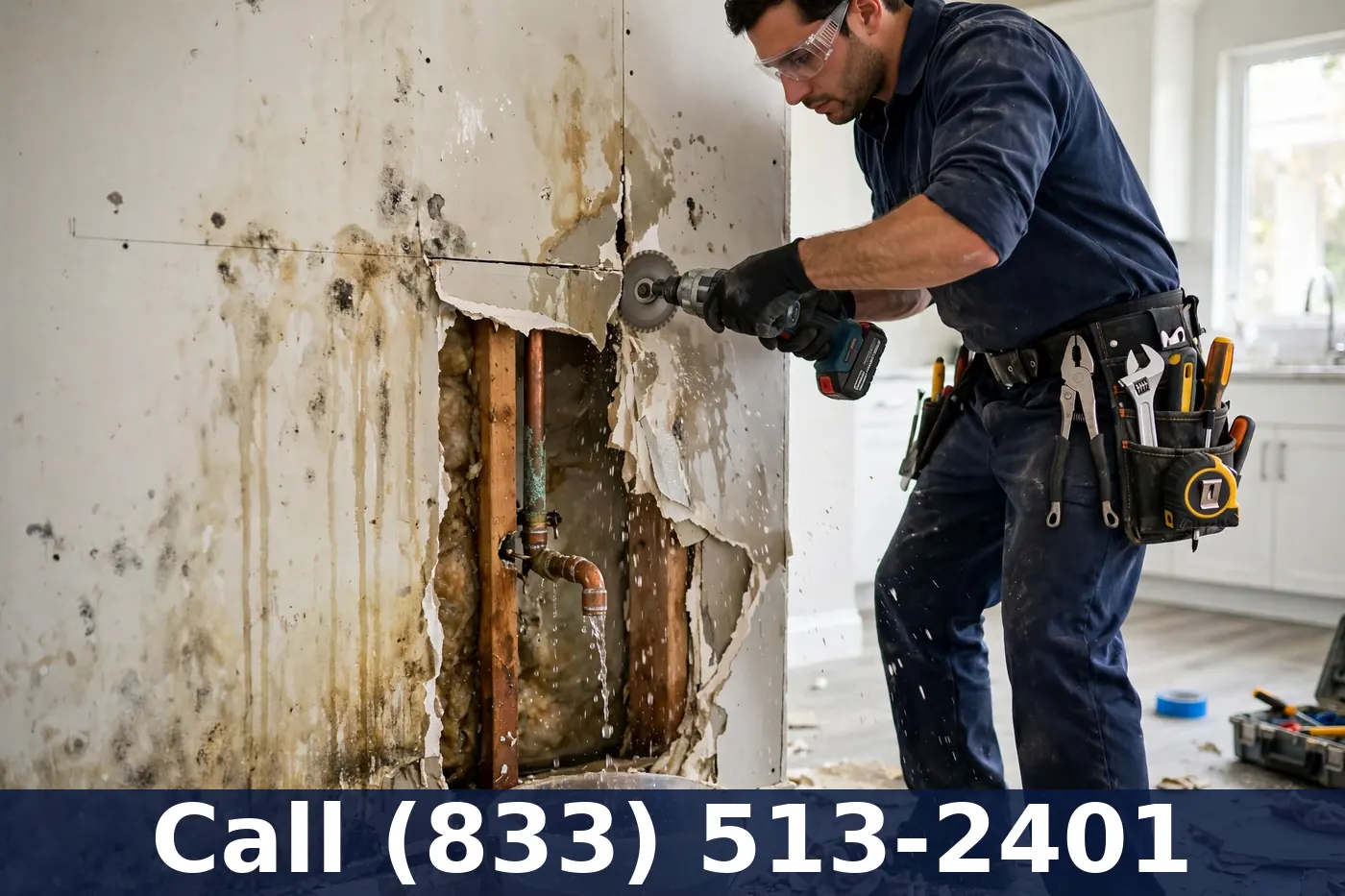
Plumbing Services Pros finds and repairs water leaks hidden inside walls before they ruin drywall, flooring, and framing. A plumber uses moisture meters and thermal imaging to pin down the source with minimal openings, then cuts out the failed pipe section and restores the line. If you see stains, bubbling paint, or hear water running when nothing is on, call (833) 513-2401.
What wall leak repair actually covers
A leak inside a wall means water is escaping from a supply line, a joint, or a fixture connection that sits behind drywall. Plumbing Services Pros handles the plumbing side of that problem: finding exactly where the water is coming from, opening the wall in one small area, and repairing or replacing the failed pipe so the leak stops at the source. The job covers supply pipes, shower valve bodies, tub spouts, and the connections behind them.
It does not cover full mold remediation or rebuilding the wall itself. Once the pipe is fixed, the wall cavity needs to dry out, and in most cases a drywall contractor or painter finishes the surface afterward. We explain what the opened area needs before it gets closed up and point you toward the right next step.
Signs the leak is hiding inside the wall
Wall leaks rarely announce themselves loudly. Look for damp spots or yellow-brown stains that grow on drywall, paint that bubbles or peels for no clear reason, and baseboards that warp or pull away from the wall. A musty smell near a bathroom or kitchen wall is another classic clue, as is the sound of water hissing or dripping when every faucet in the house is off.
- Water stains that spread across drywall or the ceiling below a bathroom
- Paint or wallpaper that blisters, bubbles, or flakes
- Baseboards or flooring that feel damp or start to warp
- A musty, earthy smell near plumbing walls
- A water meter that moves when no water is being used
- Walls that feel cold, soft, or spongy to the touch
If you notice several of these together, the leak has probably been active for a while. That is when calling (833) 513-2401 makes sense, because the longer water sits, the more it damages.
How the leak gets found and fixed
The first step is a call to (833) 513-2401, where you describe what you are seeing and where. A plumber arrives with moisture meters that read dampness through drywall and a thermal imaging camera that spots the cold, wet area inside the wall. These tools narrow the source down to a small zone, so the opening cut into the wall stays small.
With the water shut off and the line drained, the plumber cuts out the failed section of pipe. Copper gets new soldered joints or push-fit fittings, PEX gets crimped connections, and PVC gets primer and solvent cement. Every joint is matched to the pipe material already in the wall, and the repaired line is pressurized and checked before anything is closed back up.
What shapes the cost of the job
Every wall leak repair is different, which is why the price is never a flat figure. Access drives a big part of it: a leak behind a vanity cabinet is simpler to reach than one behind tiled shower walls or in a wall with no access panel. The pipe material matters too, since copper, PEX, and CPVC each take different fittings and different labor.
Depth and duration matter as well. A single pinhole in an easy-to-reach line is a different job from a fitting that has been seeping for months and soaked insulation and framing. For an exact figure based on your situation, call (833) 513-2401 and describe what you are seeing.
What happens after the pipe is fixed
Repairing the pipe stops new water, but the wall cavity is still wet. Fans, open windows, and time dry the space out, and drying matters because trapped moisture feeds mold. We tell you plainly whether the opened area can simply dry and be patched, or whether soaked insulation or soft drywall should come out before the wall is closed.
This is the part many homeowners overlook. Closing a wet wall traps the problem inside and lets staining or odor come back later. A short drying period now prevents a much bigger repair later.
Who we help in the Stockton area
Plumbing Services Pros serves homes and small businesses across the Stockton area, including houses where the original plumbing runs behind bathroom and kitchen walls. Older homes with copper lines and newer builds with PEX both develop wall leaks, just for different reasons: age and corrosion on one side, fitting stress on the other. Single-family homes, rentals, and small commercial spaces all qualify.
If a wall in your home is telling you something is wrong behind it, call (833) 513-2401. You will talk through what you are seeing, hear clear next steps, and know exactly what the visit will involve.
Features
- Moisture-meter and thermal imaging leak location
- Small, targeted wall openings instead of wide tear-outs
- Cut-out and replacement of the failed pipe section
- Joints matched to pipe type: soldered, crimped, or solvent-welded
- Pressure check of the repaired line before close-up
- Clear guidance on drying the opened wall cavity
Benefits
- Stops hidden water damage before it spreads to framing and floors
- Smaller wall openings than hunting for the leak blind
- Finds the real source instead of patching the symptom
- Protects insulation, studs, and subfloor from rot
- Lowers the chance of mold growing in a wet wall cavity
- Restores normal water pressure once the line is sealed
Frequently asked questions
How do you find a leak inside a wall without tearing it wide open?
A plumber starts with tools that do not require opening the wall: a moisture meter reads dampness through drywall, and a thermal imaging camera shows cold, wet areas inside the cavity. These narrow the source to a small zone, so only one targeted opening is cut to reach the pipe.
What does a plumber actually do to fix a pipe leaking in a wall?
The water is shut off and the line drained first. The failed section of pipe is cut out and replaced with new pipe, with joints matched to the material already in the wall, such as soldered copper, crimped PEX, or solvent-welded PVC. The repaired line is pressure-checked before anything is closed back up.
How do I know the leak is in the wall and not somewhere else?
Common signs include stains that keep spreading, paint that bubbles or peels, warped baseboards, a musty smell near plumbing walls, and a water meter that moves when every fixture is off. A moisture meter reading through the drywall confirms it. Plumbing Services Pros checks all of this during the visit.
Can I just patch the wall and ignore the leak behind it?
No. Patching the surface leaves the pipe leaking, so the stain comes back and the wall cavity stays wet enough for mold to grow. The pipe itself has to be repaired first; only then does patching the wall make sense.
What affects the cost of a wall leak repair?
Access, pipe material, how long the leak has been running, and how much surrounding material got wet all play a part. A plumber gives you an exact figure after seeing the job, so call (833) 513-2401 and describe what you are seeing.
Do you fix the drywall after opening the wall?
The plumbing repair covers finding the leak, fixing the pipe, and explaining what the opened area needs next. Drywall patching, texture, and paint are finished by a drywall contractor or painter, and we tell you plainly what shape the opened area is in.