
Water Heater Maintenance Near Me
Starting price: Call for pricing
Regular water heater maintenance keeps hot water steady, energy use in check, and small problems from turning into tank failures. Plumbing Services Pros flushes sediment, checks the anode rod and safety valves, and inspects the burner or heating elements on gas and electric units. To book a tune-up for your tank or tankless heater, call (833) 513-2401.
What water heater maintenance includes
A maintenance visit is a checkup for the appliance that heats most of the water in your home. Plumbing Services Pros drains and flushes the tank to remove sediment, inspects the anode rod that protects the tank from rust, tests the temperature and pressure relief valve, and checks the heating side: the burner and vent on gas units, the elements and thermostats on electric ones. Fittings, supply lines, and the shutoff valve get looked over for leaks and corrosion.
It is not a repair visit and not a sales call. The point is to find small problems while they are still small and to leave you with an honest picture of where your heater stands.
Why sediment is the real enemy
Every tank collects minerals from the water supply, and they settle at the bottom as a gritty layer of sediment. That layer sits between the burner or element and the water, so the heater has to work longer and hotter to get the same result. You hear it as popping or rumbling when the unit runs, and you feel it as lukewarm showers or a tank that runs out too fast.
Sediment also shortens the tank's life. Hot spots form under the mineral layer, the metal fatigues faster, and the anode rod depletes sooner. A yearly flush is the simplest way to push all of that back, and it is the single most useful thing maintenance does.
How a maintenance visit goes
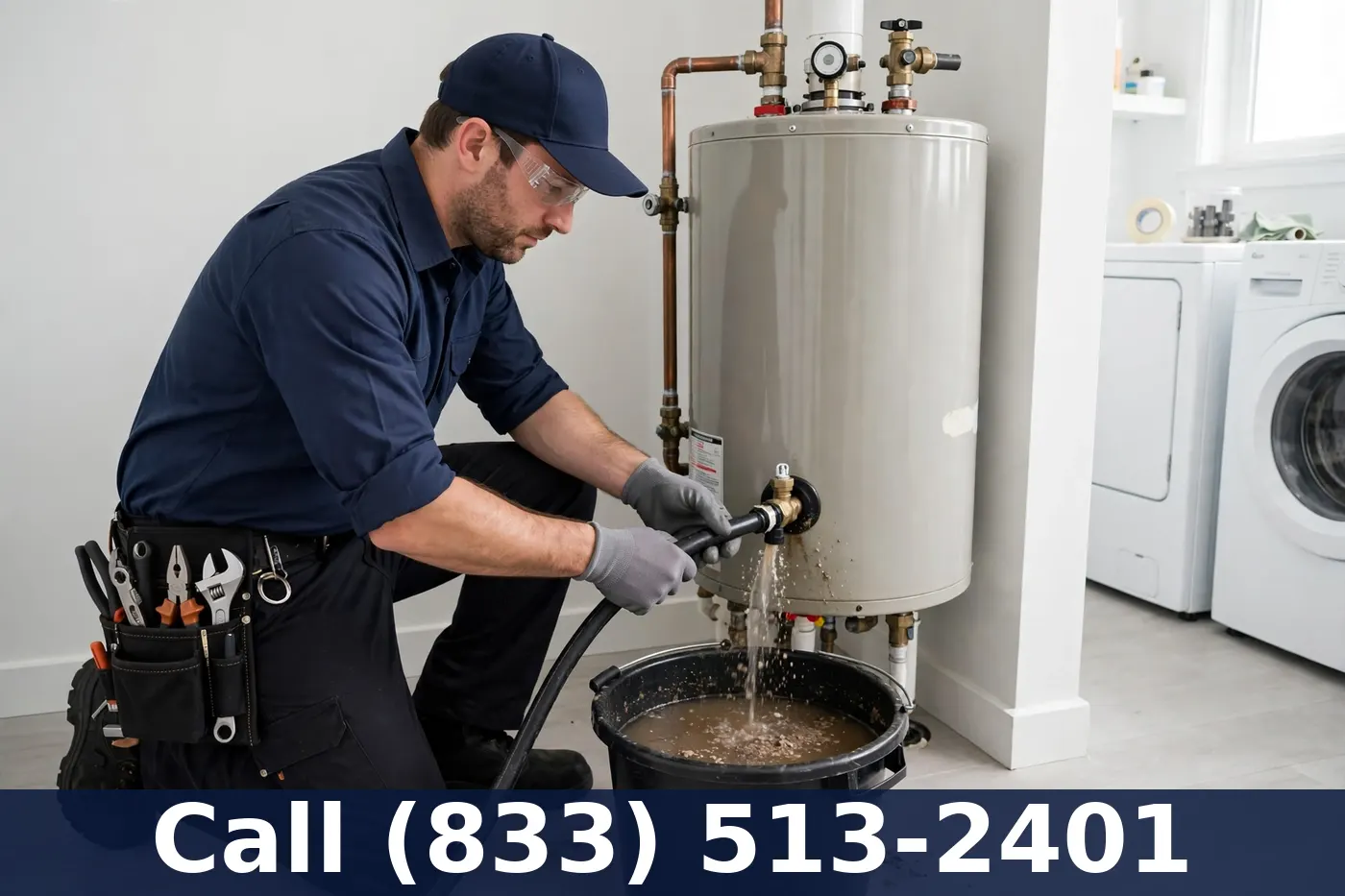
You call (833) 513-2401 and describe your heater: gas or electric, tank or tankless, and anything odd you have noticed. A plumber arrives, looks the unit over for rust streaks, moisture, and loose connections, then starts the flush by connecting a hose to the drain valve and draining the tank while cold water stirs the sediment loose.
While the tank drains, the plumber tests the TPR valve by lifting its lever to confirm it opens, discharges, and seats back cleanly. The anode rod comes out for inspection, and on gas units the burner assembly and vent get checked for sooting or blockage. When everything is back together, the tank refills, the water reheats, and you get a plain-language report on what was found.
What affects the cost
The type of heater matters most. A standard tank flush and inspection is the baseline job; tankless descaling takes different equipment and more time. If the anode rod is depleted and needs replacing, that adds parts and labor, as does a TPR valve that fails its test and has to be swapped.
Condition and access count too. A heater that has never been flushed may need extra work to clear heavy buildup, and a unit crammed into a tight closet takes longer than one with open space around it. For an exact figure, call (833) 513-2401 and describe your setup.
Tank and tankless: both need attention
Tank heaters need their sediment flushed, their anode rod checked, and their relief valve tested. Tankless units skip the tank but build up scale on the heat exchanger instead, which is why descaling is their version of a flush. Hard water speeds all of this up, since more minerals mean more buildup in less time.
Neither type fixes itself. A neglected tank rusts from the inside out, and a neglected tankless unit loses flow until it throws error codes or shuts down. Maintenance is what keeps both types doing their job without surprises.
Who we help in the Stockton area
Plumbing Services Pros maintains water heaters in homes and small businesses across the Stockton area, from garage-installed tanks to closet-mounted tankless units. Single-family homes, rentals, and small commercial spaces with standard tank heaters all benefit from a yearly visit. If your hot water has been acting up or you cannot remember the last time the heater was serviced, call (833) 513-2401 and get it on the schedule.
Features
- Full tank flush to clear sediment and scale
- Anode rod inspection and replacement when depleted
- Temperature and pressure relief valve testing
- Burner assembly and vent check on gas units
- Heating element and thermostat check on electric units
- Supply connections, shutoff valve, and leak inspection
Benefits
- Hot water that stays steady instead of running lukewarm
- Lower energy use from a clean, efficient tank
- Catches small leaks and rust before they spread
- Extends the working life of the heater
- Quieter operation without popping and rumbling
- A clear report on the heater's condition and what to watch
Frequently asked questions
How often should a water heater be serviced?
Once a year is the common recommendation for tank heaters, and tankless units need descaling on a similar schedule, especially where the water is hard. If your hot water has been inconsistent or the unit is rumbling, do not wait for the calendar. Call (833) 513-2401 and a plumber will take a look.
What actually happens during a water heater flush?
The tank is drained through its drain valve while fresh cold water stirs up the sediment at the bottom. The plumber keeps flushing until the water runs clear, which removes the mineral layer that insulates the heating surface and drives up energy use.
What is the anode rod and why does it matter?
The anode rod is a magnesium or aluminum rod hung inside the tank whose only job is to corrode so the steel tank walls do not. Once it is fully depleted, rust starts on the tank itself. Checking it during maintenance shows whether the tank still has that protection.
Can maintenance fix a heater that already leaks?
No. A flush removes sediment, but it does not fix rust, leaks, or loose connections, and those are separate condition issues. That is why the inspection part of the visit matters: if the tank shell is rusting through or fittings are failing, the plumber explains it honestly and talks through replacement instead.
What affects the cost of water heater maintenance?
Tank versus tankless, the condition of the unit, whether the anode rod needs replacing, and how easy the heater is to reach all play a part. A plumber gives you an exact figure after seeing the unit, so call (833) 513-2401 and describe your heater.
Do tankless water heaters need maintenance too?
Yes, and in some ways they need it more. Tankless units build up mineral scale on the heat exchanger, which chokes flow and forces longer heating cycles. A descaling service flushes that buildup out with the right solution and keeps the unit efficient.