
Water Heater Replacement Near Me
Starting price: Call for pricing
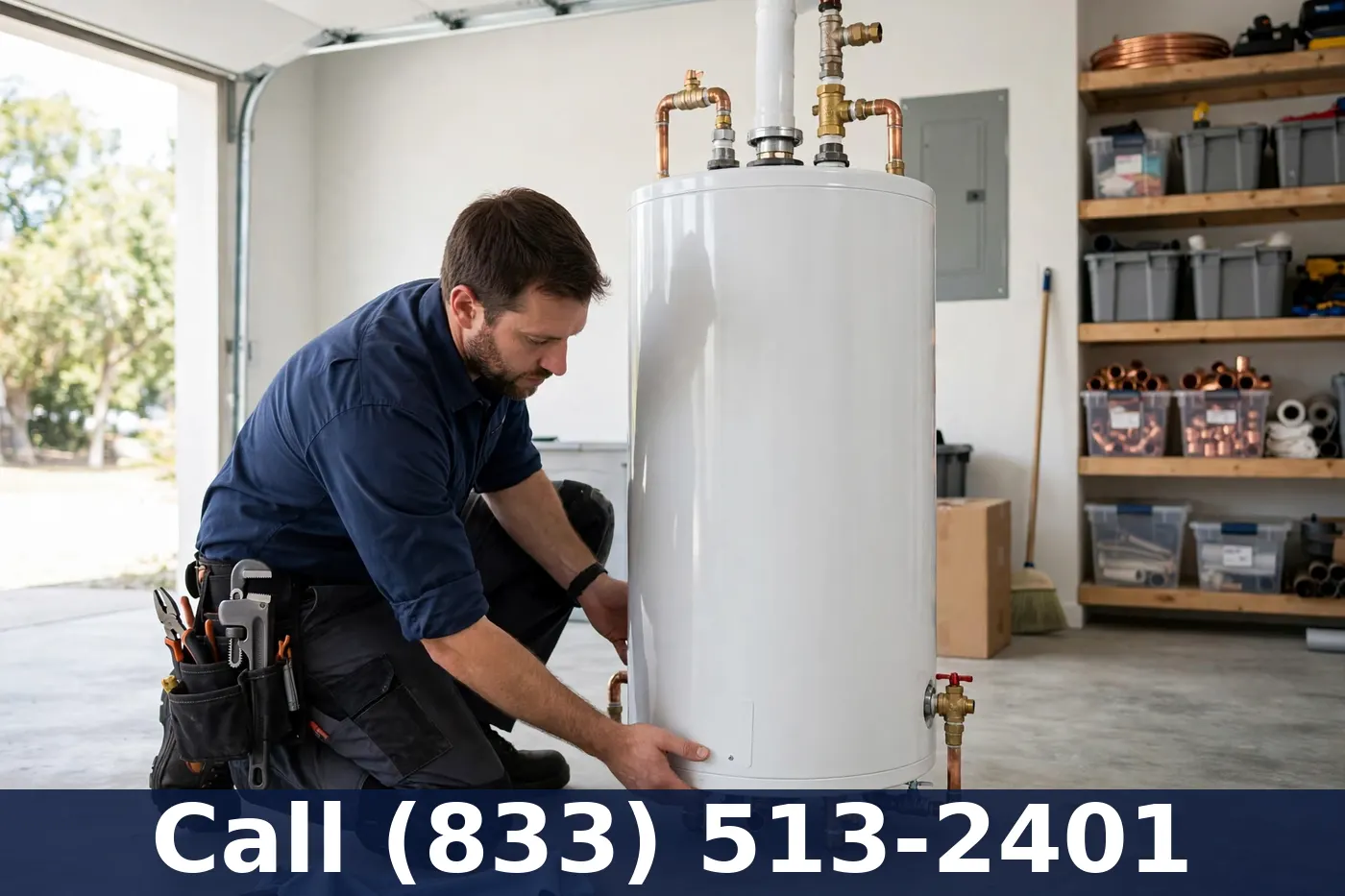
When a water heater leaks, rusts through, or simply cannot keep up anymore, another repair rarely pays. Plumbing Services Pros removes the old unit and installs a correctly sized tank or tankless replacement, with proper venting, gas or electric hookups, and safety devices set to code. For hot water you can count on again, call (833) 513-2401.
When replacement beats another repair
Some water heater problems are worth fixing: a failed heating element, a worn thermostat, a TPR valve that will not reseat. But when the tank itself starts rusting through, when water pools around the base, or when repairs keep coming every few months, the money stops making sense. A plumber looks at the unit's age, its condition, and what it would take to keep it going, then tells you straight which path is smarter.
The risk of waiting is a tank that lets go all at once. A slow weep at a fitting is one thing; a ruptured tank dumps its full capacity across the floor. If your heater is showing the classic end-of-life signs, calling (833) 513-2401 for an assessment beats mopping up later.
Tank, tankless, or heat pump: picking the right type
A standard tank heater stores a set amount of hot water and reheats it on a thermostat. It is the simplest swap, the lowest upfront cost, and the right call for many households. A tankless unit heats water as it flows through, so it never runs out, uses less energy, and mounts on a wall instead of taking up floor space, but the install is more involved and the heat exchanger needs regular descaling.
Heat pump models pull warmth from the surrounding air and are the most efficient of the three, though they need adequate space and the right indoor conditions. Fuel matters too: gas units recover faster and cost less to run in many homes, while electric units install more simply where gas is not available. The right choice depends on your household size, your fuel, and your space.
What the replacement visit looks like
It starts with a call to (833) 513-2401 and an in-home assessment. The plumber checks the old unit's size, fuel type, venting, gas line or electrical service, and the shutoff and expansion tank situation. You get a clear recommendation on type and size before any work is scheduled.
On install day the old heater is shut down, drained, disconnected, and hauled away. The new unit goes in with fresh supply connectors, a working shutoff valve, and an expansion tank where code calls for one. Gas connections are pressure-tested, vents are checked for proper draft, and the TPR valve is verified. Then the tank fills, heats, and every connection is checked for leaks while you get a walkthrough of the shutoff, the drain valve, and basic care.
What affects the cost
The unit itself is only part of the picture. A like-for-like tank swap is the most straightforward job; switching fuel types or converting from tank to tankless adds gas line, venting, or electrical work that raises both parts and labor. Permits and the required inspection are part of the job in most jurisdictions.
Condition of the existing setup counts too. Corroded shutoffs, missing expansion tanks, or venting that no longer meets code all get corrected during the install. For an exact figure based on your home, call (833) 513-2401 and describe what you have now.
Sizing mistakes to avoid
The most common mistake is replacing a struggling heater with the same size out of habit. A tank that runs out during back-to-back showers was probably undersized for the household, and repeating the error just repeats the frustration. Sizing looks at peak-hour demand: how many showers, how much laundry, and how often hot water runs at once.
Oversizing has its own costs. A tank far bigger than the household needs cycles more than necessary and wastes energy keeping water hot that nobody uses. Tankless sizing works differently, based on flow rate and temperature rise rather than gallons. Getting this right is one of the main reasons to have a plumber size the unit instead of guessing.
Who we help in the Stockton area
Plumbing Services Pros replaces water heaters in homes and small businesses across the Stockton area, from garage tanks to closet and attic installs. Single-family homes, rentals with aging units, and small commercial spaces that burn through hot water all get the same careful sizing and code-correct install. If your heater is leaking, rusting, or just done, call (833) 513-2401 and talk through your options.
Features
- In-home assessment of size, fuel type, and venting
- Correctly sized tank or tankless unit for the household
- Safe disconnection, draining, and haul-away of the old heater
- New supply connectors, shutoff valve, and expansion tank as needed
- Gas line, venting, and condensate hookups done to code
- Full testing, leak checks, and a walkthrough of the new unit
Benefits
- Hot water that lasts through showers, dishes, and laundry
- Lower energy use from a modern, efficient unit
- No more rusty water or puddles around the tank
- Venting, relief valves, and strapping brought up to current code
- Right-sized capacity instead of a unit that always strains
- A plain explanation of how to care for the new heater
Frequently asked questions
How do I know it is time to replace instead of repair?
Rusty hot water, water pooling around the base, rumbling that flushing no longer fixes, and repairs that keep coming back are the classic signs. Once a tank itself is rusting through, no repair stops it. A plumber gives you a straight answer on repair versus replacement after seeing the unit.
Tank or tankless: which should I choose?
Tank heaters cost less up front, install simply, and suit most households when sized right. Tankless units heat water on demand so they never run out, use less energy, and take up far less space, but the install is more involved and they need regular descaling. A plumber walks through your usage and fuel type before recommending one.
How long does a water heater replacement take?
A straightforward tank-for-tank swap is typically finished in a single visit. A first-time switch from tank to tankless takes longer because it often needs gas line, venting, or electrical work. Your plumber tells you the plan before anything starts.
Do you haul away the old water heater?
Yes. The old unit is drained, disconnected, hauled away, and disposed of according to local rules. You do not need to arrange anything for it.
What affects the cost of water heater replacement?
The type of unit, its size, your fuel type, venting or gas line changes, permit needs, and how easy the location is to reach. A tankless conversion from a tank setup involves the most additional work. Call (833) 513-2401 for an exact figure based on your home.
Will a new water heater lower my energy bills?
Usually yes, especially when the old unit was oversized, undersized, or badly scaled up. Tankless and heat pump models use less energy than an aging standard tank, and even a new standard tank runs cleaner than one choked with sediment. Your plumber can explain the efficiency differences between your options.