
Water Pressure Regulator Installation Near Me
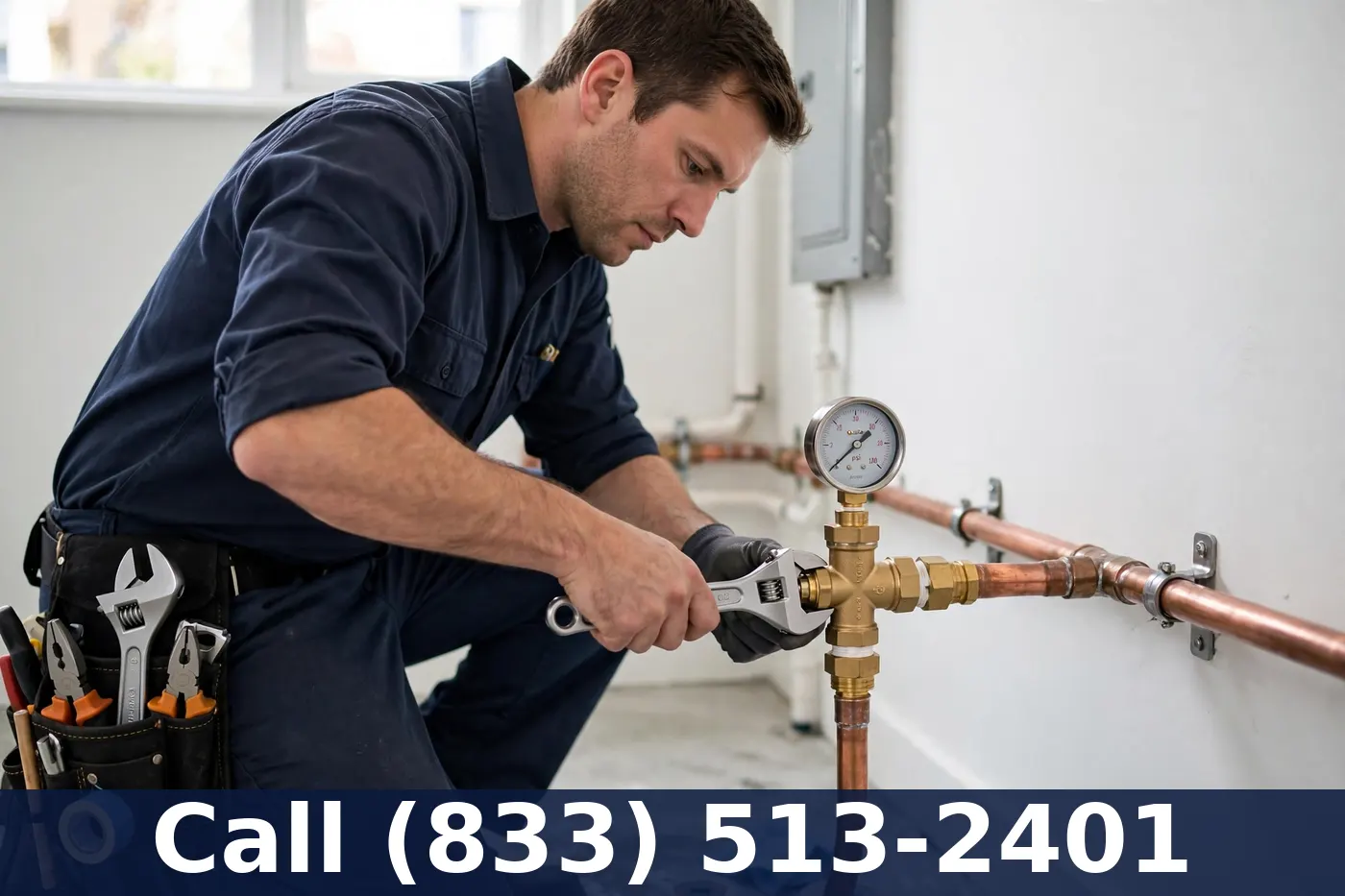
Starting price: Call for pricing
High water pressure quietly wears out pipes, fixtures, and appliances long before anything bursts. Plumbing Services Pros installs a pressure reducing valve on your main water line that holds household pressure at a safe, steady level. If your pipes bang, faucets spray hard, or supply hoses keep failing, call (833) 513-2401 to have your pressure tested.
What a pressure regulator does
City water often arrives at your property at a higher pressure than household plumbing is built to handle. A pressure reducing valve, or PRV, sits on the main line and trims that incoming pressure down to a safe, steady level before it reaches your pipes. Inside the valve, a spring and diaphragm react to changes automatically: when city pressure surges, the valve tightens down, and when it drops, the valve opens up.
The result is pressure that stays put no matter what the municipal supply is doing. Every faucet, toilet, appliance, and joint downstream gets the same moderate pressure instead of riding the ups and downs of the city main.
Signs your pressure is too high
High pressure feels good in the shower, which is why most homeowners never suspect it. The damage shows up elsewhere first. Listen for water hammer, the banging or shuddering in the walls when a faucet shuts off or the washer fills. Watch for faucets that spray hard enough to splash, toilet fill valves that fail repeatedly, and supply hoses that bulge or burst.
- Pipes that bang, hum, or vibrate when water stops
- Faucets and showerheads with an aggressive, splashy spray
- Toilets that keep needing new fill valves
- A water heater relief valve that drips or opens on its own
- Leaks at joints and connections with no clear cause
- Appliances wearing out sooner than they should
Any one of these is worth a pressure test. A gauge on a hose bib takes minutes, and a plumber reads both static pressure and pressure while fixtures run.
How the installation works
You call (833) 513-2401 and describe what you are noticing. A plumber tests the incoming pressure at an outdoor spigot, checks whether a regulator already exists and has failed, and looks at where the main line enters the house. That visit determines the right valve size and whether the shutoff valve needs replacing at the same time.
On install day the water is shut off at the meter, the main line is cut, and the new PRV goes in with solid, watertight connections. The valve is adjusted to a safe household setting and verified with a gauge. Before leaving, the plumber runs fixtures through the house to confirm steady flow and checks for leaks at every new joint.
What affects the cost
Access to the main line is the biggest variable. A line that enters through an open garage wall is quick work; one buried in a finished wall or a tight crawlspace takes more labor. The pipe material matters too, since copper, PEX, and galvanized each connect differently.
Whether an expansion tank is needed adds to the scope, as does a seized main shutoff valve that has to be replaced before the regulator can go in. For an exact figure based on your home, call (833) 513-2401 and describe your setup.
Why an expansion tank often goes with it
Installing a regulator changes your plumbing into what plumbers call a closed system: water can no longer push back out into the city main when pressure rises inside the house. That matters because heated water expands, and with nowhere to go, pressure spikes every time the water heater runs.
An expansion tank gives that extra volume somewhere to go. It is a small tank, usually mounted near the water heater, with a cushion of air inside that absorbs the pressure rise. Skipping it can leave the relief valve dripping and the whole system under stress, which defeats the purpose of the regulator. Your plumber checks whether your setup needs one.
Who we help in the Stockton area
Plumbing Services Pros installs pressure regulators for homes and small businesses across the Stockton area, including houses on municipal water with pressure that runs high at the street. Older homes with original plumbing and newer builds with high-efficiency fixtures both benefit, since no fixture is designed to take a beating from excessive pressure. If your pipes bang or your fixtures keep failing, call (833) 513-2401 and get the pressure tested.
Features
- Incoming pressure test with a gauge before any work
- Correctly sized pressure reducing valve for the home
- Installation on the main line where water enters
- Valve adjusted to a safe household pressure setting
- Expansion tank added where the system becomes closed
- Final pressure check at fixtures after the install
Benefits
- Protects pipes, joints, and seals from constant pressure stress
- Extends the life of dishwashers, washers, and water heaters
- Stops water hammer banging inside the walls
- Steadier flow at every faucet and shower
- Less water wasted through over-pressurized fixtures
- Fewer surprise leaks and burst supply lines
Frequently asked questions
What is a water pressure regulator?
A pressure reducing valve, often called a PRV, is a spring-loaded valve that sits on the main water line and lowers high incoming city pressure to a safe level for your home. It adjusts automatically as city pressure fluctuates, so the pressure inside your pipes stays steady. A plumber sizes it to your home and sets it to the right level.
How do I know if my water pressure is too high?
The surest way is a ten-dollar style pressure gauge threaded onto an outdoor hose bib, though a plumber's reading during a visit is more thorough. Warning signs include banging pipes, faucets that spray aggressively, toilets that keep needing new fill valves, and a water heater relief valve that drips. Call (833) 513-2401 and we will test it properly.
What is normal water pressure for a home?
Most homes do best between about 50 and 70 PSI. Plumbing code treats anything above 80 PSI as too high, and many houses run well past that without the owners knowing. If your gauge reads high, a regulator brings it back into the safe range.
Where does the regulator get installed?
On the main water line where it enters the house, usually just past the water meter and the main shutoff. That placement lets one valve protect everything downstream: every pipe, fixture, and appliance in the home.
What affects the cost of regulator installation?
How easy the main line is to reach, what the pipe is made of, whether an expansion tank is needed, and whether the existing shutoff valve also needs replacing. A plumber gives you an exact figure after seeing the setup, so call (833) 513-2401 for a quote.
Can I adjust the water pressure myself?
The valve has an adjustment screw, and small turns do change the pressure, but you need a gauge on a hose bib to see what you are doing. If adjustments do not hold or the pressure keeps swinging, the valve is worn out and needs replacing. When in doubt, have a plumber handle it.