
Water Softener Installation Near Me
Starting price: Call for pricing
Hard water leaves scale on fixtures, spots on dishes, and buildup inside pipes and appliances. Plumbing Services Pros installs a water softener sized to your home's water hardness and daily usage, tied into the main line with a proper drain and brine setup. For softer water at every tap, call (833) 513-2401.
What a water softener does
Hard water is water carrying dissolved calcium and magnesium. Those minerals are harmless to drink, but they leave their mark everywhere: crusty buildup on faucets, spots baked onto glassware, soap that refuses to lather, and scale quietly lining the inside of pipes, water heaters, and appliances. A water softener removes those minerals at the point where water enters the house, so every tap delivers soft water.
Most systems do it through ion exchange. Water passes through a tank of resin beads that trap the hardness minerals and release tiny amounts of sodium in their place. When the beads are full, the control valve runs a regeneration cycle, flushing the minerals away with brine from the salt tank and recharging the beads for the next round.
Signs your water is hard
You usually notice hard water in the chores, not the glass. Faucets and showerheads develop a white, crusty collar. Dishes come out of the dishwasher spotted no matter the detergent. Laundry feels stiff, and you use more soap than seems reasonable to get a lather. In the background, the water heater works harder and scale narrows pipes a little more each year.
- Chalky scale on faucets, showerheads, and fixtures
- Spots on dishes and glassware after washing
- Soap and shampoo that will not lather well
- Stiff, scratchy laundry and dingy whites
- A water heater that rumbles or runs out faster than it used to
- Dry, itchy skin after showering
A hardness test during the visit puts a number on it and sizes the system to match.
How the installation works
You call (833) 513-2401 and describe what you are seeing. A plumber tests the water's hardness, looks at household size and daily usage, and checks where the main line enters the house. That determines the right unit size and the best install spot, usually a garage or utility room with a drain nearby.
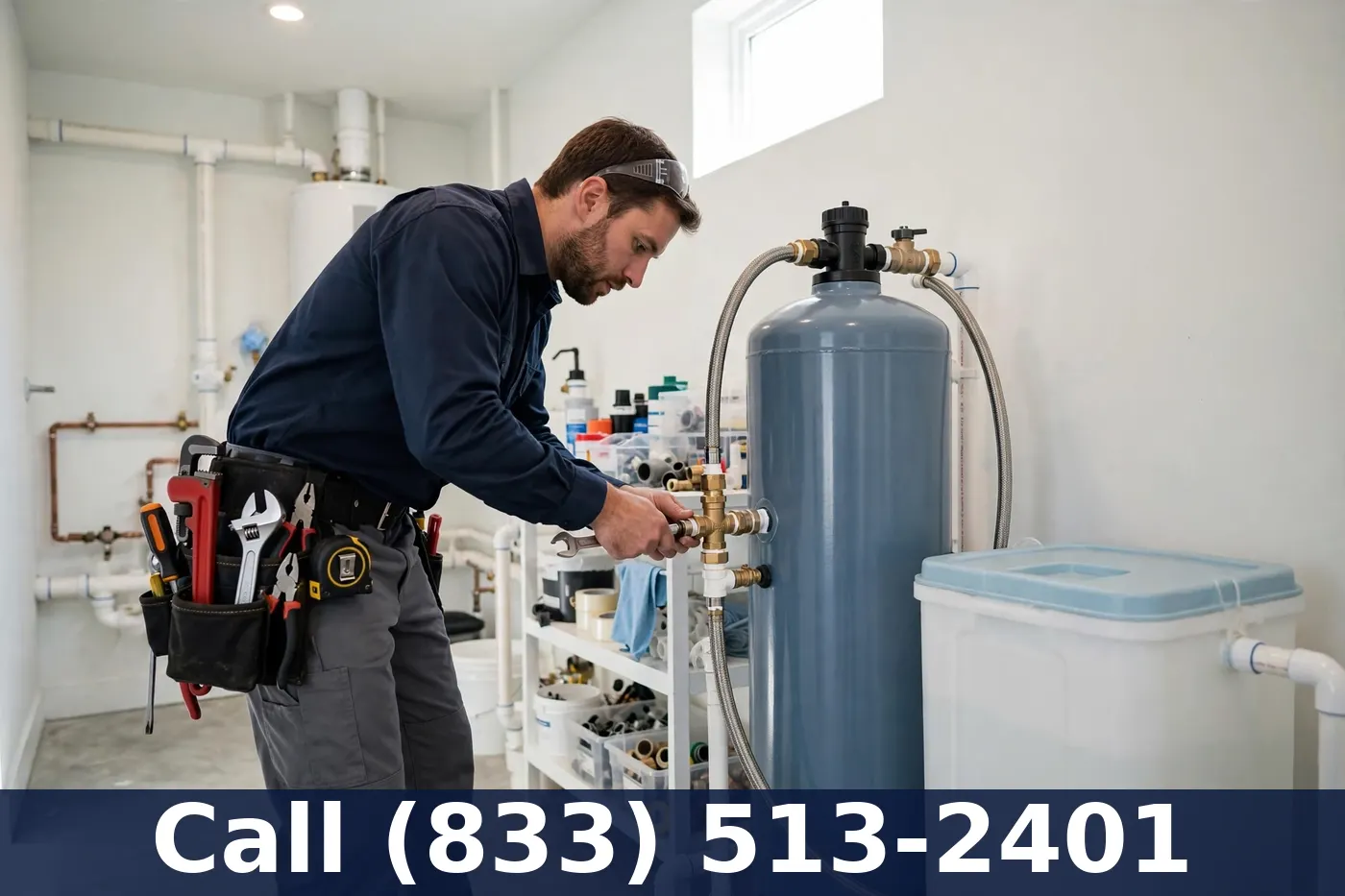
On install day the water is shut off, the main line is cut, and the softener ties in with a bypass valve so the house can still get water during future service. The brine tank is set beside the resin tank, the brine line and safety float are connected, and a drain line runs to a proper discharge point. The control valve is programmed to your hardness level, the system runs its first regeneration, and the plumber checks every connection for leaks.
What affects the cost
Unit size is the biggest factor, and size follows hardness and usage: very hard water or a large household needs more capacity. The plumbing layout matters too. A main line that is easy to reach with a drain close by is straightforward; a line buried in a finished wall or far from any drain adds labor.
Electrical access for the control valve, the condition of the existing shutoff, and any code-required details like air gaps on the drain line all play a part. For an exact figure based on your home and your water, call (833) 513-2401 after the hardness test.
Salt-based vs. no-salt systems: an honest note
Salt-based softeners actually remove hardness minerals through ion exchange, which is why plumbers recommend them when scale is the problem. No-salt systems, usually called conditioners, do not remove the minerals; they change how the minerals behave so they are less likely to stick as scale. They need no salt and no drain, but they will not give you the soft-water feel or fix existing buildup.
Which one fits depends on what you are trying to solve. If the goal is truly soft water at every tap, the salt-based system is the proven answer. Your plumber explains the difference plainly so you buy the right thing the first time.
Who we help in the Stockton area
Plumbing Services Pros installs water softeners for homes and small businesses across the Stockton area, where municipal and well water both carry enough hardness to cause scale. Single-family homes, rentals, and small commercial spaces with dishwashers, laundry equipment, or water heaters to protect all qualify. If hard water is costing you fixtures and patience, call (833) 513-2401 and start with a hardness test.
Features
- Water hardness test before sizing the system
- Softener sized to household size and daily water use
- Tie-in to the main water line with a bypass valve
- Brine tank setup with safety float and overflow routing
- Drain line run to a proper discharge point
- Control valve programmed to your hardness level
Benefits
- No more scale crusting faucets and showerheads
- Dishes that come out clear and cleaner-feeling laundry
- Softer-feeling water for skin and hair
- Less mineral buildup inside pipes and water heaters
- Appliances last longer without scale damage
- Less soap and detergent needed for the same clean
Frequently asked questions
How does a water softener actually work?
Most use ion exchange. Hard water flows through a tank of resin beads that grab calcium and magnesium and swap in tiny amounts of sodium. When the beads fill up, the system regenerates: it flushes them with brine from the salt tank, washing the hardness minerals down the drain and recharging the beads.
How do I know if I need a water softener?
White crust on faucets and showerheads, spots on glasses, soap that will not lather well, and stiff laundry are the everyday signs. A plumber tests hardness in grains per gallon during the visit, which is what sizes the system correctly. Call (833) 513-2401 to have your water tested.
Where does the softener get installed?
On the main water line, usually in the garage, utility room, or wherever the line enters the house. The spot needs a drain nearby for regeneration discharge and an outlet for the control valve. A bypass valve goes in too, so the house still gets water if the softener ever needs service.
Do I have to keep adding salt?
For a salt-based system, yes. The salt is what regenerates the resin beads, and the level drops as the system cycles. Checking the brine tank every month or so and topping it up keeps everything working. Your plumber shows you exactly what to look for.
Will softened water taste salty?
No. The amount of sodium added is very small, and most people cannot taste any difference. The system is removing hardness minerals, not adding table salt to your drinking water. If taste is a concern, your plumber can talk through your options.
What affects the cost of installation?
The size of the unit, your water's hardness level, the plumbing layout, how far the drain and electrical runs are, and whether the main shutoff needs work. A plumber gives you an exact figure after testing your water and seeing the install spot, so call (833) 513-2401.