
Water Softener Repair Near Me
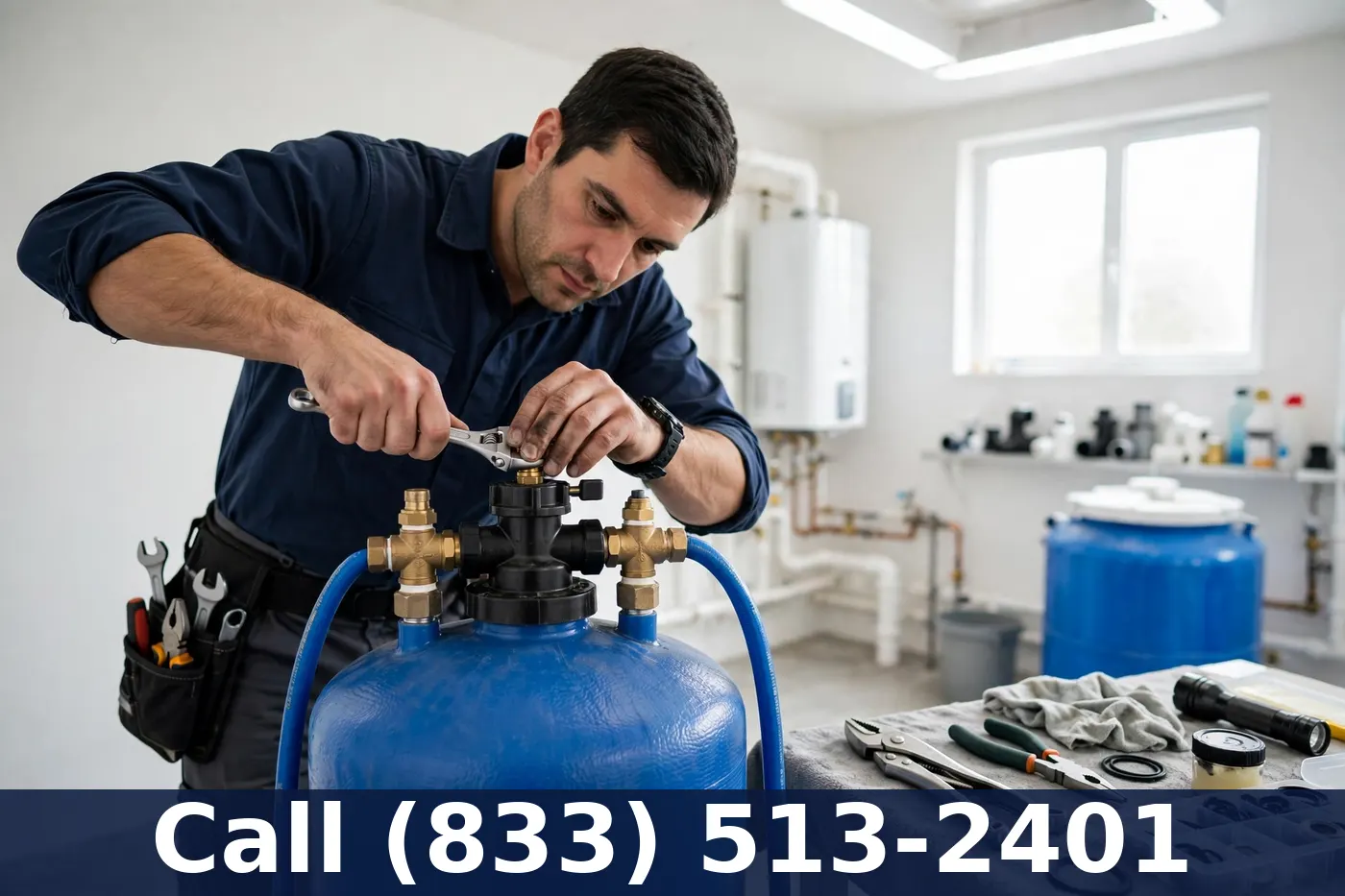
Starting price: Call for pricing
When the water turns hard again or the softener starts acting up, the fix is usually simpler than a replacement. Plumbing Services Pros diagnoses salt bridges, valve problems, resin issues, and control faults, then repairs the system so it softens properly again. If your softener is not doing its job, call (833) 513-2401.
What water softener repair covers
A water softener is a simple machine with a handful of parts that can fail: the control valve that runs regeneration, the brine system that makes the salt solution, the resin beads that do the actual softening, and the settings that tie it all together. Repair means finding which of these is at fault and fixing it, whether that is breaking up a salt bridge, rebuilding a valve, replacing resin, or reprogramming a control that lost its mind after a power outage.
Plumbing Services Pros services all major valve types and both metered and timer-based systems. The goal is always the same: get the unit softening properly again without replacing parts that are still good.
The problems we see most
Salt bridges top the list. A hard crust forms across the salt in the brine tank, the salt above it never dissolves, and regeneration runs on plain water that does nothing. Right behind it comes resin trouble: beads fouled by iron or sediment, or simply worn out after years of service, so hardness slips straight through.
- Water that tests hard even though the softener runs
- A brine tank that never seems to use salt
- A brine tank that keeps filling with too much water
- The unit stuck in regeneration or cycling at odd hours
- Noticeable pressure drop when water runs through the softener
- Error codes or a blank display on the control valve
Control valve faults round out the list: clogged injectors, worn seals, tired motors, and timers that no longer keep the right schedule. Each has a distinct signature once you know what to check.
How the diagnosis and repair go
You call (833) 513-2401 and describe the symptoms: hard water again, salty taste, strange cycling, or water in the brine tank. A plumber tests the water first to confirm the softener is actually underperforming, then works through the system in order: salt level and bridging in the brine tank, the bypass valve position, the control valve's cycle, and the condition of the resin.
The fix follows the fault. A salt bridge gets broken up and the tank cleaned and refilled to the right level. A clogged injector or brine line gets cleared. A failing valve gets rebuilt or replaced, and exhausted resin gets swapped for fresh media. After the repair, the settings are checked against your water hardness and the system runs a full regeneration to prove it is working.
What affects the cost
The failed part drives the price more than anything. Clearing a salt bridge and cleaning the tank is quick work; rebuilding or replacing a control valve takes more parts and labor; a full resin replacement sits at the higher end of repair work. The valve brand and model matter too, since parts availability and complexity vary.
Age and access play their part. An older unit with seized fittings takes longer to service, and a softener crammed into a tight corner slows every step. For an exact figure based on your system, call (833) 513-2401 and describe what it is doing.
Repair or replace: how we decide
Not every broken softener deserves a repair, and a straight answer matters more than a sale. A cracked resin or brine tank, a control valve that has failed more than once, or a system with chronic problems across multiple parts usually means replacement is the smarter money. The plumber says so plainly when that is the case.
On the other hand, a single failed component on a structurally sound unit is almost always worth fixing. A valve rebuild, a resin change, or a brine system cleanup can give a good softener many more years of service. You get both options with honest reasoning, and you make the call.
Who we help in the Stockton area
Plumbing Services Pros repairs water softeners in homes and small businesses across the Stockton area, from compact cabinet units in condos to large twin-tank systems in bigger homes. Single-family houses, rentals with tenant complaints about hard water, and small commercial spaces all get the same methodical diagnosis. If your softener has stopped softening, call (833) 513-2401 and describe the symptoms.
Features
- Full system diagnosis: water test plus component checks
- Salt bridge and salt mushing removal with tank cleaning
- Control valve cleaning, rebuild, or replacement
- Brine line, injector, and float valve service
- Resin bed cleaning or full resin replacement
- Settings check and reprogramming after the repair
Benefits
- Soft water back without buying a whole new system
- Fixes the actual fault instead of guessing at parts
- Stops salt waste from a unit stuck regenerating
- Restores proper flow if the unit was choking pressure
- Extends the useful life of the existing equipment
- A clear explanation of what failed and why
Frequently asked questions
Why is my water hard again even though I have a softener?
The usual suspects are a salt bridge blocking brine formation, resin beads that are fouled or worn out, a control valve stuck mid-cycle, or a bypass valve left open so water skips the softener entirely. A plumber tests the water and works through each one until the fault is found.
What is a salt bridge?
A salt bridge is a hard crust that forms across the salt in the brine tank, leaving a hollow gap underneath. Salt above the crust cannot reach the water below, so no brine forms and the system cannot regenerate. It gets broken up by hand, the tank gets cleaned, and salt levels get reset.
My brine tank is full of water. Is that normal?
A few inches of water at the bottom is normal, since the system needs water to make brine. A tank that keeps filling up points to a stuck float valve, a clogged injector or brine line, or a restricted drain. A plumber checks each of these in order.
Can the resin be replaced without replacing the whole softener?
Yes, resin replacement is a standard repair. The old media is flushed out of the mineral tank and fresh resin goes in, sized to the system. It makes sense when the valve, tanks, and controls are all still sound but the beads themselves are exhausted or fouled.
What affects the cost of softener repair?
Which part failed, the type of control valve, whether resin needs replacing, and how easy the unit is to service. A simple salt bridge cleanup is a different job from a valve rebuild or a full resin change. Call (833) 513-2401 for an exact figure after diagnosis.
How do I know whether to repair or replace the softener?
It comes down to age, condition, and failure pattern. A cracked tank or a control valve that keeps failing on an old unit points toward replacement. A single failed part on an otherwise sound system points toward repair. A plumber lays out both options honestly after the diagnosis.