
Water Testing Near Me
Starting price: Call for pricing
You cannot fix a water problem you cannot see, and most water issues are invisible. Plumbing Services Pros tests your home's water for hardness, chlorine, pH, iron, sediment, and total dissolved solids, then explains what the results mean in plain language. To find out what is really coming out of your taps, call (833) 513-2401.
What professional water testing is
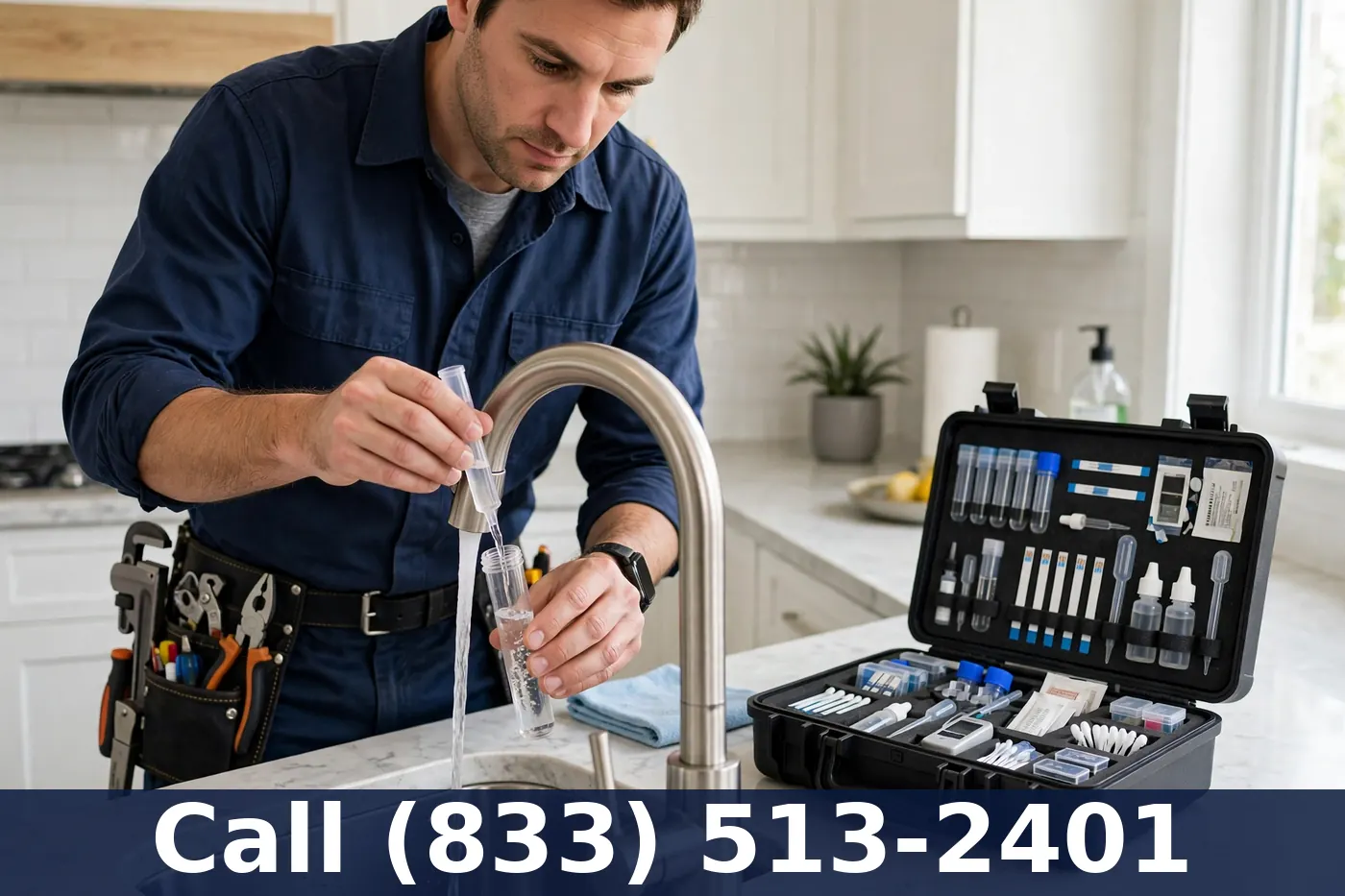
Water testing is how you find out what is actually in the water coming out of your taps. A plumber runs an on-site screening for the common culprits: hardness minerals, chlorine and chloramines, pH and acidity, iron, sulfur, sediment, and total dissolved solids. For health-related questions like bacteria, lead, or nitrates, a proper sample is collected and sent to an accredited lab for certified analysis.
Plumbing Services Pros does both levels. The in-home screening answers the everyday questions about taste, odor, staining, and scale on the spot. The lab route gives you documented results for the things that matter most to health. Either way, you get the findings explained in plain language, not a printout of numbers with no context.
When testing makes sense
Most people call because something changed. The water started tasting like a swimming pool, the shower smells like rotten eggs, orange stains appeared in the tub, or the dishes keep coming out spotted. Those are all water chemistry problems, and each one points to a different cause that a test can pin down.
- Chlorine taste or smell, especially strong at one tap
- Rotten-egg odor from hot water or all taps
- Orange, brown, or black staining on fixtures and laundry
- White scale building up on faucets and showerheads
- Blue-green stains that suggest acidic, corrosive water
- Cloudy water or visible sediment and grit
Life changes are another good trigger: a new baby, a move to a home on well water, new plumbing, or just never having tested at all. If any of this sounds familiar, call (833) 513-2401 and describe what you are noticing.
How the test visit works
It starts with a call to (833) 513-2401 and a short conversation about your concerns and your water source. A plumber arrives with screening equipment and runs the basic panel at the kitchen tap: hardness, chlorine, pH, iron, and total dissolved solids. When symptoms point elsewhere, additional taps get tested to isolate whether the issue is in the supply or in the home's own pipes.
If lab work is warranted, samples are collected following the lab's handling rules so the results hold up. When everything is in, the plumber walks through the findings one by one: what each number means, which ones are fine, which ones explain your symptoms, and what treatment would fix them. You leave knowing exactly where you stand.
What affects the cost
An in-home screening is the baseline and is often quick enough to pair with another service visit. Full lab panels cost more because they involve lab fees and certified analysis for bacteria, lead, and other health-related items. Testing multiple taps or chasing an intermittent problem adds time as well.
What you are trying to answer drives the level. A hardness and chlorine check for a softener decision is a different job from a full potability panel for a new well. Call (833) 513-2401, describe your concerns, and you will hear plainly which level fits.
What the results lead to
Testing is only useful if it leads somewhere, so every test ends with recommendations matched to the findings. Hard water points to a softener sized from the hardness reading. Chlorine taste and odor point to carbon filtration. Sediment points to a sediment filter, and acidic water points to a neutralizer before it eats through copper pipes.
This is why testing comes before buying equipment. Guessing at treatment wastes money on the wrong system, while a test makes the choice obvious. The plumber explains each option, what it fixes, and what it does not, so the decision is yours with full information.
Who we help in the Stockton area
Plumbing Services Pros tests water for homes and small businesses across the Stockton area, on both municipal supplies and private wells. Homebuyers checking a new property, well owners who have never tested, and families chasing a taste or staining problem are the most common calls. If you want to know what is in your water before deciding what to do about it, call (833) 513-2401.
Features
- On-site screening for hardness, chlorine, pH, and iron
- Total dissolved solids and sediment level readings
- Proper sample collection for accredited lab analysis
- Testing at multiple taps to isolate the source
- Plain-language review of every result
- Treatment recommendations matched to the findings
Benefits
- Know exactly what is in your water instead of guessing
- The right treatment system chosen for your actual water
- Catch pipe-corroding acidity or mineral issues early
- Protect water heaters and appliances from hidden damage
- A clear, plain-language explanation of every result
- A practical plan for whatever the test finds
Frequently asked questions
What does a professional water test check for?
Hardness, chlorine and chloramines, pH and acidity, iron, sulfur, sediment, and total dissolved solids, which together explain most taste, odor, staining, and scale complaints. For health-related concerns like bacteria or lead, a plumber collects a proper sample and sends it to an accredited lab. Call (833) 513-2401 to set up a test.
Is testing worth it if I am on city water?
City water is treated at the plant, but it picks up chlorine taste, sediment, and minerals on the way to your tap, and old household pipes can add metals. Well water is not treated at all, so testing is the only way to know what is in it. Either way, a test tells you what treatment you actually need.
What is the difference between an in-home test and a lab test?
An in-home screening gives you answers on the spot for the common culprits like hardness, chlorine, pH, and iron. Lab analysis takes longer but covers bacteria and metals with certified accuracy. A plumber recommends the right level based on what you are concerned about.
What affects the cost of water testing?
A basic screening is quick, often wrapped into a service visit. Full lab panels that include bacteria and metals take longer and involve lab fees. Call (833) 513-2401 and describe your concerns, and you will get a straight answer on what level of testing fits.
How often should I have my water tested?
Once a year is a sensible baseline, and any time something changes: new stains, new odors, a new baby, a new well, or new plumbing. Well owners should test more often since nothing is monitoring that water between tests.
Will testing tell me which treatment system to buy?
Yes, and that is the main reason to test first. A softener fixes hardness, a carbon filter handles chlorine and taste, and sediment filters catch particles. The test results tell the plumber which of these your water actually needs, so you buy the right equipment once.